
HPE ProLiant Gen11 vs Gen12: What Changed and When to Upgrade
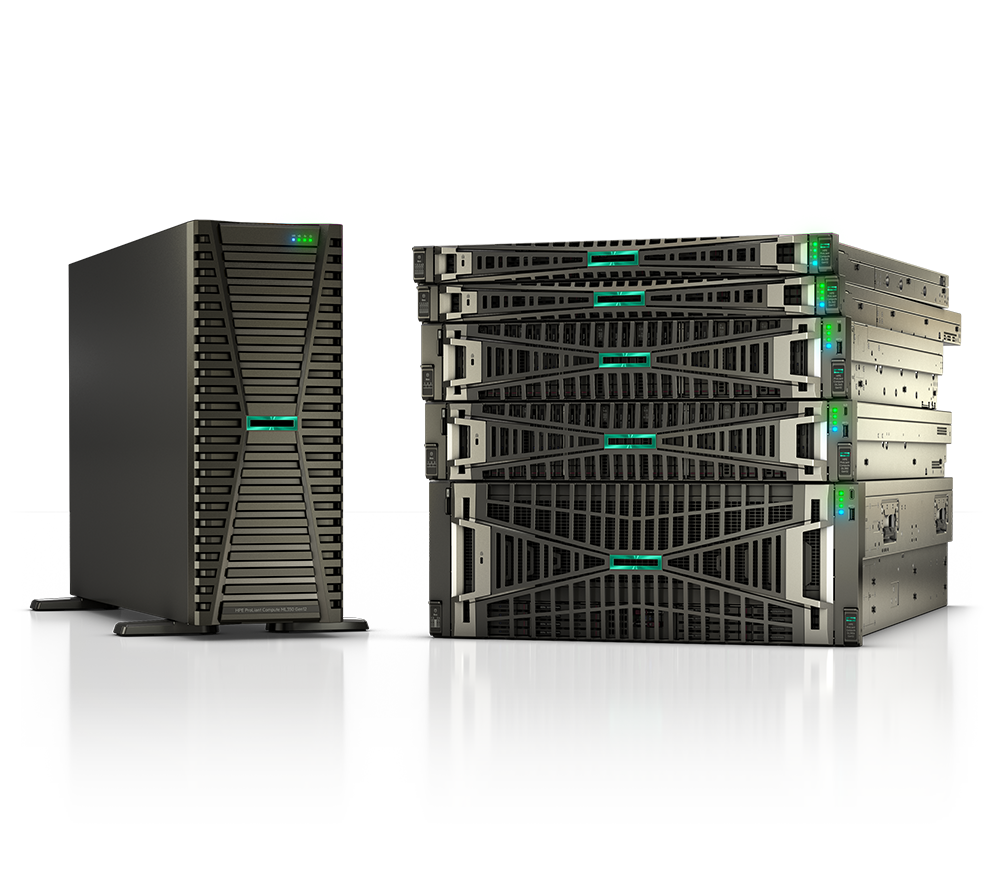
When HPE launched the ProLiant Compute Gen12 portfolio in February 2025 — and expanded it further at HPE Discover 2025 in June — it marked the most significant architectural shift in the ProLiant line in years. This was not a modest silicon refresh. HPE redesigned the security subsystem, rethought management automation, introduced direct liquid cooling across the rack server portfolio, and dramatically increased storage and I/O density, all at the same time.
For IT decision-makers running Gen11 infrastructure, the natural question is whether Gen12 justifies a refresh cycle now or whether Gen11 still has plenty of runway. The honest answer depends on your workload profile, your compliance posture, and how aggressively you are pushing toward AI inference, high-density virtualization, or power-constrained builds. This guide breaks down exactly what changed between generations and helps you build — or table — the business case for an upgrade.
Processor Architecture: Intel Xeon 6 Changes Everything
The foundational difference between Gen11 and Gen12 is the processor platform. Gen11 ships with 4th and 5th Gen Intel Xeon Scalable processors (Sapphire Rapids and Emerald Rapids), topping out at 64 cores per socket with a 350W TDP envelope. These are well-proven chips that handle the vast majority of enterprise workloads without complaint.
Gen12 moves to Intel Xeon 6 processors, which come in two distinct sub-families: P-cores (performance-optimized, up to 86 P-cores per socket) and E-cores (efficiency-optimized, up to 144 E-cores per socket). That jump — from 64 to 144 cores per socket — represents a 125% increase in maximum core density on a single server.
What that means in practice:
- Cloud-native and container workloads scale far more efficiently on E-core configurations, where thread count per watt is the dominant metric.
- Latency-sensitive database and HPC workloads benefit from the higher single-thread IPC of P-core variants.
- AI inferencing at the edge becomes viable on a 1U or 2U form factor when you can pack that many cores without requiring additional nodes.
On the AMD side, Gen12 also includes models built around 5th Gen AMD EPYC processors — the DL325 Gen12 (1U single-socket) and DL345 Gen12 (2U single-socket) — offering up to 192 EPYC cores per socket and up to 6 TB of DDR5 memory, targeting virtualization, VDI, and container-heavy environments.
Memory and PCIe: Bandwidth and Slot Counts Both Improve
Memory specifications improved measurably from Gen11 to Gen12 on the Intel platform. Gen11 supports DDR5 at up to 5600 MT/s; Gen12 raises that to 6400 MT/s — a 14% gain. For memory-bandwidth-bound workloads such as in-memory databases, large language model inference, and real-time analytics, bandwidth is often the ceiling that determines whether you buy more nodes or fewer.
The PCIe expansion story is more dramatic. Gen12 is not just PCIe Gen5 — Gen11 had PCIe Gen5 too — the difference is how many high-speed slots are accessible. A fully configured DL380 Gen12 offers up to 8 PCIe Gen5 slots, compared to approximately 2 in a DL380 Gen11, a 300% increase. This directly affects GPU throughput, NVMe-oF fabric connectivity, and high-bandwidth network adapter configurations.
| Specification | Gen11 (Intel, DL380) | Gen12 (Intel, DL380) |
|---|---|---|
| Processor family | Xeon Scalable 4th/5th Gen | Intel Xeon 6 |
| Max cores per socket | 64 | 144 (E-core) / 86 (P-core) |
| DDR5 bandwidth | 5600 MT/s | 6400 MT/s |
| Max memory capacity | 8 TB | 8 TB |
| PCIe Gen5 slots | ~2 | Up to 8 |
| EDSFF NVMe drives (DL380) | Up to 12 | Up to 36 |
| GPU support (double-wide) | Up to 3 | Up to 3 (H100 NVL, RTX PRO 6000 Blackwell) |
| iLO version | iLO 6 | iLO 7 with Secure Enclave |
Storage Density: Three Times the Flash in the Same Chassis
The expansion of EDSFF E3.S NVMe drive support from Gen11 to Gen12 is particularly striking. The DL380 Gen12 supports up to 36 EDSFF E3.S NVMe drives in a 2U chassis, compared to 12 in the Gen11 equivalent — a tripling of all-flash density without expanding footprint.
The DL360 Gen12 (1U, two-socket) similarly supports up to 20 EDSFF NVMe drives. For organizations building dense flash storage tiers without a dedicated storage array — common in healthcare imaging workflows, federal high-performance data repositories, and financial services transaction databases — this eliminates the need for external JBOFs in many reference architectures.
Gen12 also qualifies new GPU options that Gen11 did not ship with from the factory: NVIDIA H100 NVL, RTX PRO 6000 Blackwell Server Edition, L4, and RTX A1000 are all first-class, factory-configured options in the DL380 Gen12. For buyers evaluating HPE ProLiant servers for AI and GPU workloads, this GPU-first orientation is a material differentiator over Gen11.
Security: iLO 7 and the Secure Enclave Are a Generational Leap
Security is where Gen12 makes the most unambiguous argument for upgrade — and this matters most for federal, healthcare, and SLED buyers.
iLO 7 replaces iLO 6 and introduces a purpose-built, proprietary Secure Enclave — an independent, physically tamper-resistant security processor built entirely as HPE intellectual property. Unlike prior generations where the baseboard management controller relied partly on third-party silicon, the Secure Enclave provides an unbreakable hardware root of trust that no external actor, including HPE, can access or alter.
Key iLO 7 security advances over iLO 6:
- FIPS 140-3 Level 3 certification — Gen12 is the first server platform to achieve this standard, which mandates tamper-evidence, identity-based authentication, and physical security mechanisms. Gen11 with iLO 6 meets FIPS 140-2 but not Level 3 of the newer standard.
- Quantum-resistant cryptography — Gen12 meets NIST and CNSA 2.0 quantum-resistance requirements, making it the first server platform ready for the post-quantum cryptography transition that federal agencies are now planning for per CISA and NIST SP 800-208.
- Extended component trust via SPDM — iLO 7 uses the Security Protocol and Data Model to extend the Silicon Root of Trust to PCIe option cards, NVMe drives, power supplies, storage backplanes, and riser cards. On Gen11, root-of-trust verification stops at the motherboard.
- Runtime firmware integrity monitoring — iLO 7 continuously verifies firmware integrity while the system is running, not just at boot. This catches in-memory firmware tampering that boot-time checks miss.
- 30% faster OS boot, 3x faster iLO operations — performance improvements in the management controller itself reduce maintenance windows and speed recovery time.
For federal agencies evaluating CMMC Level 2/3, organizations under HIPAA's audit and accountability controls, or SLED buyers working against state-level NIST CSF 2.0 requirements, the gap between iLO 6 and iLO 7 is not cosmetic. The FIPS 140-3 Level 3 certification and quantum-resistant readiness in Gen12 can directly satisfy emerging procurement requirements that Gen11 cannot meet without compensating controls.
Cooling: Direct Liquid Cooling Becomes a Standard Option
Gen11 was an air-cooled platform in its standard configurations, with direct liquid cooling available only on select, non-standard variants. Gen12 makes optional Direct Liquid Cooling (DLC) a factory-supported choice on all Intel-based 1U and 2U rack servers, including the DL320, DL340, DL360, and DL380.
Why this matters:
- Power density: High-core-count Xeon 6 E-core configurations generate heat profiles that stress traditional air cooling in dense deployments. Liquid removes heat more than 3,000 times more efficiently per unit volume than air.
- Sustainability math: HPE projects up to 65% reduction in per-server power costs versus legacy Gen10 infrastructure, and positions a single Gen12 server as delivering the compute equivalent of seven Gen10 servers. That consolidation ratio dramatically changes capacity planning.
- Facility constraints: Federal and SLED data centers running at power or cooling limits often cannot absorb new compute without retiring old hardware. Gen12 DLC enables higher compute density in the same footprint without facility upgrades.
Organizations that run air-cooled environments and do not intend to enable DLC still benefit: Gen12 introduces dynamic power scaling that adjusts power consumption based on active workload demand, which provides efficiency gains over Gen11 even in conventional air-cooled deployments.
HPE Compute Ops Management: AI Moves from Reactive to Predictive
Both Gen11 and Gen12 connect to HPE Compute Ops Management (COM), HPE's cloud-based server lifecycle platform. Gen12 ships at a point where COM has added substantive AI-powered automation worth understanding:
- Proactive issue resolution through AI-informed insights that correlate telemetry across a server fleet and surface anomalies before they cause outages — a shift from reactive alerting to predictive operations.
- Workload-aware power forecasting that lets organizations set energy and carbon emission thresholds on a per-site or global basis, directly relevant to federal sustainability reporting mandates.
- Map-based infrastructure visualization for operations teams managing distributed edge or branch deployments.
- Automated server onboarding to reduce manual configuration steps at locations without on-site IT staff.
The combination of iLO 7's runtime telemetry depth and COM's AI processing creates a feedback loop that Gen11 with iLO 6 simply cannot replicate. Gen12 with COM positions operations teams for predictive infrastructure management; Gen11 teams are running a reactive model.
For IT teams managing dozens to hundreds of servers across agencies or campuses, explore server management resources and lifecycle guides at Uniqcli to see how COM fits into an HPE-managed infrastructure strategy.
Gen11 vs Gen12 at a Glance
| Feature | ProLiant Gen11 | ProLiant Gen12 |
|---|---|---|
| Intel processor | Xeon Scalable 4th/5th Gen (up to 64 cores/socket) | Intel Xeon 6 (up to 144 E-cores or 86 P-cores/socket) |
| AMD processor | EPYC 9004 (Genoa) | EPYC 9005 (Turin), up to 192 cores/socket |
| DDR5 memory bandwidth (Intel) | 5600 MT/s | 6400 MT/s |
| Max PCIe Gen5 slots (DL380) | ~2 | Up to 8 |
| EDSFF NVMe drive density (DL380) | Up to 12 | Up to 36 |
| Management controller | iLO 6 | iLO 7 with Secure Enclave |
| FIPS compliance level | FIPS 140-2 | FIPS 140-3 Level 3 |
| Quantum-resistant crypto | No | Yes (NIST/CNSA 2.0 ready) |
| Runtime firmware integrity check | Boot-time only | Continuous (boot + runtime) |
| Direct liquid cooling availability | Select models only | All Intel 1S/2S rack servers |
| AI-driven COM features | Available (basic) | Available (enhanced predictive AI) |
When to Upgrade: A Practical Framework
Not every Gen11 deployment needs to move to Gen12 today. Gen11 remains a fully supported, high-performance platform that handles the majority of enterprise workloads without issue. The question is whether your specific environment makes a business case for moving sooner.
Upgrade Gen11 to Gen12 now if:
- You have compliance mandates that reference FIPS 140-3 Level 3, CMMC Level 2/3, or quantum-resistant cryptography — Gen12 with iLO 7 Secure Enclave is the only path to those capabilities in the ProLiant family.
- You are running AI inference or machine learning training that saturates current core counts or GPU slot capacity — Xeon 6 density and expanded PCIe Gen5 slots remove the bottlenecks.
- You need all-flash NVMe density in a 2U chassis beyond 12 EDSFF drives — the DL380 Gen12 triples that to 36.
- Your hardware is approaching end of warranty or you are already in a refresh planning cycle.
- You are deploying net-new infrastructure — there is no TCO argument for locking into a previous generation when Gen12 is in production.
- Your data center is power- or cooling-constrained and consolidation onto fewer, denser Gen12 nodes would free capacity without facility expansion.
Continue running Gen11 if:
- Workloads are stable, utilization is healthy, and hardware is under active support with 2–3 years remaining in depreciation schedules.
- Your compliance framework does not yet require FIPS 140-3 and your iLO 6 posture satisfies current audits.
- You are mid-cycle on a software platform (VMware, Oracle, SAP) where recertification or relicensing costs would offset hardware savings in the near term.
- Budget cycles align better with late 2025 or 2026 purchasing — Gen12 pricing will normalize as production volume ramps.
If you are somewhere between these two scenarios, a structured cost-of-ownership comparison with your actual workload profile is the right starting point. Request a quote from Uniqcli and we can model Gen11 versus Gen12 TCO for your specific configuration.
Gen12 Models Available Now
As of mid-2025, the ProLiant Compute Gen12 rack and tower portfolio includes:
- HPE ProLiant Compute DL320 Gen12 — 1U single-socket, Intel Xeon 6, up to 4 TB DDR5, entry edge/branch
- HPE ProLiant Compute DL340 Gen12 — 1U single-socket, Intel Xeon 6, dense edge compute
- HPE ProLiant Compute DL360 Gen12 — 1U dual-socket, Intel Xeon 6, up to 20 EDSFF NVMe drives
- HPE ProLiant Compute DL380 Gen12 — 2U dual-socket, Intel Xeon 6, up to 36 EDSFF NVMe drives, up to 8 TB DDR5
- HPE ProLiant Compute DL380a Gen12 — 2U AI-optimized variant, Intel Xeon 6
- HPE ProLiant Compute ML350 Gen12 — tower/rack-convertible, Intel Xeon 6
- HPE ProLiant Compute DL325 Gen12 — 1U single-socket, 5th Gen AMD EPYC, up to 4 TB DDR5
- HPE ProLiant Compute DL345 Gen12 — 2U single-socket, 5th Gen AMD EPYC, up to 6 TB DDR5, up to 36 EDSFF drives
HPE also announced at HPE Discover 2025 that the EL2000 chassis and corresponding Gen12 blade modules are scheduled for availability later in 2026. Organizations planning blade or composable environments should factor that timeline into roadmaps.
Browse the full HPE ProLiant compute portfolio at Uniqcli for current SKU availability, lead-time estimates, and AMD versus Intel configuration options.
Federal, SLED, and Healthcare: The Compliance Calculus
Regulated-sector buyers face a distinct set of considerations. Gen12 is the first HPE server generation purpose-built for what NIST, CISA, and federal CIO policy are now pointing toward: a post-quantum security environment where today's encrypted data faces "harvest now, decrypt later" threats.
For federal agencies, the combination of FIPS 140-3 Level 3 hardware certification, CNSA 2.0 quantum-resistant readiness, and extended supply-chain trust in iLO 7 aligns directly with requirements emerging in CMMC and FedRAMP frameworks. Gen11 with iLO 6 does not reach that bar without compensating controls that create audit complexity.
For healthcare organizations, the hardware root-of-trust improvements in Gen12 support HIPAA's audit and accountability controls and reduce the firmware attack surface that has historically been difficult to remediate after a supply-chain compromise.
For SLED buyers, many states have adopted or are adopting NIST CSF 2.0 as a cybersecurity baseline. Gen12's security posture is easier to document and evidence during security assessments, which reduces assessment overhead over the full server lifecycle.
Contact the Uniqcli federal and SLED team for pre-sales technical support — we provide configuration guidance and control-mapping assistance at no charge.
How Uniqcli Helps
As an authorized HPE and HPE Aruba Networking partner serving federal, SLED, healthcare, and enterprise customers, Uniqcli does more than source hardware. Our technical team can model workload-specific performance differences between Gen11 and Gen12 configurations, help you navigate HPE financing and leasing options, and structure orders through GSA Schedule, SEWP, or cooperative purchasing vehicles where your procurement rules require it.
Whether you are comparing a Gen11 DL380 refresh against a Gen12 DL380 investment, sourcing AMD EPYC Gen12 nodes for a VDI consolidation, or standing up a new compute cluster from scratch, Uniqcli's procurement specialists work with your timeline and budget.
Request a quote or contact our team to start the conversation. We respond within one business day and provide detailed BOMs, lead-time estimates, and configuration guidance at no cost.