
HPE ProLiant Servers
Right-sized rack, tower, and edge compute across an honest Gen11 and Gen12 lineup, run from one cloud console
Overview
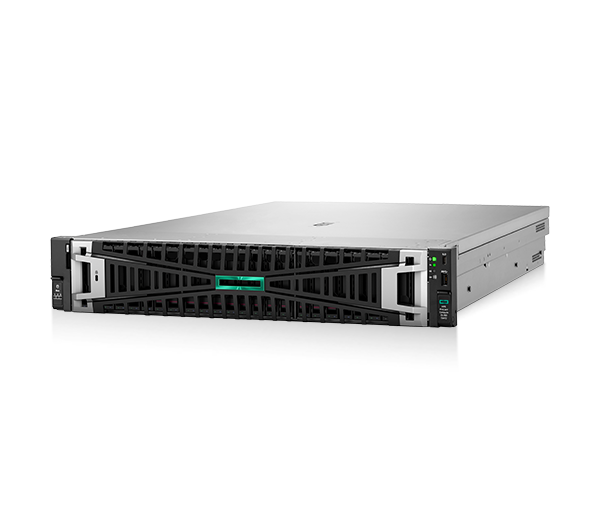
HPE ProLiant is HPE's core x86 server line, and as of mid-2026 it runs a genuinely mixed Gen11/Gen12 lineup rather than a clean generational cutover. HPE launched Gen12 with Intel Xeon 6 in February 2025 across the DL320, DL340, DL360, DL380, DL380a, DL580, and ML350, then added AMD EPYC Gen12 models, the DL325 and DL345, in mid-2025. If your workload maps to one of those, Gen12 is the current answer: Intel Xeon 6 or 5th Gen AMD EPYC, DDR5 at up to 6400 MT/s, PCIe Gen5, EDSFF NVMe, and HPE iLO 7, the first server management controller HPE has shipped with quantum-computing-resistant readiness and design intent to meet FIPS 140-3 Level 3.
But not everything moved to Gen12. The two-socket AMD flagship DL385, the four-socket Intel DL560, and the entry towers ML30, ML110, and MicroServer remain on Gen11 with no announced Gen12 successor, and HPE's own product pages still position DL385 Gen11 as an MLPerf Inference and TPC-H price-performance leader today. Buying ProLiant in 2026 means picking the right generation per model, not defaulting to "newest is best."
Uniqcli, as an authorized HPE partner, scopes the right generation, processor, memory, and storage for each workload rather than pushing a blanket Gen12 upsell, and supports the build through deployment and its operating life. For federal, SLED, healthcare, and enterprise buyers, ProLiant configurations are available TAA-compliant and can move through GSA MAS (application in progress), SAP/FAR channels, GPC direct, or GPC.
A closer look
Why HPE ProLiant Servers
Assuming every ProLiant model jumped to Gen12 leads to two costly mistakes: overpaying for a Gen12 SKU that doesn't exist yet in a given form factor, or underspecifying a workload that genuinely needs iLO 7's quantum-resistant security posture. Knowing exactly which models are Gen12 today and which are still Gen11, and why, keeps refresh budgets accurate and security compliance conversations honest with federal and regulated buyers.
Gen11 and Gen12 in one honest lineup
Gen12 (Intel Xeon 6, launched Feb 2025) covers DL320/360/380/380a/580/ML350, and AMD EPYC Gen12 (DL325/DL345) followed mid-2025. DL385, DL560, and the entry towers remain current on Gen11, HPE has not replaced them yet.
iLO 7 quantum-resistant security on Gen12
The newest generation ships with HPE iLO 7, built for quantum-computing-resistant readiness and designed to meet FIPS 140-3 Level 3, backed by a dedicated secure enclave processor.
Intel Xeon 6 and AMD EPYC choice
Pick Intel Xeon 6 (up to 144 cores) or 5th Gen AMD EPYC (up to 192 cores) per node to tune for clock speed, core density, or price-performance, across both Gen11 and Gen12 platforms.
MLPerf-leading AI inference
The DL380a Gen12 claimed eight number-one positions in MLPerf Inference v6.0 llama-focused tests, while DL385 Gen11 continues placing first in its own MLPerf Inference and TPC-H benchmark categories.
Up to 41% better performance per watt
HPE states Gen12 systems deliver up to 41% better performance per watt than legacy enterprise servers and up to 65% in annual power savings, a real factor in refresh ROI math.
Silicon root of trust across the fleet
Every ProLiant, Gen11 or Gen12, anchors firmware to immutable silicon via HPE iLO, validating every boot and blocking tampered code from running across the server's life.
What it does
iLO 7 quantum-resistant security
Gen12 servers ship with HPE iLO 7, the first server management controller built for quantum-computing-resistant readiness and designed to meet FIPS 140-3 Level 3 requirements, anchored by a dedicated secure enclave processor.
Cloud-based fleet management
HPE Compute Ops Management provisions, monitors, and patches ProLiant servers from data center to edge, cutting fleet maintenance effort by up to 75% versus manual, box-by-box updates.
DDR5 and PCIe Gen5 throughput
Up to 8 TB of DDR5 at 6400 MT/s and PCIe Gen5 lanes on Gen12 models feed memory-hungry databases, analytics, and accelerators without I/O bottlenecks.
EDSFF NVMe storage density
E3.S NVMe bays, up to 36 drives on the DL380 Gen12, pack more flash into 1U and 2U chassis, raising IOPS for transactional and AI data pipelines.
GPU-ready for AI training and inference
DL380a Gen12 scales to 10 double-wide GPUs including NVIDIA H200 and RTX PRO 6000 Blackwell Server Edition, and claimed 8 number-one positions in MLPerf Inference v6.0 llama-focused tests.
Direct liquid cooling for density
Select Gen12 rack servers offer direct liquid cooling alongside air cooling, letting you push higher TDP processors and denser GPU configurations without exceeding data center thermal limits.
Performance-per-watt gains
HPE states Gen12 systems deliver up to 41% better performance per watt than legacy enterprise servers, with up to 65% in annual power savings for refresh planning.
As-a-service via GreenLake
Consume ProLiant capacity pay-per-use through HPE GreenLake instead of a large up-front purchase, scaling with demand and keeping capital budgets predictable.
The HPE ProLiant Servers lineup
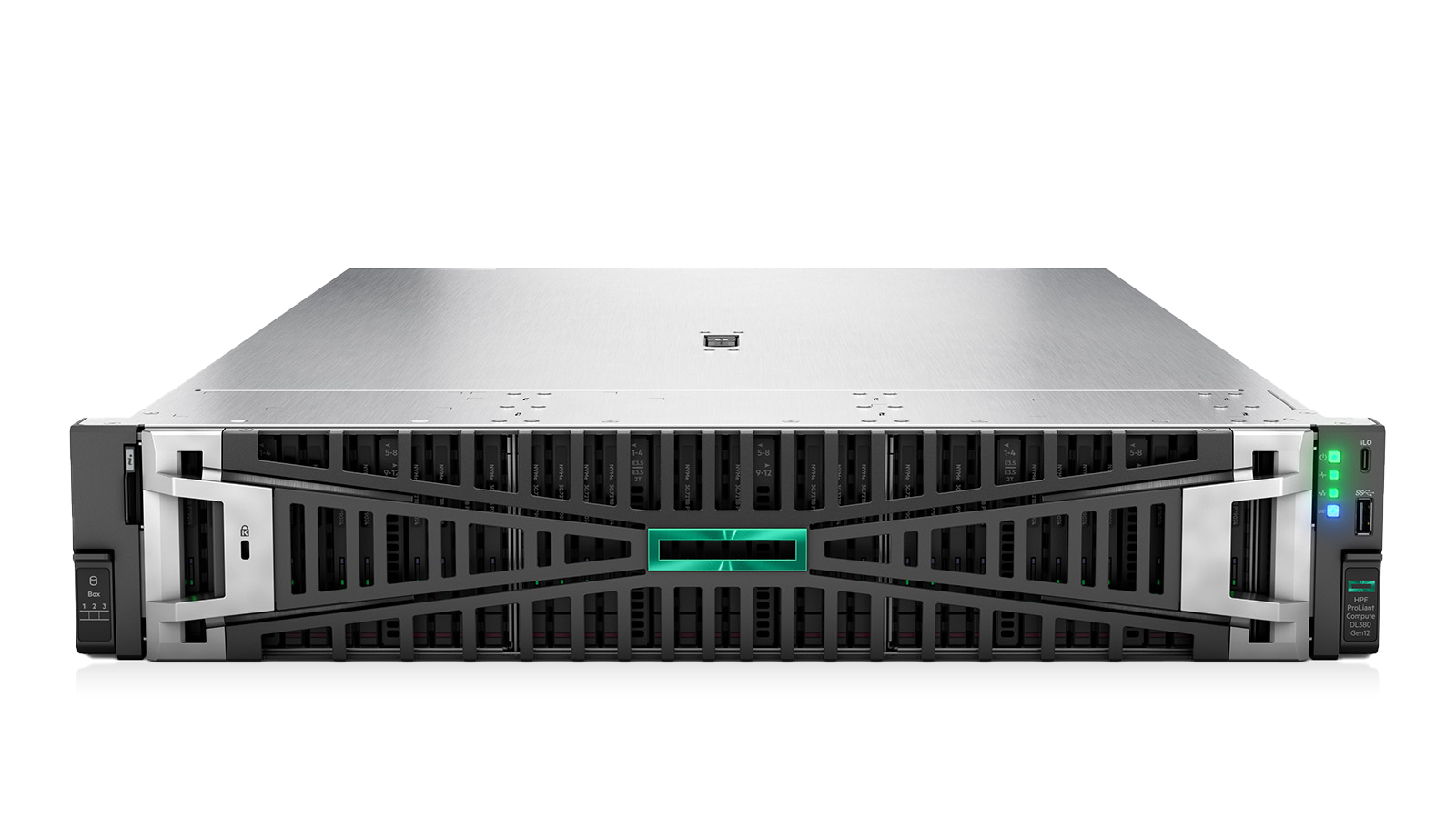
HPE ProLiant Compute DL380 Gen12
The flagship 2U dual-socket server for the broadest set of enterprise and hybrid cloud workloads, with room for up to 36 EDSFF drives.
2U, 2P Intel Xeon 6 (up to 144 cores), up to 8TB DDR5, up to 36 E3.S NVMe, PCIe Gen5
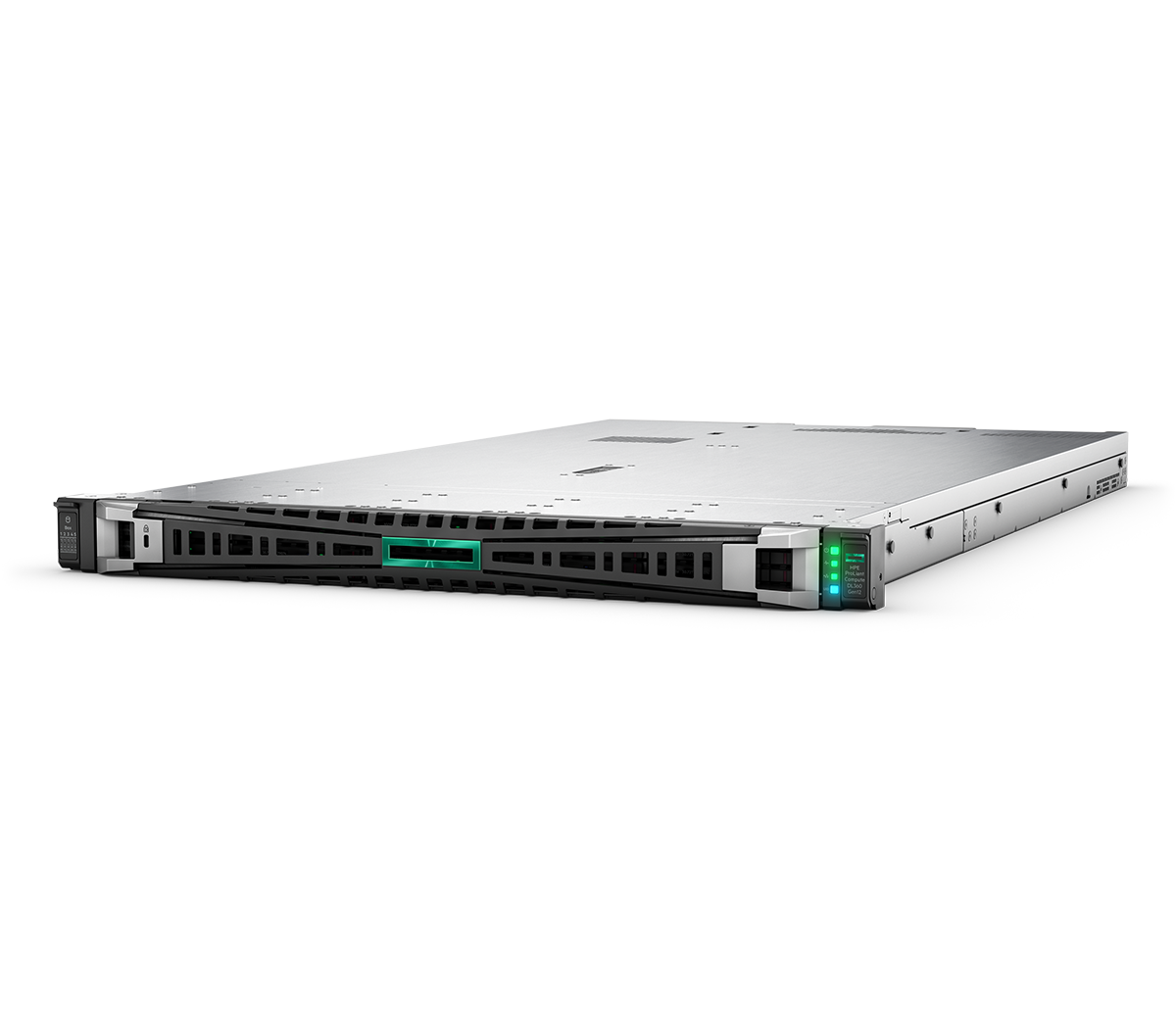
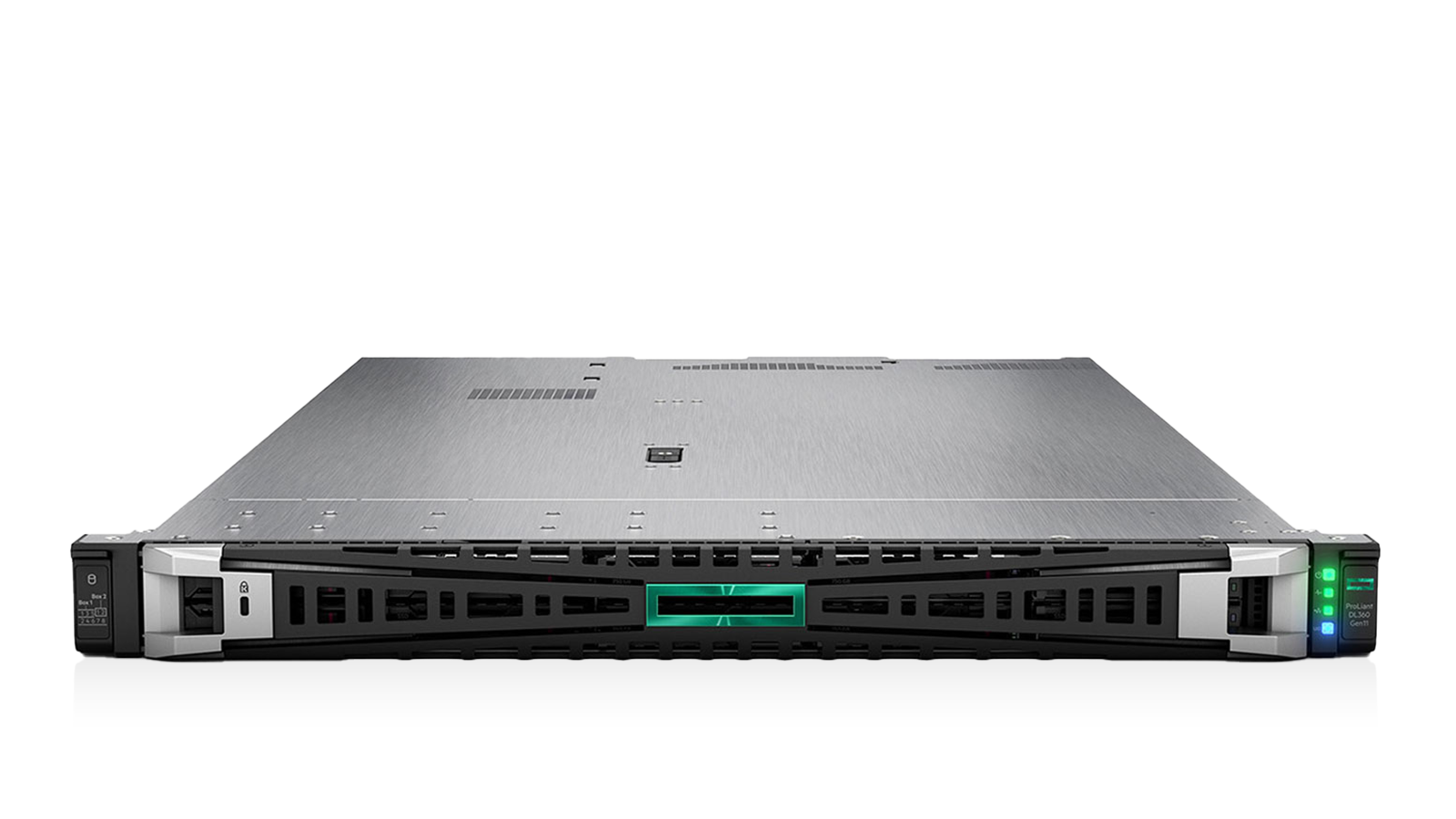
HPE ProLiant Compute DL360 Gen12
Compute-dense 1U workhorse for virtualization, VDI, and hybrid cloud where rack space is tight.
1U, 2P Intel Xeon 6 (up to 144 cores), up to 8TB DDR5, up to 20 E3.S NVMe
HPE ProLiant Compute DL380a Gen12
4U AI inferencing powerhouse claiming eight number-one MLPerf Inference v6.0 positions, built for GPU scale-out.
4U, 2P Intel Xeon 6 (up to 144 cores), up to 10 double-wide GPUs (H100 NVL, H200, RTX PRO 6000), up to 8TB DDR5
HPE ProLiant Compute DL325 Gen12
Single-socket 1U AMD server delivering huge core counts where power and rack space are limited.
1U, 1P 5th Gen AMD EPYC (up to 192 cores), up to 6TB DDR5, iLO 7
HPE ProLiant Compute ML350 Gen12
Rack-convertible two-socket tower for growing SMB and edge sites needing internal expansion.
Tower/4U, 2P Intel Xeon 6700/6500 P-series (up to 86 cores/socket), up to 8TB DDR5
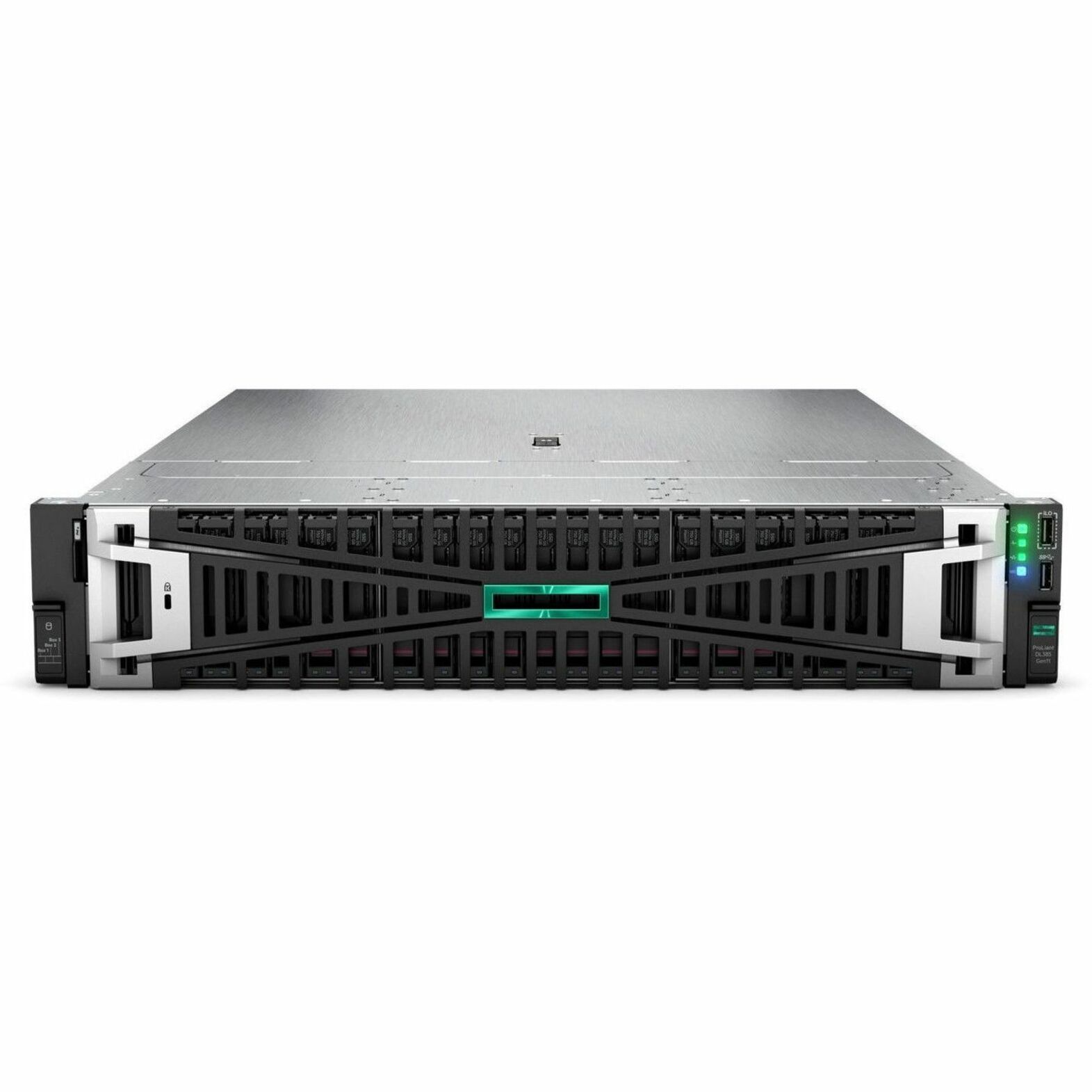
HPE ProLiant DL385 Gen11
Two-socket AMD EPYC flagship still leading MLPerf Inference and TPC-H price-performance benchmarks, no Gen12 successor yet.
2U, 2P 4th/5th Gen AMD EPYC (up to 160 cores), up to 6TB DDR5, PCIe Gen5, iLO 6
HPE ProLiant DL360 Gen11
Proven 1U rack server for EDA, CAD, and containerized apps still shipping alongside Gen12.
1U, 2P 4th/5th Gen Intel Xeon Scalable (up to 64 cores), up to 8TB DDR5, iLO 6
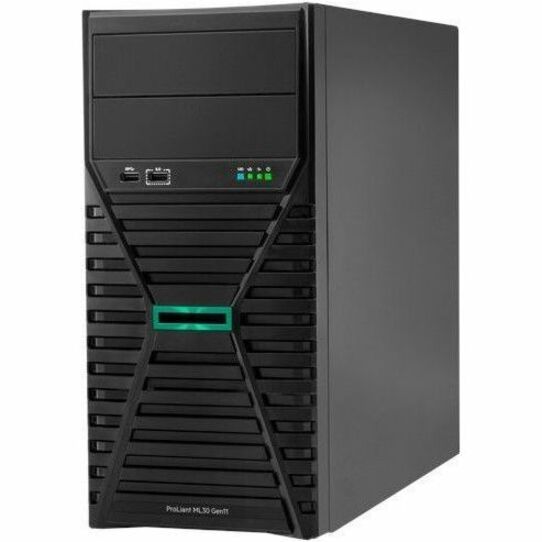
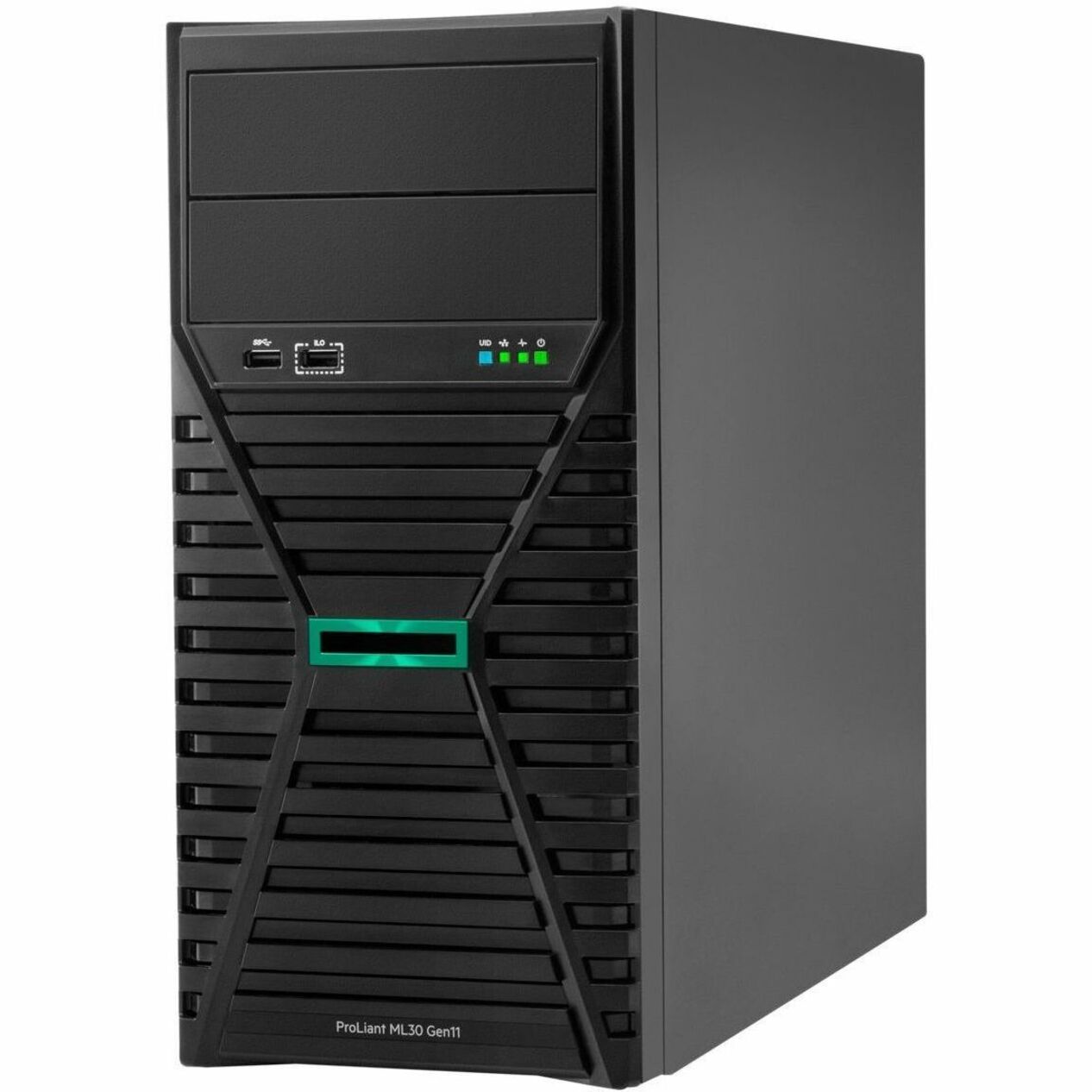
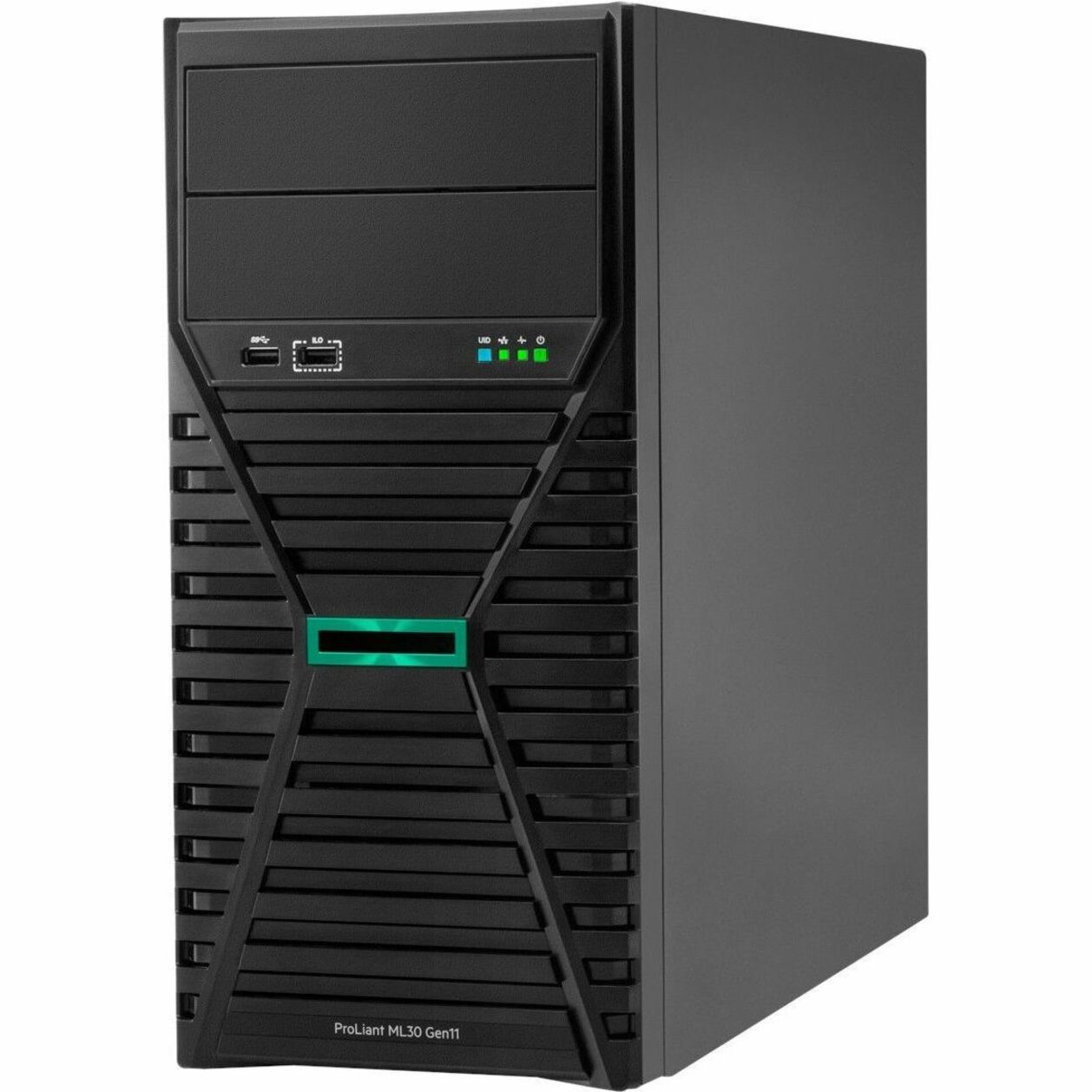
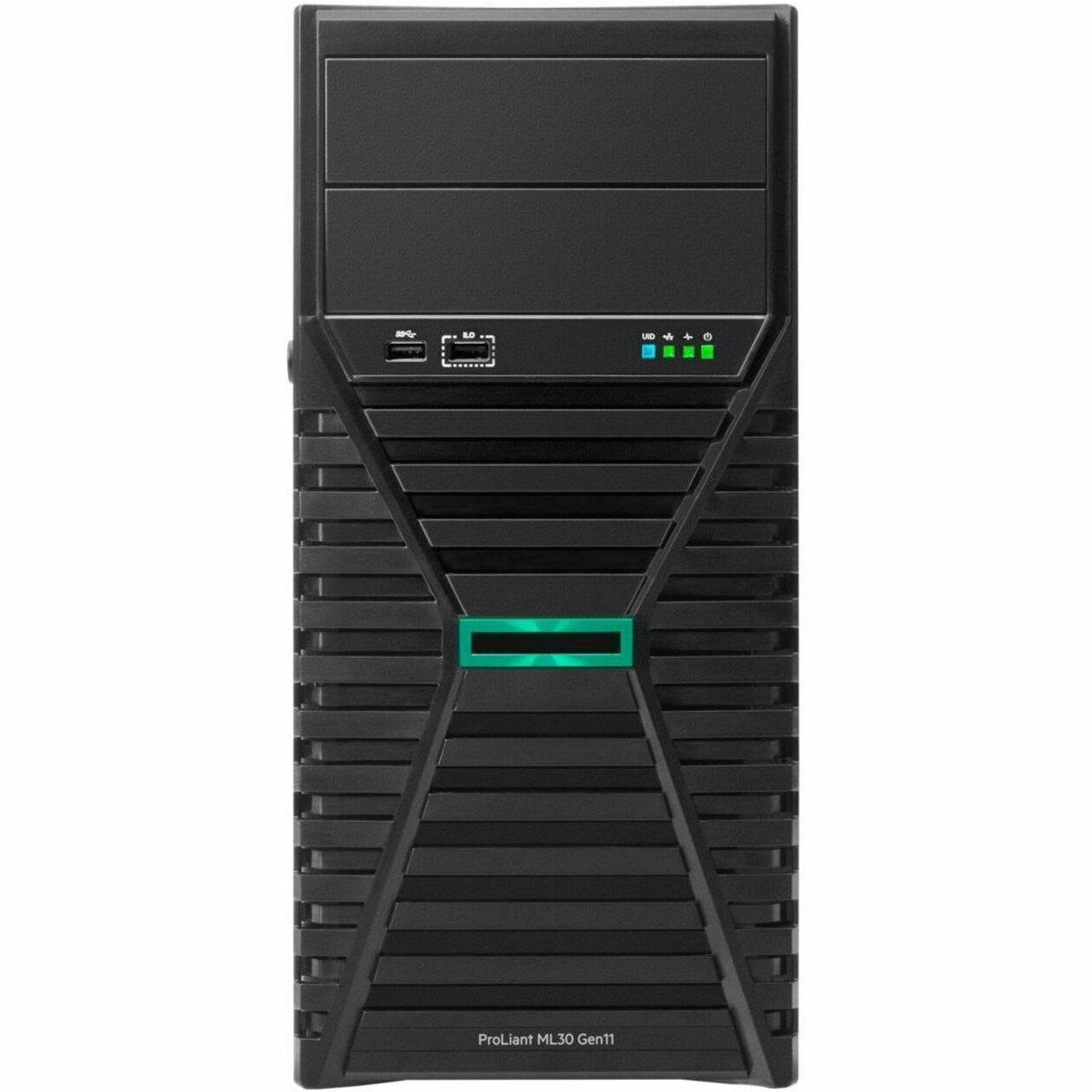
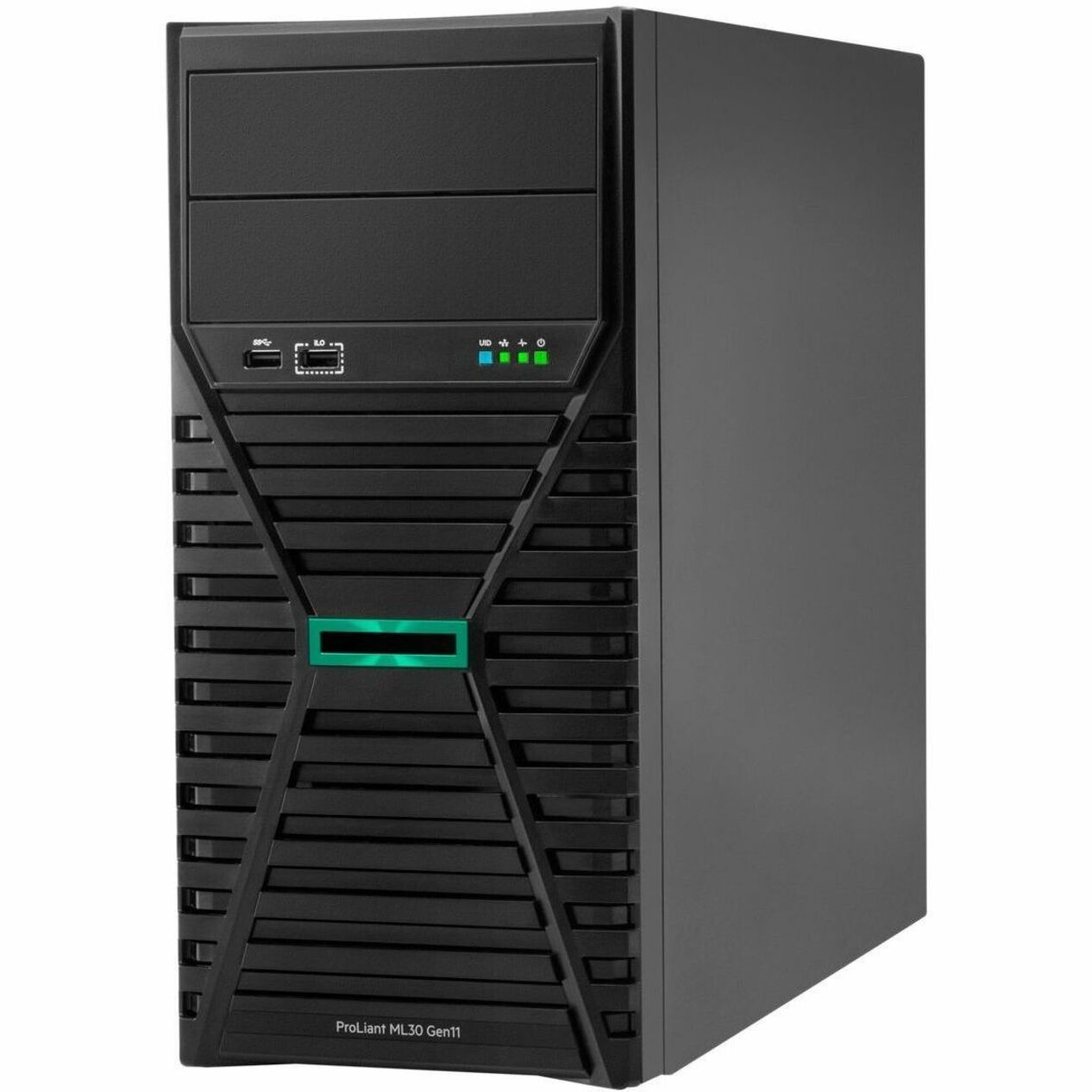
HPE ProLiant ML30 Gen11
Entry tower for first servers and edge sites, quiet and affordable with optional GPU, still HPE's current small-office answer.
Tower, 1P Intel Xeon 6/Xeon E-2400 (up to 12 cores), up to 128GB DDR5, optional RTX A400 GPU
At a glance
- Processors (Gen12)
- Intel Xeon 6 (up to 144 cores) or 5th Gen AMD EPYC (up to 192 cores)
- Processors (Gen11)
- 4th/5th Gen Intel Xeon Scalable (up to 64 cores) or 4th/5th Gen AMD EPYC (up to 160 cores)
- Memory
- Up to 8 TB DDR5 at up to 6400 MT/s
- Storage
- EDSFF E3.S, SFF, and LFF; NVMe, SAS, SATA
- I/O
- PCIe Gen5, OCP 3.0 NICs
- Form factors
- 1U/2U/4U rack, tower, rack-convertible tower, mini-tower edge
- Management
- HPE iLO 7 (Gen12) or iLO 6 (Gen11), HPE Compute Ops Management
- Generations shipping
- Gen12 (DL320/325/340/345/360/380/380a/580, ML350) and Gen11 (DL385, DL560, ML30, ML110, MicroServer) both current
- Cooling
- Air-cooled standard; direct liquid cooling optional on select Gen12 rack models
- Consumption
- Capital purchase or pay-per-use via HPE GreenLake
Up to 41% better performance per watt
Gen12 vs. legacy enterprise servers, per HPE's Feb 2025 launch announcement(vendor-published figure)
Up to 192 cores
5th Gen AMD EPYC on DL325 Gen12, single-socket(vendor-published figure)
How to buy HPE ProLiant Servers
ProLiant is sold as a capital purchase through standard HPE price lists and contract vehicles, or consumed pay-per-use through HPE GreenLake, with GPC, GSA, and GPC direct paths available for eligible federal, SLED, and healthcare buyers.
Direct purchase, build-to-order
Configure processor, memory, storage, and NIC per node and buy outright. TAA-compliant configurations are available for federal and defense procurement where country-of-origin matters.
HPE GreenLake pay-per-use
Consume ProLiant capacity as a metered service with buffer capacity on site. Useful when workload demand is seasonal or budget needs to track actual usage instead of a large up-front outlay.
Contract vehicles: GPC, SAP, FAR, GPC direct, GPC
Federal and defense buyers can acquire ProLiant via GPC direct, SAP, FAR-based purchase orders, or GSA eBuy, and smaller orders can move through the Government Purchase Card for fast turnaround.
HPE Tech Care and Compute Ops Management attach
Pair every server with a Tech Care support tier and Compute Ops Management so firmware baselines, monitoring, and support cases are handled from one console instead of per-box.
Trade-in and refresh financing
HPE Financial Services lifecycle programs let you roll aging Gen9/Gen10 fleets into new Gen11 or Gen12 nodes with financing terms matched to the refresh cycle.
Where it fits
Frequently asked
Is HPE ProLiant Gen12 the current generation, or is Gen11 still the right buy?
Both are current and both are the right buy depending on the model. HPE introduced Gen12 in February 2025 with Intel Xeon 6 across DL320, DL360, DL380, DL380a, DL580, and ML350, then added AMD EPYC Gen12 models (DL325, DL345) in mid-2025. But DL385 (2-socket AMD flagship), DL560 (4-socket Intel), and the entry towers ML30, ML110, and MicroServer remain Gen11 with no Gen12 successor announced yet, so Gen11 is the current, correct answer in those segments, not a legacy fallback.
What is actually new in HPE iLO 7 versus iLO 6?
iLO 7 adds a dedicated secure enclave processor and is the first server management controller HPE has shipped with quantum-computing-resistant readiness, built to meet FIPS 140-3 Level 3 requirements using hash-based cryptography. iLO 7 ships only on Gen12 models; DL385 Gen11, DL560 Gen11, and the Gen11 towers still run iLO 6, which remains fully supported and Silicon Root of Trust protected.
Should I choose a DL360 Gen12 or a DL380 Gen12?
The DL360 Gen12 is a 1U, two-socket server best when rack density matters and you need a compact node with up to 20 EDSFF drives. The DL380 Gen12 is a 2U server with room for up to 36 EDSFF drives, more GPU slots, and rear storage options, making it the more flexible default for mixed enterprise and hybrid cloud workloads. Both run the same Intel Xeon 6 processors up to 144 cores.
When does an AMD EPYC ProLiant make sense over Intel Xeon 6?
AMD EPYC ProLiant models deliver the highest core counts per socket for dense virtualization and consolidation. The single-socket DL325 Gen12 and DL345 Gen12 both reach up to 192 cores on 5th Gen AMD EPYC with up to 6 TB of DDR5, while the two-socket DL385 Gen11 scales to 160 cores and has repeatedly placed first in MLPerf Inference and TPC-H price-performance benchmarks. Intel Xeon 6 models can be the better fit for per-core-licensed software or specific accelerator-tuned workloads.
What is the HPE ProLiant DL380a Gen12 built for?
The DL380a Gen12 is a 4U, dual-socket server purpose-built for AI training and inference, supporting up to 10 double-wide GPUs including NVIDIA H100 NVL, H200, L40S, and RTX PRO 6000 Blackwell Server Edition, with three dedicated GPU power domains and direct liquid cooling. It claimed eight number-one positions in MLPerf Inference v6.0 llama-focused tests, making it the AI inferencing workhorse of the current ProLiant lineup.
Do ProLiant tower servers still make sense for a small office in 2026?
Yes. The ML30 Gen11 and MicroServer Gen11 remain HPE's current entry towers for small offices and edge sites, both now offering Intel Xeon 6 or Xeon E-2400 options with optional NVIDIA RTX A400 GPU support. The ML350 Gen12 scales up as a two-socket, rack-convertible tower for growing mid-size sites needing up to 8 TB of DDR5 and 24 NVMe drives.
How do I manage a mixed Gen11 and Gen12 ProLiant fleet across sites?
HPE Compute Ops Management is a cloud console that monitors, updates, and secures ProLiant servers regardless of generation, from data center to edge. It applies firmware baselines and configuration policies fleet-wide and is stated to cut maintenance effort by up to 75%, so a mixed Gen11/Gen12 estate still behaves like one managed platform.
Where can a federal or SLED buyer get a formal ProLiant quote from Uniqcli?
Request pricing directly through Uniqcli's quote workflow at /quote, where you can specify the ProLiant model, processor, memory, and storage configuration along with any GPC direct, SAP, FAR-based orders, or GSA eBuy requirements. Uniqcli, as an authorized HPE partner, scopes the exact build and returns a configured quote rather than a generic price list.
Can I buy ProLiant servers as a service instead of paying up front?
Yes. Through HPE GreenLake you can consume ProLiant compute pay-per-use with capacity staged on site, paying for what you use while HPE manages buffer capacity. Uniqcli can model whether a capital purchase or GreenLake consumption fits your budget cycle and growth plans.
Works with
ProLiant servers rarely stand alone. They connect into HPE's broader compute, storage, networking, and management fabric so a rack, a fleet, or a full data center runs as one coordinated system rather than isolated boxes.
Compare before you buy
All comparisonsHPE ProLiant DL360 Gen12 vs HPE ProLiant DL360 Gen11
DL360 Gen12 vs Gen11: 1U Xeon 6 Performance per Watt
HPE ProLiant DL380 Gen12 vs HPE ProLiant DL380 Gen11
DL380 Gen12 vs Gen11: Xeon 6 & PCIe Gen5 Compared
HPE ProLiant DL380a Gen12 vs HPE ProLiant DL380 Gen12
DL380a Gen12 vs DL380 Gen12: GPU AI vs 2U Workhorse
HPE ProLiant ML350 Gen12 vs HPE ProLiant ML30 Gen11
HPE ProLiant ML350 Gen12 vs ML30 Gen11 Tower Servers
Related in Compute
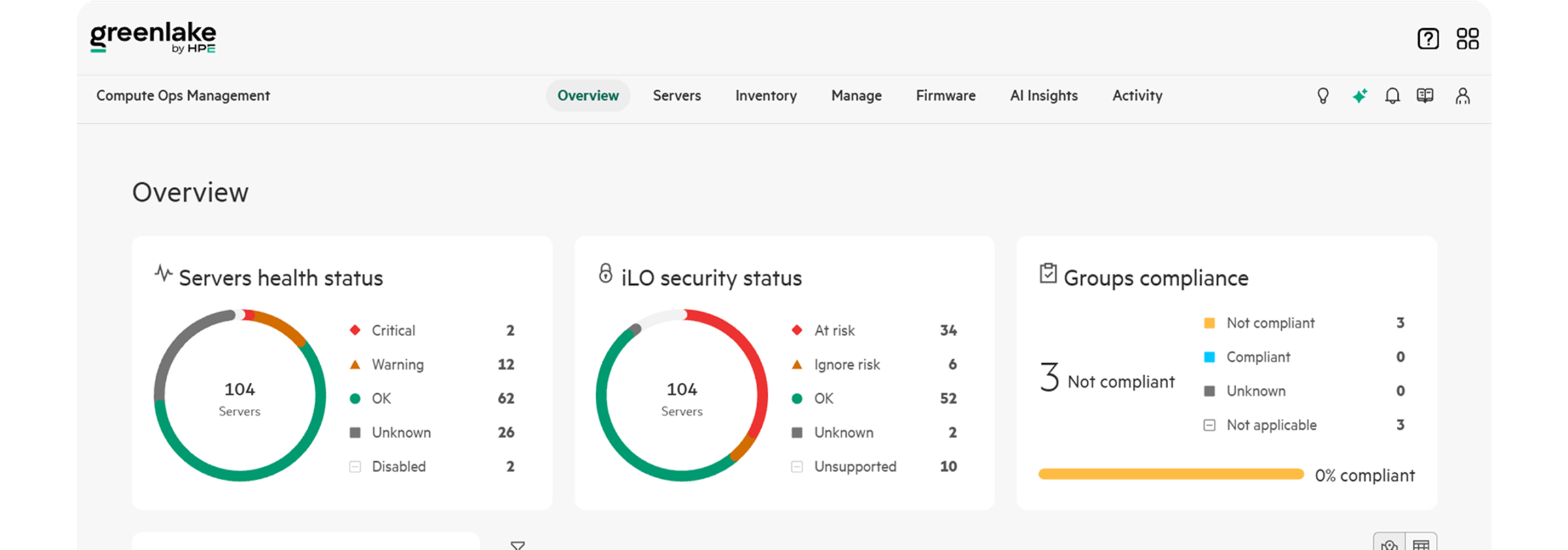
HPE Compute Ops Management
Run every HPE ProLiant server from one cloud console, data center to edge, now with cross-domain network visibility
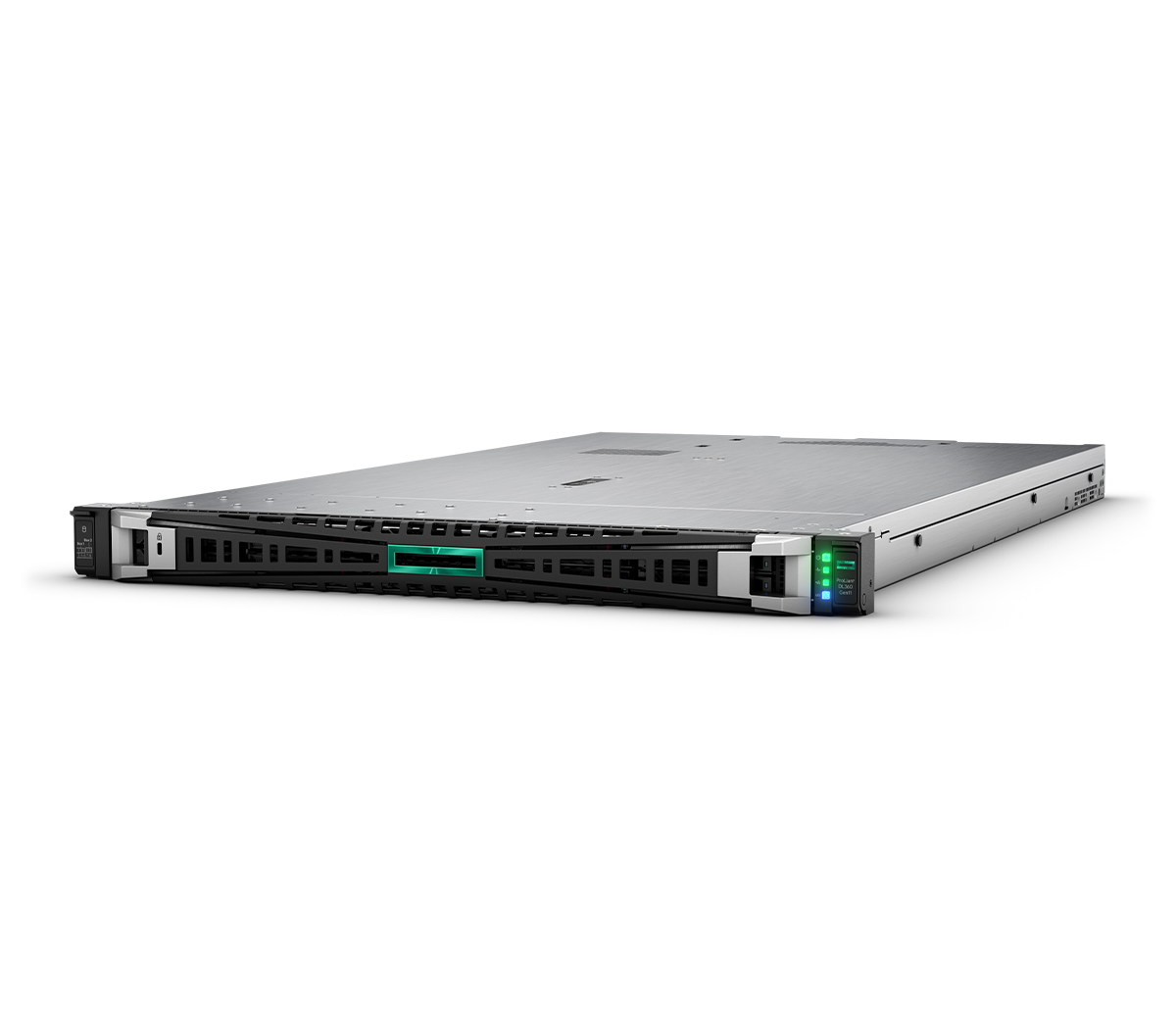
HPE ProLiant DL360 Gen11
1U dual-socket density for virtualization, VDI, and general-purpose compute at scale
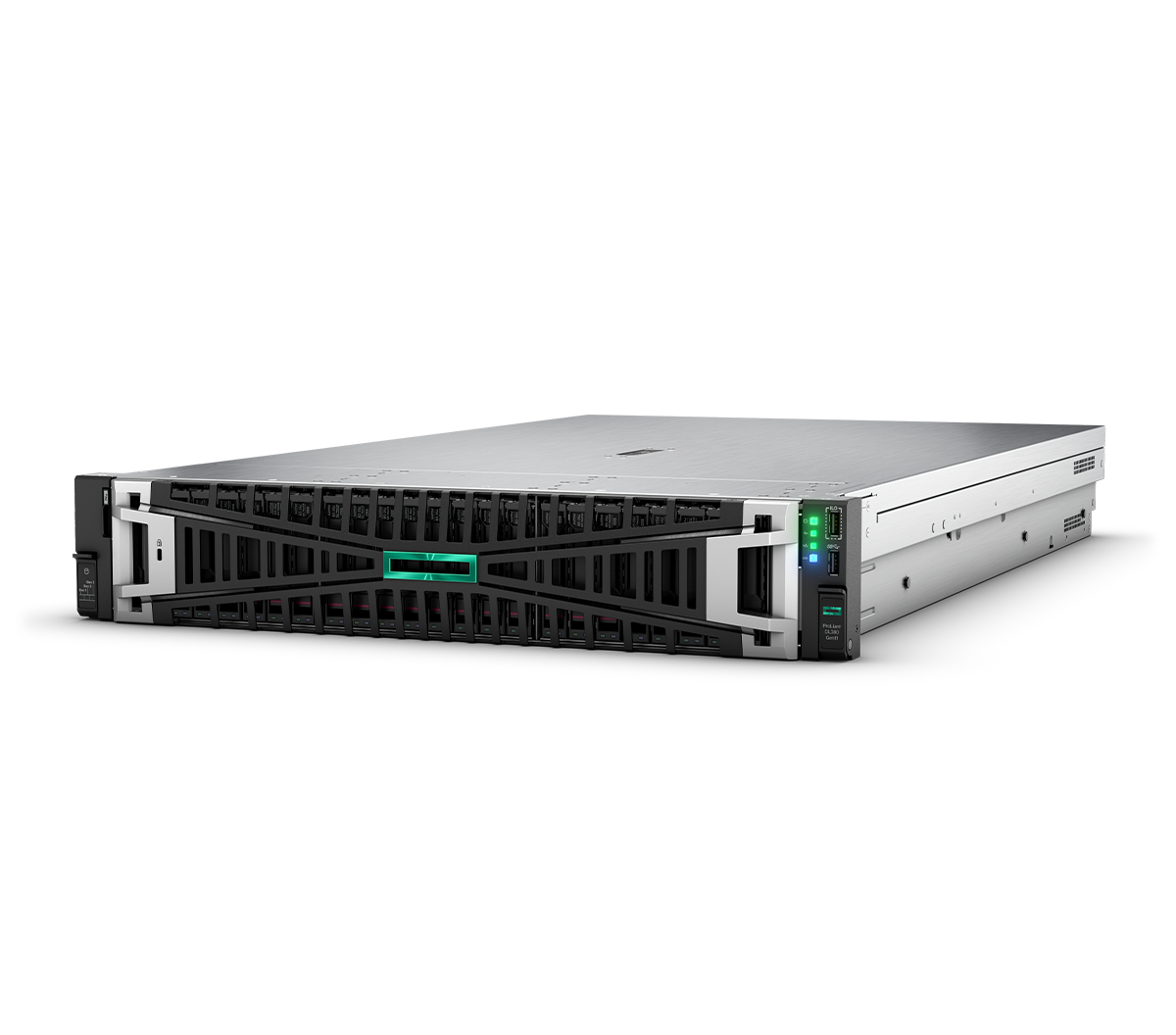
HPE ProLiant DL380 Gen11
The versatile 2U workhorse for virtualization, hybrid cloud, and mixed enterprise workloads
Shop HPE ProLiant Servers in the catalog
See all results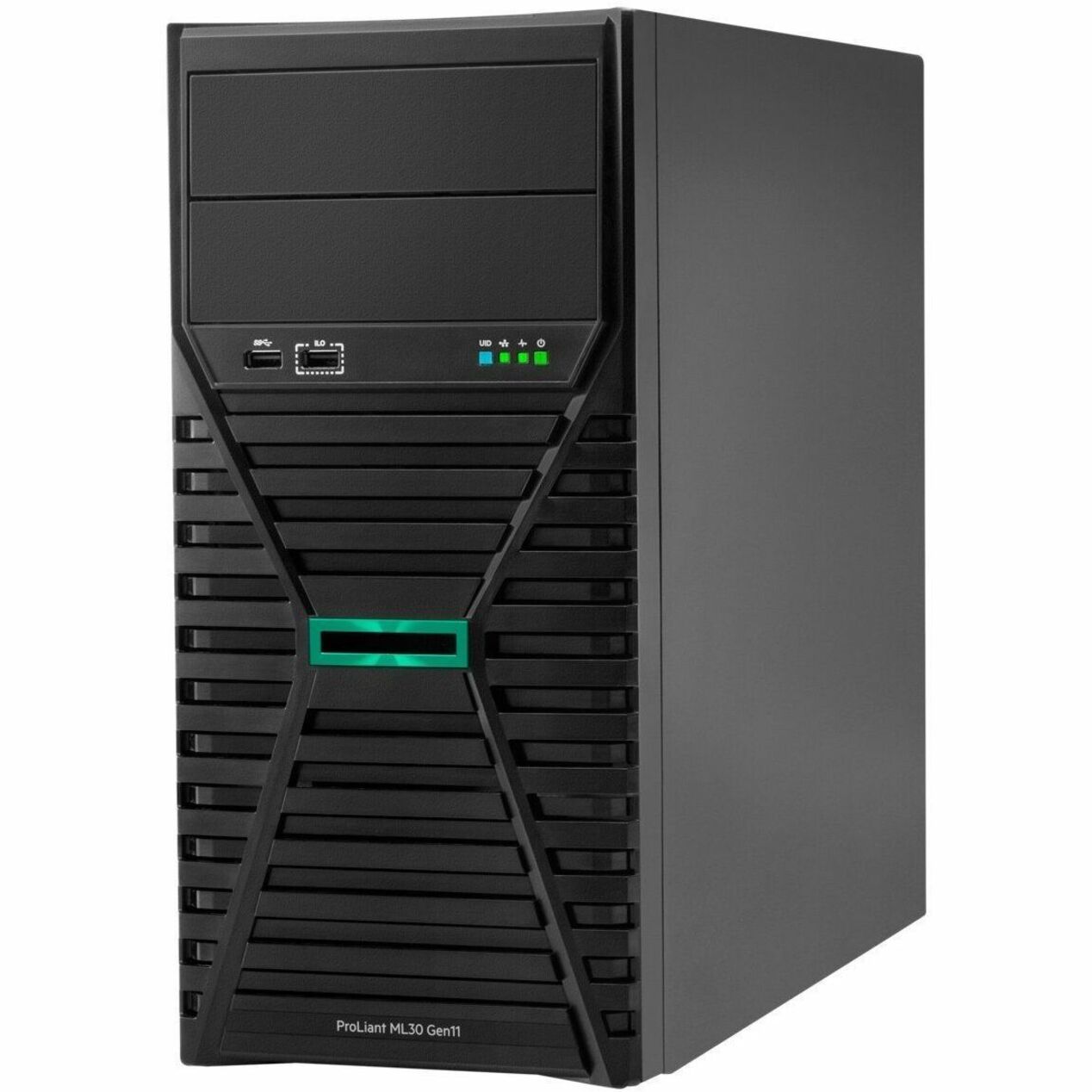
P65095-371
HPE ProLiant ML30 G11 4U Tower Server
P65096-001
HPE ProLiant ML30 G11 4U Tower Server
P65094-001
HPE ProLiant ML30 G11 4U Tower Server
P65397-001
HPE ProLiant ML30 G11 4U Tower Server
P65093-001
HPE ProLiant ML30 G11 4U Tower Server
P65097-001
HPE ProLiant ML30 G11 4U Tower Server
P83036-005
HPE ProLiant DL385 G11 2U Rack Server
P83035-005
HPE ProLiant DL365 G11 1U Rack Server
Build your HPE bill of materials.
Send us the requirement, the project, or an existing quote to beat. We come back with a validated, TAA-compliant HPE configuration and a real price, often below list.
connect [at] getuniqcli.com · Chicago, IL