
"Cutting Data Center Power Bills: Efficiency Gains with ProLiant Gen12 and Direct Liquid Cooling"
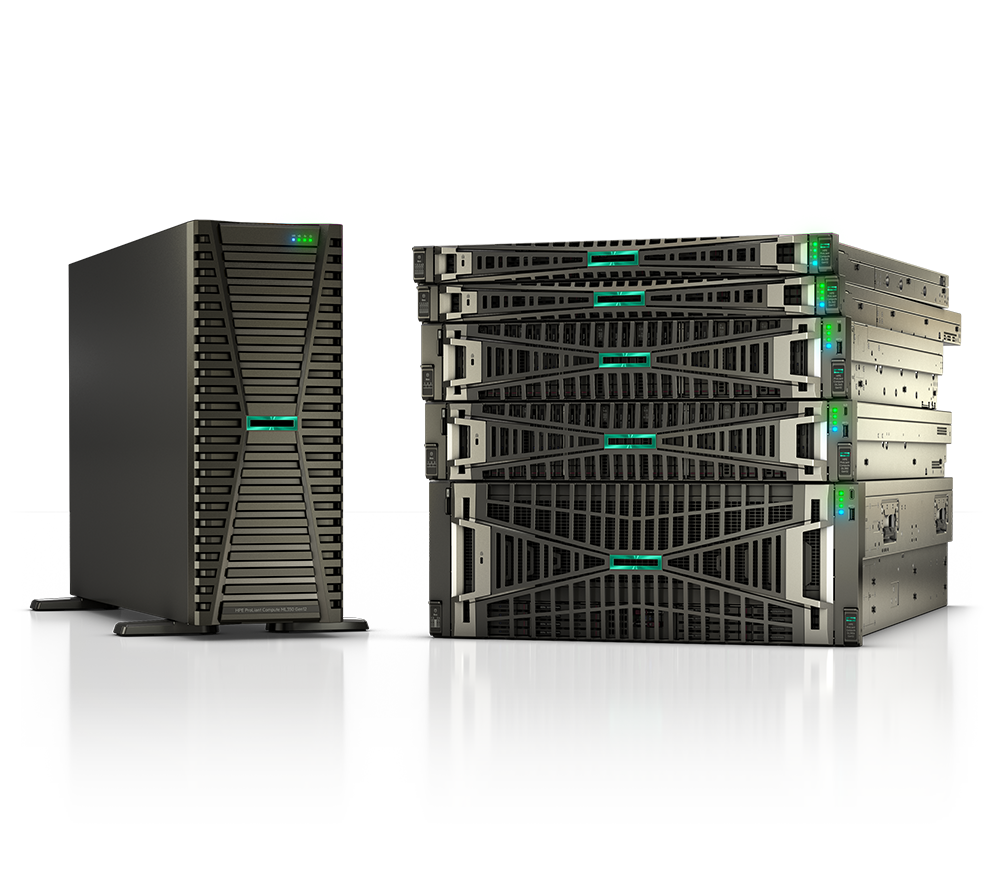
Power and cooling now dominate the data center budget conversation in a way compute never used to. As rack densities climb and energy prices stay volatile, the line item that surprises CFOs isn't the server purchase — it's the recurring electricity bill and the cooling infrastructure behind it. This post breaks down where the data center power savings actually come from when you pair ProLiant Gen12 efficiency with direct liquid cooling, and how procurement teams can quantify the case before they buy.
The hidden cost: why power and cooling outrun compute
A modern server's purchase price is a one-time event. The energy it draws — and the energy spent removing the heat it produces — recurs for the life of the asset, often five to seven years. In dense racks, cooling alone can consume a substantial fraction of total facility power, which is why Power Usage Effectiveness (PUE) has become the headline efficiency metric.
The problem compounds with age. A fleet of aging servers running at low utilization burns disproportionate power per useful unit of work. Every watt drawn at the chassis is a watt the cooling system must then carry away, so inefficiency at the server level cascades into the facility's HVAC load. For cost-pressured and sustainability-minded buyers alike, the fastest lever isn't a new chiller plant — it's modernizing the compute and cooling together.
ProLiant Gen12 efficiency: doing more work per watt
HPE ProLiant Compute Gen12 servers, built on Intel Xeon 6 processors, are engineered around performance-per-watt rather than raw clock speed alone. According to HPE, Gen12 with Xeon 6 P-core processors can deliver meaningful annual power savings versus legacy systems, with materially better performance per watt compared to older enterprise servers.
The practical implication for procurement is consolidation. Because each Gen12 node does more work per watt, you can retire several older servers and replace them with fewer, denser, more efficient ones. That consolidation ratio is where the energy story becomes a budget story:
- Fewer physical nodes means lower aggregate idle and active power draw.
- Fewer nodes means less heat to remove, lowering cooling load.
- Fewer nodes means reclaimed rack space, deferring or avoiding facility expansion.
- A smaller, newer fleet reduces software licensing tied to socket or core counts.
Models in the Gen12 lineup span the familiar workhorses — including the HPE ProLiant DL360, DL380, DL320, DL340, and the accelerator-ready DL380a — so consolidation can map cleanly onto whatever role your existing fleet plays today. You can browse the current generation on our products page or filter the full catalog by form factor and workload.
Direct liquid cooling from HPE: removing heat the efficient way
Air is a poor medium for moving heat. Direct liquid cooling (DLC) circulates coolant through cold plates mounted directly on the hottest components — CPUs, GPUs, memory — and liquid removes far more heat per unit volume than air ever can. That difference is what makes high-density and accelerated racks practical without runaway fan power.
HPE has pushed this further than most. In late 2024 the company announced what it described as the industry's first 100% fanless direct liquid cooling systems architecture, using an eight-element design that liquid-cools the GPU, CPU, full server blade, local storage, network fabric, rack, cluster, and coolant distribution unit. HPE's published figures for that architecture are the headline numbers worth taking to a budget meeting:
- Up to a 90% reduction in cooling power consumption versus traditional air cooling.
- Roughly a 37% reduction in cooling power per blade versus hybrid DLC alone.
- Roughly half the floor space, thanks to higher supported cabinet density.
That engineering pedigree isn't theoretical — HPE liquid-cooling technology underpins a majority of the most energy-efficient supercomputers on the Green500 list. For mainstream enterprise buyers, DLC options on Gen12 platforms (such as the DL380a) bring a scaled-down version of the same principle into standard racks.
Quantifying the savings before you buy
The strongest business case combines both levers. Gen12 cuts the watts you draw to get work done; DLC cuts the watts you spend removing the resulting heat. Here's a simplified way to frame the comparison for a refresh:
| Factor | Aging air-cooled fleet | ProLiant Gen12 + DLC |
|---|---|---|
| Performance per watt | Baseline | Significantly higher |
| Node count for same workload | Many | Consolidated (fewer) |
| Cooling power draw | High (fan + facility HVAC) | Much lower (liquid, minimal/no fans) |
| Rack / floor space | Higher | Reduced density footprint |
| PUE trajectory | Stagnant or rising | Improving |
| Sustainability reporting | Harder to move | Measurable kWh and carbon reductions |
To build a defensible estimate, gather three inputs: your current fleet's measured power draw (iLO and facility metering both help), your blended electricity cost per kWh, and your target consolidation ratio. Multiply the avoided watts by hours per year and your kWh rate, then layer in the cooling reduction. The cooling line is often where the surprise upside lives — and it's the line most teams forget to model. When you're ready to put real numbers against your environment, request a sizing analysis through our quote flow.
How Uniqcli helps
Uniqcli is an authorized reseller of HPE, HPE Aruba Networking, and HPE Juniper Networking, and we work with US federal, SLED, healthcare, and enterprise buyers end to end on data center modernization.
- Scope and sizing. We assess your current fleet's power and cooling profile, model the consolidation ratio with Gen12, and identify which workloads justify DLC versus standard air cooling — so you don't over-buy cooling you won't use.
- Procurement vehicles. We support TAA-compliant, GSA Schedule, SEWP, and E-Rate purchasing where applicable, and we help map configurations to the right contract vehicle to keep acquisition clean and auditable.
- Quote and configure. Get accurate, build-to-order Gen12 and DLC configurations through our quote process, or compare platforms side by side before you commit.
- Deploy and support. From staging and rack integration to lifecycle support, we stay engaged past the PO so the efficiency gains you modeled actually show up on the bill.
Start with the catalog to scope hardware, or reach out for a power-and-cooling assessment tailored to your facility.
FAQ
How much can ProLiant Gen12 actually cut my power bill? It depends on what you're replacing and your electricity rate, but the savings come from two stacked effects: higher performance per watt (fewer servers doing the same work) and lower cooling load (less heat to remove). HPE cites substantial annual power savings for Gen12 with Xeon 6 P-core versus legacy systems; the right way to size it is a fleet-specific model using your measured draw and kWh cost.
Do I need direct liquid cooling, or is air cooling still fine? Most standard enterprise workloads still run well on air. DLC pays off as rack density climbs — especially with accelerated/AI workloads or when facility cooling capacity is the bottleneck. We help you determine the crossover point for your environment so you cool efficiently without over-investing.
Can these solutions be purchased on government contract vehicles? Yes. We support TAA-compliant procurement and common public-sector vehicles including GSA, SEWP, and E-Rate where eligible, and we'll help align your Gen12 and DLC configuration to the appropriate vehicle.
How do power and cooling savings support sustainability reporting? Lower kWh consumption translates directly into reduced carbon output, and an improving PUE is a defensible, auditable metric. Consolidating onto fewer efficient nodes plus DLC gives you concrete energy and emissions reductions you can document for ESG and compliance reporting.