
"Planning a VMware Exit: Sizing HPE ProLiant for Morpheus VM Essentials"
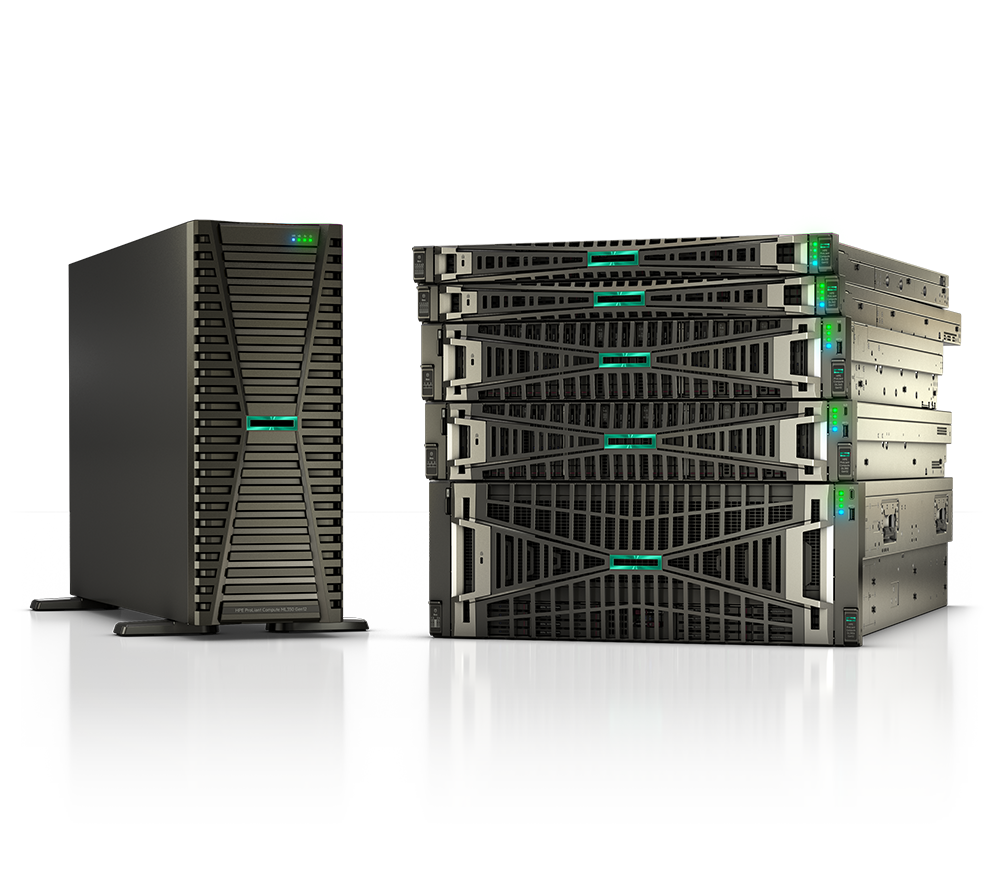
Broadcom's repackaging of VMware into core-based subscription bundles has pushed a lot of IT and procurement teams to seriously evaluate a VMware exit for the first time in a decade. If you are weighing a VMware alternative, HPE Morpheus VM Essentials paired with ProLiant Gen12 hosts is one of the most direct migration paths on the market. This guide walks through the sizing math, the licensing model, and the procurement steps so you can build a credible plan instead of a guess.
Why teams are planning a VMware exit
The driver is rarely the technology. vSphere still works. The problem is the commercial model: per-core licensing, minimum core counts per CPU, and subscription bundles that fold in products most teams never deploy. On modern high-core processors, a renewal quote can land several times higher than the perpetual licensing it replaced.
That is the opening for HPE Morpheus VM Essentials. It is a KVM-based hypervisor (the HVM hypervisor) with an enterprise management layer that delivers the features that actually matter day to day: high availability, live migration, intelligent VM placement, and storage integration over NFS, iSCSI, and Fibre Channel. Critically for the budget conversation, it is licensed per socket rather than per core, with a published US list price around $600 per CPU socket per year and 1, 3, and 5-year subscription terms. On a dual-socket host with 64 cores per CPU, per-socket pricing is dramatically cheaper than per-core competitors.
How HPE Morpheus VM Essentials fits
VM Essentials is not a rip-and-replace gamble. The same management plane can provision and operate native HVM clusters alongside an existing VMware estate, so you can migrate workloads in phases instead of cutting over a whole data center in one weekend. That side-by-side model is what makes a VMware exit realistic for risk-averse healthcare, federal, and SLED environments where change windows are tight.
The platform also covers the operational glue teams forget to budget for: IPAM and DNS integration, plus day-2 automation through Bash and PowerShell. For a fuller picture of HPE's virtualization direction, see HPE's Morpheus VM Essentials materials, then map it against the hardware below.
Sizing ProLiant Gen12 hosts for the new hypervisor
The hardware side is where most exit plans go wrong. Teams either over-buy (paying for cores they will never schedule) or under-buy on memory and stall the consolidation ratio. HPE ProLiant Gen12 rack servers are the reference platform HPE and Intel have validated for Morpheus VM Essentials, so they are the safest starting point.
Two workhorse models cover the vast majority of virtualization estates:
- HPE ProLiant DL360 Gen12 — a 1U, dual-socket platform on Intel Xeon 6. Dense and rack-efficient; best where rack units are scarce and per-host storage needs are modest.
- HPE ProLiant DL380 Gen12 — a 2U, dual-socket platform on Intel Xeon 6 with more drive bays and expansion. The default for general-purpose virtualization, mixed I/O, and VDI.
Both support up to 144 cores and up to 8 TB of DDR5 across 16 DIMM channels per processor at speeds up to 6400 MT/s. Use this as your sizing framework:
- Count usable vCPU, not raw cores. Plan a consolidation ratio (commonly 3:1 to 5:1 vCPU-to-physical-core for general server workloads, closer to 1:1 for latency-sensitive databases) and leave headroom for HA failover.
- Size memory first — it is usually the binding constraint. Sum the RAM of all VMs on a host, add roughly 20-25% for hypervisor overhead and burst, then confirm DIMM population hits the right channels for full bandwidth.
- Right-size sockets to the license. Because VM Essentials is per-socket, fewer high-core CPUs can lower licensing cost versus more lower-core CPUs delivering the same total cores. Model both.
- Plan storage and network for live migration. NFS, iSCSI, or FC plus adequate east-west bandwidth keeps live migration and HA fast.
How to choose: DL360 vs DL380 Gen12
| Decision factor | DL360 Gen12 (1U) | DL380 Gen12 (2U) |
|---|---|---|
| Best for | Dense racks, edge, scale-out | General virtualization, VDI, mixed I/O |
| Form factor | 1U, dual-socket | 2U, dual-socket |
| CPU (Intel Xeon 6) | Up to 144 cores | Up to 144 cores |
| Max memory | Up to 8 TB DDR5 | Up to 8 TB DDR5 |
| Internal storage | Modest, NVMe-focused | More bays, greater flexibility |
| Expansion (PCIe/GPU) | Limited | Larger, GPU-capable |
| Typical role | Compute-dense host | Default consolidation host |
A common pattern: standardize on DL380 Gen12 for the core virtualization cluster, and use DL360 Gen12 where rack density or smaller remote sites favor 1U. Browse current configurations on our products page, compare specs in the catalog, or run a side-by-side on the compare tool.
Building the migration and budget plan
A defensible VMware exit plan has four moving parts that procurement will ask about:
- Hardware refresh timing. If your hosts are nearing refresh anyway, fold the hypervisor change into the Gen12 buy so you pay one project cost, not two.
- License math, side by side. Put your current VMware renewal next to per-socket VM Essentials across a 3 or 5-year term. The socket-vs-core difference is where the business case is won.
- Phased cutover. Run VM Essentials alongside vSphere, migrate non-critical workloads first, validate HA and live migration, then move production.
- Support and warranty. Match HPE server support (Tech Care / Foundation Care) terms to the subscription length so coverage does not lapse mid-lifecycle.
How Uniqcli helps
Uniqcli is an authorized HPE reseller, and we scope VMware exits end to end so the plan holds up in both the data center and the contracts office.
- Scope and sizing. We translate your current VMware inventory into a right-sized ProLiant Gen12 design — socket counts, DIMM population, storage, and HA headroom — so you are not paying for idle cores or starving memory.
- Licensing. We model per-socket HPE Morpheus VM Essentials against your VMware renewal across 1, 3, and 5-year terms so the savings are documented, not assumed.
- Procurement. We deliver TAA-compliant configurations and quote through the vehicles you already use — GSA, NASA SEWP, E-Rate for K-12, and SLED cooperatives — so federal, SLED, and healthcare buyers stay compliant.
- Deploy and support. Factory-integrated builds, migration support for the phased cutover, and HPE support terms matched to your subscription length.
Start with a configured quote and we will return a sized bill of materials with the license and support lines spelled out.
FAQ
Is HPE Morpheus VM Essentials a true VMware replacement? For most server virtualization workloads, yes. It provides HA, live migration, intelligent placement, and shared-storage support over NFS/iSCSI/FC, and it can manage VMware and HVM side by side during migration. Validate any specialized vSphere features your environment depends on before committing.
How is the licensing different from VMware? VM Essentials is licensed per CPU socket, not per core, with a published US list price around $600 per socket per year and 1/3/5-year terms. On high-core CPUs, per-socket pricing is typically far cheaper than per-core models.
Which ProLiant Gen12 server should I standardize on? Most teams pick the DL380 Gen12 (2U) as the default consolidation host for its storage and expansion flexibility, and add DL360 Gen12 (1U) where rack density matters. Both run Intel Xeon 6 with up to 144 cores and up to 8 TB of DDR5.
Can we migrate gradually instead of all at once? Yes. Run VM Essentials alongside your existing vSphere estate, migrate workloads in phases, validate HA and live migration, then cut over production. The single management plane is what makes the phased approach practical.