
"FY26 Server Refresh Budget Planning: A CIO Checklist for ProLiant and Alletra"
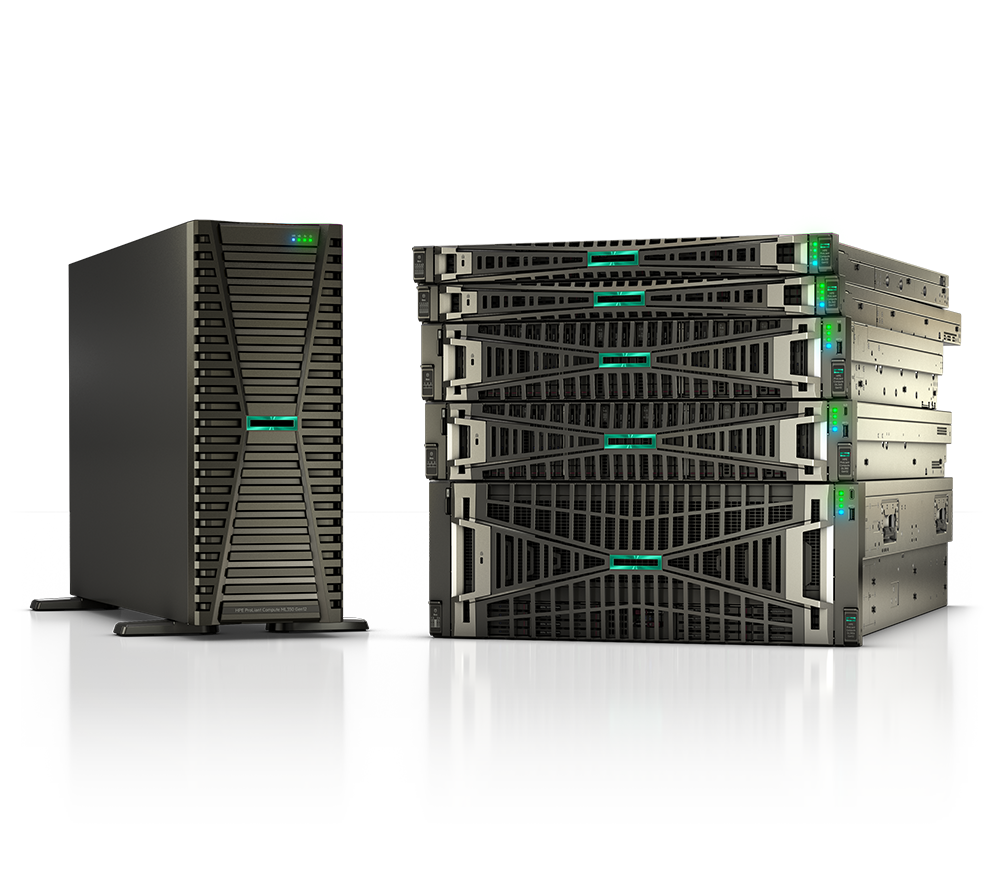
Server refresh budget planning is rarely about the hardware line item alone. By the time an FY26 IT budget lands on a CIO's desk, the harder questions are timing: when does the asset fully depreciate, when does support lapse, how long until racks ship, and whether power and cooling can absorb the new gear. This guide walks through a ProLiant refresh planning checklist that ties HPE compute and Alletra storage decisions to the calendar and the capital plan, so your FY26 numbers survive contact with finance, facilities, and the supply chain.
Start with depreciation and support timing, not the spec sheet
The cleanest way to anchor a data center refresh checklist is to map every chassis against two dates: when it finishes depreciating, and when HPE support ends. Most enterprises run servers on a 4-to-5-year capital schedule, while many federal and SLED agencies hold assets through a longer useful-life window. Either way, the budgetary trigger is the overlap between book value hitting zero and the platform aging out of standard support.
For HPE compute, that usually means ProLiant Gen9 and Gen10 are now squarely in refresh territory, with Gen10 Plus following close behind. Pulling your install base into a single sheet — model, purchase date, depreciation end, support tier, warranty expiration — turns IT capital planning from guesswork into a ranked queue. Anything past book value and approaching end of support goes to the top of the FY26 list; anything with two-plus years of runway can wait for FY27.
Build the same view for storage. Legacy 3PAR, Primera, and Nimble arrays should be on this list, and HPE's current direction points refreshes toward the Alletra Storage MP family — the B10000 for disaggregated scale-out block and the X10000 for high-performance object. Treating storage and compute refreshes on one timeline avoids the classic trap of buying new servers that then bottleneck on an array you'll replace six months later.
Right-size to Gen12 instead of replacing one-for-one
A one-for-one swap almost always overspends. HPE ProLiant Compute Gen12 — built on Intel Xeon 6 across the DL320, DL340, DL360, DL380, DL380a, and ML350, plus AMD EPYC-based DL325 and DL345 models — delivers large per-node consolidation gains over Gen9 and Gen10-era hardware. HPE positions a single Gen12 node as replacing roughly seven Gen10 servers for equivalent compute, with meaningful annual power savings.
For budgeting, that consolidation is the lever. Before you size FY26, model the refresh as a reduction in node count, not a replacement:
- Inventory current core, memory, and IOPS utilization per workload — not nameplate capacity.
- Group workloads by profile: general virtualization, memory-bound databases, edge, and any GPU/AI inference.
- Map each group to the leanest Gen12 SKU that clears the requirement with headroom.
The AMD EPYC DL325 and DL345 are aimed at memory-intensive virtualization and edge with very high memory ceilings, while the Xeon 6 DL360/DL380 cover dense general-purpose consolidation. Sizing to actual utilization is typically where a refresh budget tightens by double-digit percentages.
How to choose: match the platform to the workload
Use the table below as a starting selection grid, then validate against your own utilization data and a formal quote.
| Workload profile | Suggested HPE platform | Why it fits | Budget watch-item |
|---|---|---|---|
| General virtualization / VDI consolidation | ProLiant DL360 / DL380 Gen12 | Dense 1U/2U Xeon 6, strong consolidation ratio | Right-size cores to actual vCPU demand |
| Memory-bound DBs, large virtualization, edge | ProLiant DL325 / DL345 Gen12 (AMD EPYC) | High memory ceiling, fewer sockets | Confirm DIMM population vs. licensing cost |
| AI inference / GPU-accelerated | ProLiant DL380a Gen12 | Built for accelerators | GPU lead times drive the schedule |
| Branch / remote / single-server site | ProLiant ML350 Gen12 (tower) | Quiet, flexible for edge sites | Standardize one SKU across sites |
| Scale-out block storage refresh | Alletra Storage MP B10000 | Disaggregated scale-out, scales nodes independently | Size for growth, not just today |
| Object / AI data and protection | Alletra Storage MP X10000 | High-performance object at scale | Align with backup/Zerto strategy |
A recurring decision is CapEx versus consumption. If FY26 cash is constrained or demand is uncertain, HPE GreenLake shifts hardware to an operating model with metered capacity. The trade-off is total cost over the asset life versus budget flexibility now — worth modeling both ways before the number is locked. See our comparison resources to weigh the two side by side.
Don't let power, cooling, and lead times blow up the plan
Two non-hardware factors derail more refreshes than price ever does.
Power and cooling. Gen12 nodes are denser and more efficient per unit of work, but a consolidated rack can still raise per-rack draw and heat output. Before committing, confirm with facilities that target racks have the circuit capacity, PDU headroom, and cooling to support the new density. The efficiency story usually nets positive — but only if the rack can deliver the power in the first place.
Supply-chain lead times. Configured servers, and especially GPU-accelerated and high-memory builds, can carry multi-week to multi-month lead times. For an FY26 deployment, that means quoting and placing orders well ahead of the install window, and accounting for fiscal-year-end ordering surges. Lock your BOM early, get firm lead times in writing, and stage delivery so racking aligns with your maintenance windows rather than the vendor's ship date.
A quick FY26 refresh checklist
- Map every server and array to depreciation-end and support-end dates; rank the queue.
- Pull real utilization (cores, memory, IOPS) — not nameplate — to size Gen12 consolidation.
- Model node-count reduction and the resulting power/space savings into the TCO.
- Validate rack power and cooling headroom with facilities before sizing.
- Decide CapEx vs. GreenLake per workload, with both fully costed.
- Confirm lead times in writing and place orders ahead of fiscal-year-end.
- Verify TAA compliance and the right contract vehicle if you're public sector.
How Uniqcli helps
Uniqcli is an authorized HPE, HPE Aruba Networking, and HPE Juniper Networking reseller, and we scope FY26 refreshes end to end. That starts with an install-base review — mapping your ProLiant and storage fleet against depreciation and support timelines — and a right-sized Gen12 and Alletra design built from your actual utilization rather than a one-for-one swap.
On procurement, we support TAA-compliant configurations and the contract vehicles that matter to federal, SLED, and healthcare buyers — GSA, NASA SEWP, and E-Rate among them — so the buy is clean and audit-ready. We provide firm lead times up front, configure-to-order BOMs, and staged delivery aligned to your deployment windows, plus deployment and ongoing support. Browse the product catalog, compare platforms and options, or request a quote to get firm FY26 pricing and lead times on the table early.
FAQ
When should FY26 server refresh budgeting actually start? Begin two to three quarters ahead of the deployment window. Configured servers — and especially GPU or high-memory builds — can carry long lead times, and ordering ahead of fiscal-year-end avoids the seasonal surge that stretches them further.
Should I replace servers one-for-one? Usually not. Gen12 consolidation ratios over Gen9/Gen10 are significant, so sizing to real utilization typically lets you reduce node count, cut power draw, and lower the FY26 hardware line at the same time.
CapEx purchase or HPE GreenLake for FY26? It depends on cash position and demand certainty. CapEx is often lower total cost over the asset life; GreenLake's consumption model preserves budget flexibility and handles uncertain growth. Model both before deciding — Uniqcli can quote each.
What do public-sector buyers need to confirm before purchase? TAA compliance for the configuration and the correct contract vehicle (GSA, SEWP, E-Rate, etc.). Confirming both early keeps the purchase audit-ready and avoids re-quoting late in the fiscal year.