
"ProLiant Gen11 vs Gen12: Should You Upgrade? A TCO and Lifecycle Decision Guide"
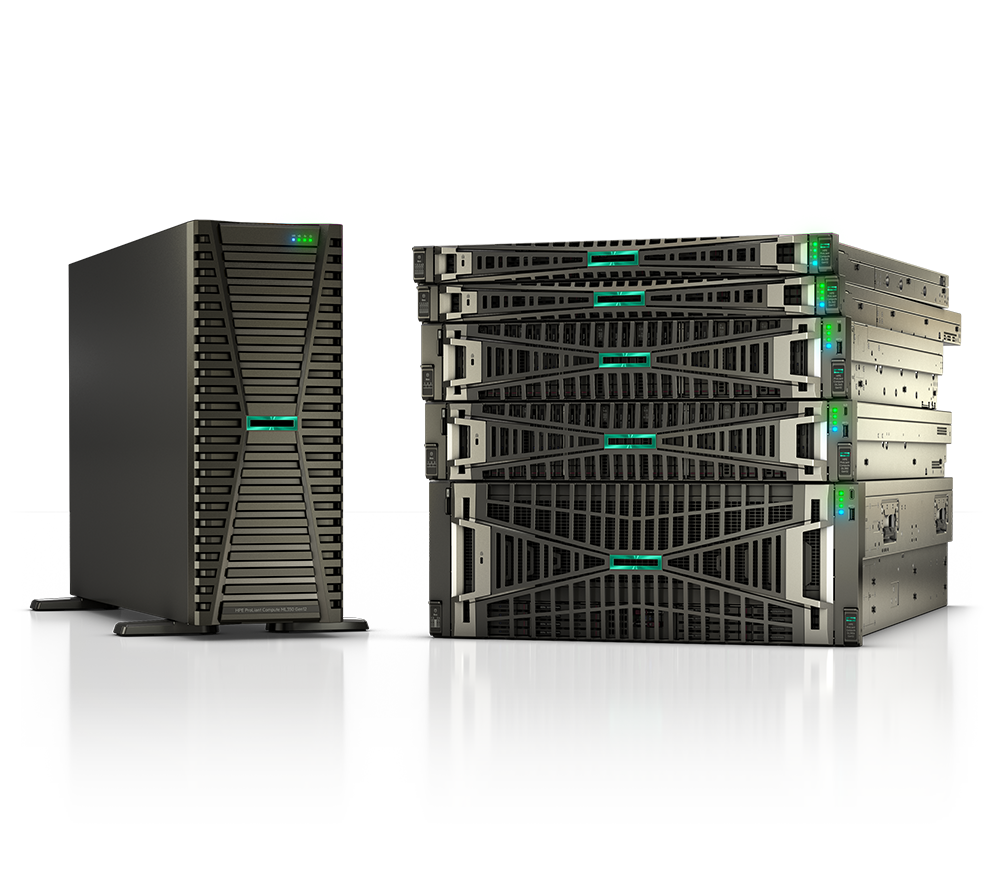
The HPE ProLiant Gen11 lineup is still a strong, supportable platform, and Gen12 just raised the ceiling on core density, memory bandwidth, and power efficiency. So the real question for IT planners isn't "is Gen12 better?" (it is) — it's whether a Gen12 upgrade pays off against your existing fleet, your budget cycle, and your refresh window. This guide breaks down the ProLiant Gen11 vs Gen12 decision on the terms that actually drive an HPE server refresh: total cost of ownership, performance-per-watt, and lifecycle timing.
What actually changed between Gen11 and Gen12
The generational jump is meaningful, but it concentrates in a few areas that matter for consolidation and AI-adjacent workloads.
- Processors. Gen11 runs 4th/5th Gen Intel Xeon Scalable (up to ~64 cores) and 4th Gen AMD EPYC (up to ~96 cores). Gen12 moves to Intel Xeon 6 — with separate P-core and E-core lines, up to ~144 cores per socket — and 5th Gen AMD EPYC "Turin," which pushes core counts substantially higher.
- Memory. Gen11 tops out around DDR5-4800; Gen12 supports faster DDR5 (up to 6400 MT/s) for memory-bandwidth-bound analytics and in-memory workloads.
- I/O. Both are PCIe Gen5, but Gen12 adds higher lane density and EDSFF storage options (e.g., the DL380 Gen12 can carry a large EDSFF NVMe complement in 2U).
- Cooling and power. Gen12 is built for higher-wattage CPUs and GPUs, with closed-loop and direct liquid cooling (DLC) options, and HPE cites large annual power-savings figures versus older fleets.
- Security and management. Gen12 ships with iLO 7 and post-quantum / quantum-resistant firmware protections — a forward-looking compliance signal for federal and regulated buyers.
The practical takeaway: Gen12's biggest wins are consolidation ratio and performance-per-watt. If you can collapse three or four older nodes into one, the math changes fast.
The TCO math: where a Gen12 upgrade actually pays off
ProLiant TCO is rarely about the server sticker price. It's about how many nodes you run, what they draw, and what you pay to keep them under support. Frame the decision around four levers:
- Consolidation. Higher core density and memory bandwidth mean fewer physical hosts for the same VM or container count. Fewer hosts cut hypervisor and per-socket software licensing — often the single largest line item.
- Power and cooling. Better performance-per-watt compounds every month. In a dense rack or a power-capped facility, Gen12 can buy you headroom you'd otherwise pay a data-center provider to expand.
- Support and maintenance. Aging Gen9/Gen10 gear creeps toward end-of-support and post-warranty premiums. A refresh resets the support clock and consolidates contracts.
- Opportunity cost. Memory-bandwidth-bound and AI-inference workloads simply run better on Gen12 — sometimes the difference between meeting an SLA and buying more nodes.
How to choose: Gen11 vs Gen12 selection table
Match the platform to the workload and the budget reality, not to the newest spec sheet.
| Scenario | Best fit | Why |
|---|---|---|
| Replacing Gen9/Gen10 at end-of-support | Gen12 | Maximize consolidation and performance-per-watt; reset support clock for a full lifecycle |
| General virtualization / VDI, steady workloads | Gen11 | Mature, fully supported, strong price/performance; lower acquisition cost |
| AI inference, analytics, memory-bandwidth-bound apps | Gen12 | Xeon 6 / EPYC Turin core density + faster DDR5 + DLC headroom |
| Power- or cooling-capped facility | Gen12 | Higher performance-per-watt and liquid-cooling options relieve facility constraints |
| Tight budget cycle, expand an existing Gen11 cluster | Gen11 | Node/firmware/spares parity avoids mixed-fleet operational overhead |
| Long compliance horizon (post-quantum, latest firmware) | Gen12 | iLO 7 and quantum-resistant protections future-proof the platform |
| Small-footprint edge / ROBO refresh | Either (DL320/DL340 class) | Size to the workload; Gen11 if cost-led, Gen12 if longevity-led |
A simple rule of thumb: if you're retiring older nodes, lean Gen12 to capture consolidation and efficiency. If you're extending a healthy Gen11 estate, lean Gen11 to preserve fleet uniformity — until your next planned refresh window.
Refresh timing and budget-cycle alignment
Server lifecycle planning is as much about when as what. A few timing principles:
- Anchor to end-of-support, not the calendar. Let HPE support milestones on your oldest tier drive the trigger, so you spend capital where risk is highest.
- Don't fragment the fleet mid-cycle. Buying one or two Gen12 nodes into a large Gen11 cluster adds firmware, driver, and spares complexity. Refresh by logical pod or rack instead.
- Align to fiscal and contract vehicles. For public-sector buyers, map the purchase to your fiscal year-end and to the contract vehicle you'll use, so lead times and obligation deadlines line up.
- Plan for power early. If DLC or higher-wattage CPUs are on the table, validate facility power and cooling before you size the order.
How Uniqcli helps
Uniqcli is an authorized HPE, HPE Aruba Networking, and HPE Juniper Networking reseller, and we run the full ProLiant Gen11 vs Gen12 decision end to end for federal, SLED, healthcare, and enterprise buyers.
- Scope and sizing. We model your current fleet against Gen11 and Gen12 options — consolidation ratio, performance-per-watt, licensing impact, and a side-by-side TCO so the upgrade case is defensible to finance. Browse current configurations on our products and full catalog pages, or run a head-to-head on the compare tool.
- Procurement that fits your vehicle. We deliver TAA-compliant configurations and quote through the path that works for you — GSA, SEWP, E-Rate, and cooperative contracts — to keep acquisition clean and on-schedule.
- Quote and lead time. Tell us the workload and the deadline and we'll turn around a configured, priced quote with realistic availability — including any DLC or facility-power considerations.
- Deploy and support. Staging, imaging, iLO setup, and lifecycle support so the refresh lands without surprises.
Start with a quote or compare platforms on the compare page.
FAQ
Is ProLiant Gen11 end-of-life now that Gen12 has shipped? No. Gen11 remains a current, fully supported platform and an excellent price/performance choice for mainstream workloads. Gen12 is the newer, higher-density tier — not a forced replacement.
When does a Gen12 upgrade clearly pay off? When you're retiring Gen9/Gen10 nodes, when consolidation cuts software licensing, when you're power- or cooling-constrained, or when you run memory-bandwidth-bound or AI-inference workloads that benefit from Xeon 6 / EPYC Turin and faster DDR5.
Should I mix Gen11 and Gen12 in the same cluster? Avoid mixing within a single logical cluster where possible — it adds firmware, driver, and spares overhead. Refresh by pod or rack so each unit stays uniform.
Can Uniqcli handle the upgrade on a government contract vehicle? Yes. We provide TAA-compliant ProLiant configurations and quote through GSA, SEWP, E-Rate, and cooperative contracts, then support sizing, deployment, and lifecycle. Request a quote to begin.