
"Juniper Mist AI-Driven Enterprise: How AIOps Cuts Network Tickets and MTTR"
Most enterprise IT teams are not short on alerts — they are short on people to triage them. The promise of a Juniper Mist AI driven enterprise is to flip that ratio: let machine learning find root cause, surface or auto-fix the fix, and stop the flood of low-value tickets before they reach a human. This post breaks down how Juniper Mist AI, the Marvis virtual assistant, and AIOps networking actually reduce help-desk load — and what that means for the budget and headcount math behind a refresh.
The problem: lean teams, rising network complexity
Wi-Fi 7, IoT sprawl, hybrid work, and "it worked yesterday" client issues have made the access layer the single biggest source of help-desk volume. A typical wireless or roaming complaint is genuinely hard to diagnose: the symptom (slow app, dropped call, failed onboarding) sits one or two layers away from the cause (DHCP exhaustion, a bad cable, an authentication server timeout, AP coverage gap, or simply a client device behaving badly).
For a lean IT shop — a hospital system with three network engineers, a school district covering 40 campuses, a federal field office — the math is brutal. Each ticket can consume 30 to 90 minutes of swivel-chair work across controllers, RADIUS logs, and switch CLI just to determine whether the network is even at fault. That is exactly the work AIOps is built to remove.
The Juniper Mist approach: AI-native, cloud-delivered
Juniper Mist (now part of HPE Juniper Networking) was built cloud-native and AI-native from the start rather than bolting analytics onto a legacy controller. Every access point and switch streams rich telemetry to the Mist cloud, where Mist AI establishes baselines per site, per client, and per service. Three pieces do the heavy lifting:
- Mist AI — the data engine that ingests telemetry, sets dynamic baselines, and performs automated root-cause analysis instead of dumping raw alerts on an engineer.
- Marvis virtual assistant — a conversational, natural-language interface ("why is the Wi-Fi slow in Building C?") plus proactive Marvis Actions that bubble up the highest-impact issues across the whole org.
- Self-driving vs. driver-assist — Marvis can automatically remediate certain issues (self-driving mode) or recommend a vetted fix that an engineer approves (driver-assist mode). Newer "Marvis Minis" digital-twin testing and an agentic AI assistant push this further toward a self-driving network.
The same model spans wireless and wired. Marvis Actions covers both APs and EX switches, so a stuck port, missing VLAN, bad cable, or a misconfigured switch shows up as a specific, actionable item — not a vague red dot.
How AIOps actually reduces network tickets and MTTR
The ticket and MTTR reduction comes from four concrete mechanisms, not magic:
- Root cause instead of alerts. Mist AI correlates events and tells you why, collapsing dozens of symptom alerts into one cause. That alone removes a huge volume of "investigate and close as no-fault" tickets.
- Proactive detection (Marvis Actions). Issues surface before users call. Catching DHCP exhaustion or an authentication failure org-wide and fixing it once prevents the hundreds of individual tickets it would have generated.
- Self-service triage. A help-desk tier-1 tech (or even the user's manager) can ask Marvis a plain-English question and get an answer, deflecting escalations to senior engineers.
- Faster mean time to resolution / innocence (MTTR/MTTI). When the network is innocent, Marvis proves it in seconds, so the team stops chasing problems that belong to an app, an ISP, or a client device.
Juniper does not publish a single universal ticket-reduction figure that applies to every environment — results depend on your baseline, site count, and how much you let Marvis run in self-driving mode. The honest framing for a business case: model your current ticket volume and average handle time, then estimate deflection conservatively and let the pilot data validate it.
Mapping Mist AI to the hardware refresh
AIOps only works on instrumented gear. A Mist-driven refresh typically pairs cloud-managed access points and switches under one subscription:
| Layer | Representative HPE Juniper Networking models | Role in the AI-driven enterprise |
|---|---|---|
| Wi-Fi 7 / Wi-Fi 6E access points | AP37, AP47 series, AP66 (rugged/outdoor) | High-density client experience; per-client telemetry feeds Mist AI |
| Wi-Fi 6 access points | AP32, AP63 (outdoor) | Cost-effective coverage with full Mist telemetry |
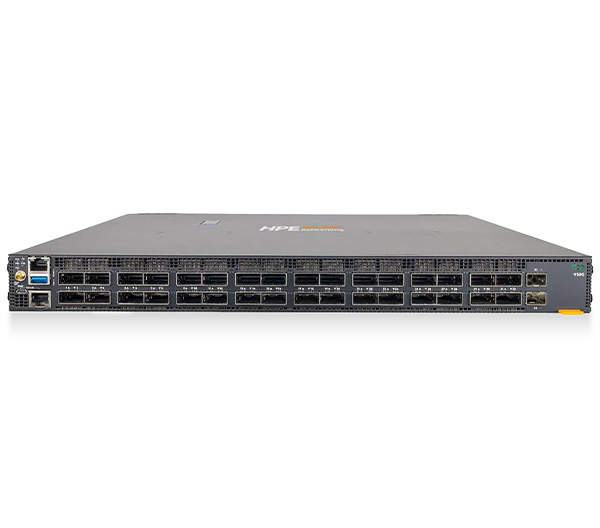
| Access / aggregation switches | EX4000, EX4100, EX4400, EX4650 | Wired Assurance + Marvis Actions for ports, VLANs, cabling |
| AI engine + assistant | Mist AI + Marvis (AI Assistant) subscriptions | Root-cause analysis, conversational triage, auto-remediation |
Exact models, Wi-Fi 7 support, and Junos OS feature levels evolve — confirm the current SKU and subscription tier for your design before you buy. Browse current options on our products and catalog pages, and use /compare to weigh AP and switch tiers side by side.
The outcomes that matter to buyers
For the people approving the purchase, the Mist AIOps ROI story lands in four places:
- Lower operational cost — fewer tickets and faster resolution mean existing staff cover more sites without new hires.
- Better user experience — proactive fixes reduce the "Wi-Fi is down" perception that drives executive escalations.
- Predictable subscription economics — cloud delivery means no controller hardware to size, patch, or replace mid-lifecycle.
- Audit-ready visibility — service-level metrics and historical data help with compliance reporting in healthcare, SLED, and federal environments.
How Uniqcli helps
Uniqcli is an authorized HPE, HPE Aruba Networking, and HPE Juniper Networking reseller, so we can scope, quote, procure, deploy, and support a Mist AI-driven enterprise end to end.
- Scope and design. We size APs, EX switches, and the right Mist AI / Marvis subscription tier to your sites, client density, and the AIOps outcomes you care about — and we model the ticket/MTTR business case with you.
- Quote and procurement. Get a fast, itemized quote at /quote. We support TAA-compliant hardware and procurement through GSA, SEWP, and E-Rate vehicles for federal, SLED, and education buyers, with the contract-vehicle details confirmed for your specific order.
- Deploy. Zero-touch provisioning means APs and switches phone home to the Mist cloud and configure themselves — we coordinate staging, claim codes, and rollout across single or multi-site footprints.
- Support. Ongoing lifecycle support, subscription renewals, and help tuning Marvis from driver-assist toward self-driving as your team builds trust in the automation.
Start with our products and catalog, or send your requirements through /quote and we'll turn them into a buildable, fundable design.
FAQ
What is the Marvis virtual assistant? Marvis is Juniper Mist's AI-driven virtual network assistant. It answers natural-language questions about your network, performs automated root-cause analysis, and proactively surfaces (or, in self-driving mode, fixes) the highest-impact issues across wired and wireless.
Does Juniper Mist AI really reduce trouble tickets? Yes — by replacing raw alerts with root cause, detecting issues proactively, and deflecting tier-1 triage to self-service. The exact reduction depends on your environment, so the right approach is to baseline your current ticket volume and validate deflection during a pilot rather than relying on a single headline number.
Do I need to replace all my hardware to use Mist AIOps? You need Mist-managed gear to feed telemetry into the AI engine, but you don't have to do it all at once. Many teams start with a Wi-Fi refresh (APs plus Mist subscriptions), then bring EX switches into Wired Assurance and Marvis Actions in a later phase.
Can government and education buyers procure Mist through contract vehicles? Yes. As an authorized reseller, Uniqcli supports TAA-compliant procurement through vehicles such as GSA, SEWP, and E-Rate. Reach out via /quote and we'll confirm the right vehicle and pricing for your organization.