
HPE Private Cloud AI: Turnkey AI Infrastructure, Reviewed
Running large-scale AI workloads in a public cloud sounds convenient until the bills arrive, the compliance team asks where your data actually lives, or a model fine-tuning job grinds to a halt because GPU quotas ran out. For federal agencies, SLED organizations, healthcare systems, and enterprise IT teams that need predictable costs, data sovereignty, and production-grade performance, HPE Private Cloud AI offers a compelling alternative: a fully integrated, turnkey stack co-developed with NVIDIA that you own and operate on your own infrastructure.
This guide walks through what HPE Private Cloud AI actually is, how it is architected, which workloads it fits best, where it competes and where it falls short, and how to determine whether it is the right investment for your organization. We draw on HPE's current product documentation, third-party testing, and real deployment patterns from regulated-industry customers.
What HPE Private Cloud AI Actually Is
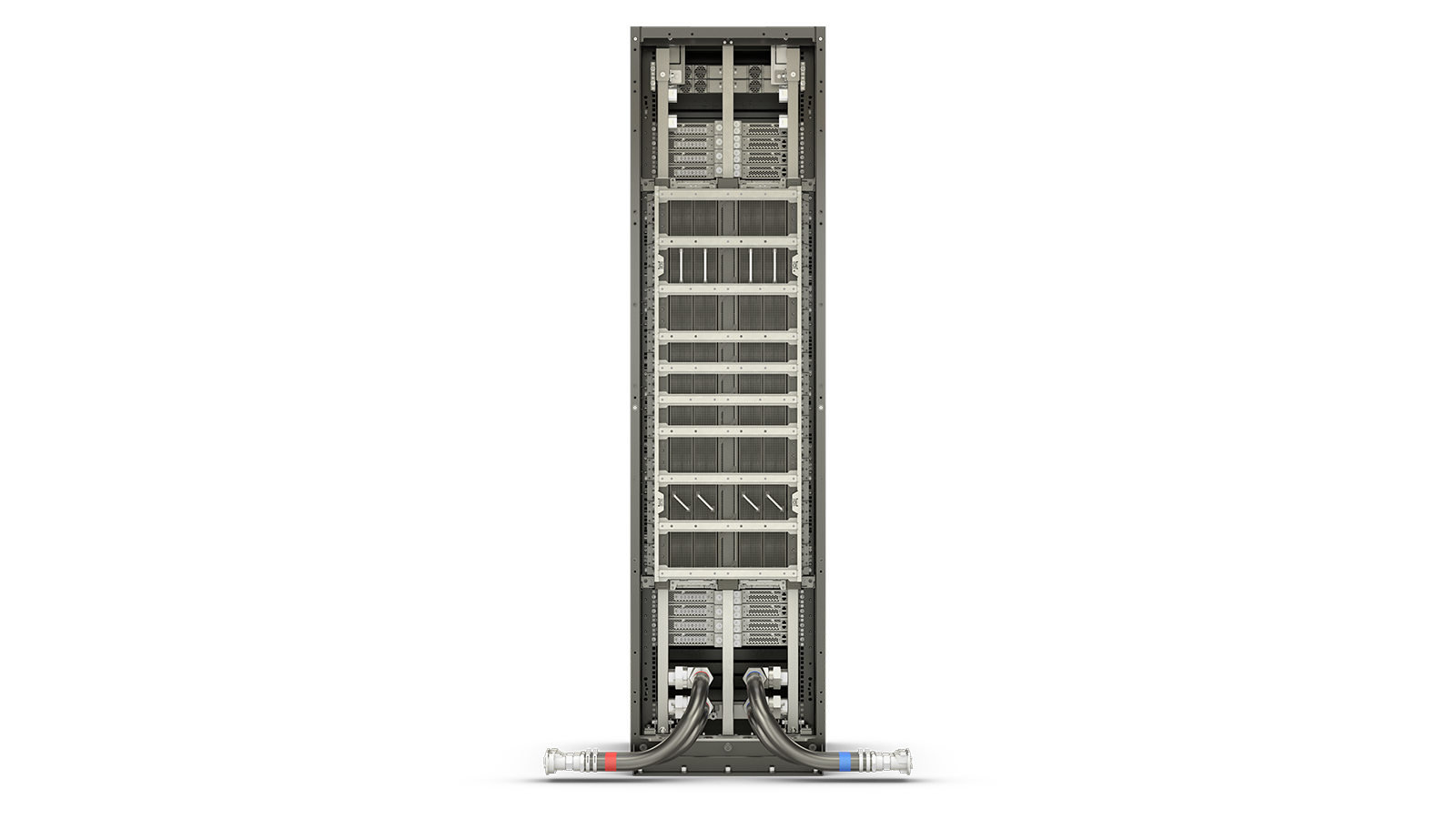
HPE Private Cloud AI is a co-engineered solution built jointly by Hewlett Packard Enterprise and NVIDIA. It bundles validated compute hardware, high-speed networking, storage, and a curated AI software stack into a single SKU that HPE sizes, ships, installs, and supports. The goal is to eliminate the multi-vendor integration work that traditionally consumed weeks of professional-services time before a single GPU was ever put to productive use.
At its core, the stack combines:
- HPE ProLiant Compute Gen12 servers — the current generation platform built on Intel Xeon 6 processors, supporting up to 144 cores per socket and up to 8 TB of DDR5 memory per node, with purpose-built GPU variants for dense AI acceleration
- NVIDIA GPUs — including the NVIDIA H100 NVL, H200 NVL, and RTX PRO 6000 Blackwell Server Edition, depending on the configuration tier
- NVIDIA Spectrum-X high-speed Ethernet — purpose-built for GPU-to-GPU east-west traffic at the speeds AI training and multi-node inferencing demand
- HPE Alletra Storage MP — providing both object and file storage for model weights, training datasets, and inference caches
- NVIDIA AI Enterprise software — including NeMo for fine-tuning and agentic AI pipelines, NIM microservices for optimized model inference, and an integrated model catalog
- HPE AI Essentials — HPE's unified control plane that layers on top of NVIDIA AI Enterprise to provide a studio-like self-service experience with curated open-source tooling, Hugging Face integration, workload scheduling, and multi-tenant resource governance
- HPE GreenLake — the cloud management layer that delivers lifecycle automation, firmware management, and cloud-style consumption visibility on-premises
The result is a system where, in HPE's own testing alongside Principled Technologies, an organization can go from infrastructure delivery to a running AI model in hours rather than weeks.
Configuration Tiers: Sizing for the Workload
HPE Private Cloud AI uses a "T-shirt sizing" model with four main tiers. Each tier is pre-validated and includes deployment and startup services (except the Developer System, which is self-service).
| Tier | Primary Use Cases | GPU Scale | Notes |
|---|---|---|---|
| Developer System | Prototyping, model evaluation, prompt engineering | Small footprint | Self-service; no deployment services included |
| Small | LLM inference, chatbots, document Q&A | Single rack | Deployment services included |
| Medium | RAG pipelines, multi-model inference, agentic workflows | Multi-rack | Supports simultaneous workloads |
| Large | Full model fine-tuning, multi-node training, large-scale inference | Up to 128-256 GPUs | Air-gapped configuration available |
The Large tier received a notable expansion in 2026: network expansion racks that scale GPU counts to 128 GPUs became available, and multi-node inferencing support was extended to configurations with up to 256 GPUs for very large model deployments.
For most enterprise buyers new to on-premises AI, the Medium tier covers the broadest range of production workloads — RAG over enterprise document repositories, fine-tuning smaller open models on domain-specific data, and running multiple concurrent inference endpoints for different lines of business.
The Software Stack: Where the Real Value Lives
Hardware is a commodity. What differentiates HPE Private Cloud AI is the integrated software layer, and it is worth understanding what each component actually does.
NVIDIA AI Enterprise is the foundation. It provides production-certified, STIG-hardened, and FIPS-enabled versions of NVIDIA's AI runtime — including NIM inference microservices, NeMo for fine-tuning and agentic pipeline construction, and a model store with access to NVIDIA Nemotron open models and curated third-party models. The STIG-hardened and FIPS-enabled configuration is specifically relevant for federal and DoD buyers who cannot operate software that has not been hardened to those standards.
HPE AI Essentials sits above NVIDIA AI Enterprise and adds the operational layer most IT teams need: a unified model gateway for governed access to both local and frontier models, active workload prioritization to prevent one team's batch job from starving another's real-time inference endpoint, multi-tenancy controls so different business units share infrastructure without seeing each other's data or models, and integration with Hugging Face for access to the broader open-source model ecosystem.
HPE GreenLake provides what HPE calls "cloud-native lifecycle automation." HPE's own data suggests Compute Ops Management — the GreenLake module for server lifecycle — reduces IT hours spent on server management by up to 75% and unplanned downtime by approximately 4.8 hours per server annually. In a multi-rack AI cluster where firmware drift or misconfiguration can cause silent correctness issues in model outputs, centralized lifecycle management is not a convenience feature; it is a correctness and reliability requirement.
For teams already running HPE GreenLake for other workloads, the management consistency is a genuine operational advantage. If you are evaluating HPE's broader AI ecosystem, our NVIDIA AI on HPE guide covers the compute hardware side in more depth.
Security and Air-Gapped Deployments for Regulated Industries
One of the clearest differentiators HPE Private Cloud AI has over hyperscaler-based AI services is its air-gapped deployment mode, introduced first for Large configurations and progressively extended down the stack.
Air-gapped management means the entire HPE Private Cloud AI system — compute, storage, networking, and software — can operate in a network-isolated environment with no external connectivity requirements. This matters for:
- Federal and DoD agencies subject to CMMC, FedRAMP, or classified network requirements
- Healthcare organizations managing Protected Health Information (PHI) under HIPAA
- SLED organizations subject to state-level data residency laws or handling Criminal Justice Information Services (CJIS)-governed data
- Financial services and critical infrastructure operators with strict network segmentation policies
The STIG-hardened and FIPS-enabled NVIDIA AI Enterprise available in air-gapped configurations satisfies compliance requirements that effectively rule out public cloud AI services for many of these buyers. The HPE iLO 7 Silicon Root of Trust on ProLiant Gen12 servers adds hardware-level tamper detection and quantum-resistant firmware signing, providing assurance that the compute layer itself has not been compromised.
HPE has also built out what it calls "sovereign AI" controls — features designed to help government agencies and national enterprises keep model weights, training data, and inference outputs fully within a defined legal jurisdiction. This is increasingly relevant as AI regulations in the EU, UK, and various US states impose residency requirements on AI-processed data.
Workload Performance: What the Hardware Can Actually Do
The HPE ProLiant DL380a Gen12 is the primary GPU compute node in HPE Private Cloud AI. Its key characteristics for AI workloads:
- Up to 10 double-wide GPUs per node — supporting NVIDIA H200 NVL, H100 NVL, L40S, L20, L4, and RTX PRO 6000 Blackwell Server Edition
- Intel Xeon 6 processors with up to 144 cores and up to 4 TB of DDR5 memory per node at 6400 MT/s
- Three power domains, with two dedicated entirely to GPUs — a design that improves power delivery efficiency and avoids the power contention that can throttle GPU performance in standard server designs
- Six PCIe Gen5 x16 slots for GPU and network adapter connectivity
- Direct Liquid Cooling (DLC) support — essential for sustained GPU utilization in large AI clusters where air cooling cannot dissipate heat fast enough at full GPU TDP
The RTX PRO 6000 Blackwell Server Edition GPUs, now supported across HPE Private Cloud AI configurations, are relevant particularly for organizations that need strong inferencing performance without the power and cooling requirements of H100/H200-class data center GPUs. NVIDIA positions RTX PRO 6000 as an inference-optimized GPU with Blackwell architecture, making it well-suited for the Small and Medium tiers.
For multi-node workloads like large model fine-tuning, the NVIDIA Spectrum-X Ethernet fabric provides the GPU-to-GPU bandwidth needed to avoid network becoming the bottleneck — a common failure mode when AI clusters are built on standard data center Ethernet without the optimizations Spectrum-X provides for collective communications.
How HPE Private Cloud AI Compares to the Alternatives
When evaluating HPE Private Cloud AI against the alternatives, the honest comparison depends on what problem you are actually solving.
| Consideration | HPE Private Cloud AI | Public Cloud AI (AWS/Azure/GCP) | DIY On-Premises |
|---|---|---|---|
| Data sovereignty | Full control, air-gap available | Limited; data leaves premises | Full control |
| Time to first inference | Hours (turnkey) | Minutes (API) | Weeks to months |
| Cost predictability | Fixed CapEx / GreenLake OpEx | Variable; escalates with scale | Fixed CapEx, variable labor |
| Software integration | Pre-validated NVIDIA + HPE stack | Provider-specific MLOps tooling | Self-assembled; no warranty |
| GPU generation currency | Updated with new HPE Private Cloud AI releases | Managed by provider | Depends on your refresh cycle |
| Compliance (STIG/FIPS/FedRAMP) | Air-gapped; STIG-hardened NVIDIA AI Enterprise | FedRAMP-authorized regions vary | Self-managed |
| Support model | Single vendor (HPE) | Provider SLA | Multi-vendor complexity |
The public cloud wins on time-to-first-experiment and eliminates upfront capital expenditure — which matters for organizations that are still in the exploratory phase. But for organizations that have cleared the exploratory phase and are running AI at production scale, the cost curve inverts. Independent analysis suggests that private AI infrastructure typically becomes cost-competitive with equivalent public cloud GPU capacity somewhere between 500,000 and 1,000,000 inference tokens per day — a threshold many production enterprise AI deployments cross quickly.
Dell's AI Factory (PowerEdge XE97xx series) is the most direct competitor in the integrated on-premises AI stack space. Dell offers similar NVIDIA GPU integration and a rack-scale approach with NVLink-based 72-GPU configurations. The HPE differentiation is the depth of the GreenLake management layer, the STIG/FIPS hardening for regulated buyers, and the maturity of HPE AI Essentials as a multi-tenant workload management plane. Organizations with existing HPE infrastructure will also find operational continuity benefits that pure infrastructure buyers may not weight as heavily.
For organizations already deep in the HPE ecosystem, exploring HPE's full server portfolio alongside Private Cloud AI is worth doing — particularly if you are planning a phased AI buildout rather than an all-at-once deployment.
Planning Your HPE Private Cloud AI Deployment
Before engaging with HPE or an authorized partner on a Private Cloud AI project, the following questions should be answered:
- What workloads are you targeting first? Inferencing only, RAG over existing document repositories, or full model fine-tuning? The answer drives tier selection significantly.
- What are your data residency and compliance requirements? Air-gapped Large configurations satisfy the most demanding requirements, but they also add complexity and cost. If standard rack configurations satisfy your compliance posture, do not over-specify.
- What is your existing HPE footprint? If you already run HPE GreenLake, adding Private Cloud AI extends an existing management relationship. If you are greenfield, factor in the GreenLake onboarding curve.
- What is your GPU cooling capacity? High-density GPU configurations — particularly those using H100/H200 NVL or future Rubin-class GPUs — require direct liquid cooling. Verify your data center has, or can be retrofitted with, liquid cooling infrastructure before selecting the Large tier.
- What is the model of acquisition? HPE Private Cloud AI can be purchased as a capital expenditure through traditional procurement channels (including federal contract vehicles) or consumed as a managed service through HPE GreenLake's OpEx model. For public sector buyers, GreenLake's as-a-service model can align with operating budget rather than capital budget constraints.
- What support tier do you need? HPE offers different support levels including HPE Pointnext services for deployment, HPE Care Pack for ongoing hardware support, and proactive advisory services. For mission-critical AI infrastructure, understand the SLA before signing.
Our HPE buying guides cover some of these planning considerations in more depth for specific product families. If you are working toward a formal procurement, getting a custom quote early in the process helps identify lead times — GPU-dense configurations can have meaningful lead times in constrained supply environments.
What HPE Private Cloud AI Does Not Solve
Vendor honesty requires acknowledging the limitations:
It does not solve the AI skills gap. HPE AI Essentials simplifies the infrastructure management layer, but you still need data scientists, ML engineers, or AI platform engineers to define use cases, curate training data, evaluate models, and operate production AI systems. The turnkey stack accelerates infrastructure readiness; it does not replace AI expertise.
It is not the fastest path to a prototype. If you need to test a hypothesis with an LLM next week, a public cloud API or a hosted model service is faster. HPE Private Cloud AI is an investment in production infrastructure for organizations that have already validated their AI use cases.
Storage scaling has generational dependencies. HPE Alletra Storage MP X10000 file storage capabilities are expanding in 2026, but if your AI workloads demand very large shared file namespaces at scale today, verify the current GA capabilities match your needs rather than relying on roadmap features.
Multi-cloud and hybrid AI pipelines require additional design work. HPE Private Cloud AI is excellent for sovereign, on-premises AI. If your architecture needs to burst to public cloud GPU capacity during peak demand or integrate with hyperscaler AI services, that hybrid topology requires additional network and identity design work beyond what the base Private Cloud AI stack provides.
How Uniqcli Helps
Uniqcli is an authorized HPE and HPE Aruba Networking partner with direct experience helping federal, SLED, healthcare, and enterprise buyers navigate HPE Private Cloud AI procurement, sizing, and deployment planning. We can help you match the right configuration tier to your actual workload requirements, identify available federal contract vehicles and pricing, and coordinate with HPE Pointnext for deployment services.
If you are evaluating HPE Private Cloud AI alongside other options — or you are ready to move toward a formal procurement — request a quote or contact our team to start a conversation. There is no pressure and no obligation; we are here to help you make the right call for your infrastructure, not just close a transaction.