
HPE + Juniper: What the Networking Acquisition Means for Buyers
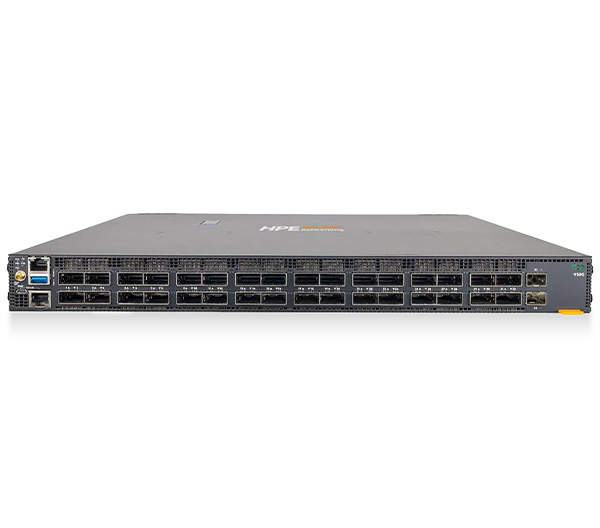
The networking industry shifted on its axis on July 2, 2025, when Hewlett Packard Enterprise officially closed its $14 billion acquisition of Juniper Networks — one of the largest deals in enterprise networking history. The transaction, first announced in January 2024, survived a Department of Justice antitrust challenge and emerged with a negotiated settlement that reshaped the terms of the deal. For enterprise, federal, SLED, and healthcare buyers already running HPE Aruba Networking or Juniper hardware, the implications range from welcome portfolio expansion to real questions about product roadmaps, support continuity, and competitive dynamics.
This post breaks down what actually happened, what the combined company looks like today, and — most importantly — what it means for your next networking decision.
How the Deal Came Together
HPE announced the $14 billion all-cash acquisition of Juniper Networks on January 9, 2024, offering Juniper shareholders $40.00 per share. Juniper shareholders approved the deal in April 2024. What followed was a lengthy regulatory gauntlet: the U.S. Department of Justice filed a complaint to block the transaction, arguing the combination would give the merged company an anticompetitive share of the enterprise wireless LAN market — potentially exceeding 70% in certain segments.
The DOJ and HPE reached a settlement on June 28, 2025, and the deal closed four days later. The regulatory resolution came with significant conditions attached, which buyers need to understand.
What DOJ Required HPE to Give Up
The settlement imposed two major remedies:
- Divestiture of HPE Instant On: HPE must divest its global Instant On campus and branch WLAN business — including intellectual property, R&D personnel, and customer relationships — to a DOJ-approved buyer within 180 days of closing. Instant On is an SMB-focused, cloud-managed wired and wireless platform designed for minimal IT involvement. Its divestiture is intended to preserve a viable, independent competitor in the SMB wireless space.
- Licensing of Juniper Mist AI Ops source code: HPE must hold an auction for a perpetual, non-exclusive license to Juniper's AI Ops for Mist source code, with optional transitional support, so that competing WLAN vendors can build against the same underlying AI engine.
What this means for buyers: If you are an existing HPE Instant On customer, your product line will transition to a new owner. Monitor communications from HPE and the eventual acquirer closely. If you are evaluating Instant On for a new project, it is prudent to pause and wait for clarity on the acquiring entity's roadmap before committing. Enterprise and mid-market buyers running HPE Aruba Central or Juniper Mist are unaffected by the divestiture.
The Combined Portfolio: Two Platforms, One Vision
The most immediate question buyers ask is: will HPE consolidate down to a single networking platform, and which one wins? The answer, at least through the near-term roadmap HPE has published, is neither — and both.
HPE has structured the combined business under a single HPE Networking unit led by Rami Rahim, Juniper's former CEO, now serving as Executive Vice President and President & General Manager of HPE Networking. Under this umbrella, two distinct product pillars remain:
- HPE Aruba Networking — campus wireless, Aruba CX switching, ClearPass network access control, EdgeConnect SD-WAN, and Aruba Central cloud management.
- HPE Juniper Networking — EX Series campus and branch switching, QFX Series data center switching, MX Series service provider and enterprise edge routing, and the Juniper Mist cloud management platform with its AI engine.
HPE's stated strategy is "build once, deploy twice": share AI and agentic capabilities across both management platforms while keeping each platform's hardware and existing customer relationships intact. No product discontinuations have been announced for either Aruba CX or Juniper EX/QFX/MX lines, and both received new hardware at HPE Discover 2025 and HPE Discover 2026.
AI Integration: Where the Two Platforms Are Converging
The most significant technical development post-close is the cross-pollination of AI capabilities between Aruba Central and Juniper Mist. Announced at HPE Discover Barcelona in December 2025 and entering availability in early 2026:
- Marvis Actions — Juniper Mist's autonomous remediation engine, which detects issues, pinpoints root cause, and can take corrective action — is being brought into Aruba Central.
- Juniper's Large Experience Model — an AI model trained on billions of data points from application telemetry including Microsoft Teams and Zoom — is being added to Aruba Central's AIOps stack.
- Aruba Agentic Mesh — Aruba's distributed intelligence framework — is being extended into Juniper Mist, giving Mist users access to proactive, agent-driven troubleshooting.
- New WiFi 7 access points launched at HPE Discover 2026 are designed to work under either Aruba Central or Juniper Mist management, giving buyers flexibility in which cloud platform they use to manage new wireless deployments.
This "unified AIOps" approach means buyers on either platform gain access to the other platform's AI innovations without having to migrate their entire installed base. HPE describes the endpoint goal as self-driving networks — infrastructure that can detect, diagnose, and remediate issues with minimal human intervention.
Hardware Expansion: New Silicon, New Edge Capabilities
Beyond software integration, the acquisition adds meaningful hardware reach to HPE's portfolio. Key additions from the Juniper side:
- QFX5250 data center switch — powered by Broadcom Tomahawk 6 silicon, delivering 102.4 Tbps of switching bandwidth for GPU-to-GPU connectivity in AI training and inference clusters.
- MX301 multiservice edge router — a compact platform supporting 1.6 Tbps throughput with 400G interfaces, designed for AI inferencing at the edge, metro Ethernet, mobile backhaul, and enterprise WAN aggregation.
- EX Series campus switches — Juniper's existing campus and branch switching portfolio, which gives HPE a second full campus switching stack alongside the Aruba CX family.
For buyers building or upgrading AI infrastructure — particularly data centers that need high-bandwidth, low-latency east-west fabric — the Juniper QFX line adds capabilities that the Aruba CX portfolio alone did not cover at scale.
How the Two Platforms Compare Today
Understanding which HPE Networking platform fits your environment is the most practical decision buyers face right now. The table below summarizes the primary use cases and strengths of each.
| Dimension | HPE Aruba Networking | HPE Juniper Networking |
|---|---|---|
| Primary strength | Campus wireless & wired, SD-WAN | Data center, service provider, AI-native cloud ops |
| Cloud management | Aruba Central | Juniper Mist |
| AI / AIOps engine | Aruba Central AIOps + Marvis (incoming) | Marvis AI, Large Experience Model |
| Campus switching | Aruba CX 6000–9300 Series | EX2300, EX3400, EX4400, EX4650 |
| Data center switching | Aruba CX 8325, 8360, 9300 | QFX5120, QFX5200, QFX5250 |
| Edge / WAN routing | EdgeConnect SD-WAN | MX Series (MX204, MX304, MX301) |
| Network access control | ClearPass Policy Manager | — |
| Wireless | Aruba APs (WiFi 6E, WiFi 7) | Mist-managed APs (WiFi 6E, WiFi 7) |
| Best fit | Enterprise campus, SLED, healthcare | Data center fabric, service provider, multi-site |
Buying guidance: If you run an existing Aruba wireless and switching environment, the path of least resistance is to stay on Aruba Central and benefit from the Marvis AI additions rolling in over 2026. If you are building a new AI data center fabric or have a multi-site WAN aggregation requirement, Juniper QFX and MX now carry the full weight of HPE's investment and support. For organizations with no existing footprint in either platform, the choice should be driven by your primary workload — campus networking versus data center or SP-grade routing.
What Changes for Federal, SLED, and Healthcare Buyers
Regulated and mission-critical buyers have specific concerns that go beyond product specs:
Contract vehicles and procurement: Both HPE Aruba Networking and HPE Juniper Networking products are available through major federal and SLED contract vehicles. The organizational change to a unified HPE Networking business unit does not affect existing contract vehicles, though buyers should verify that their specific SKUs remain on vehicle schedules during any transition period.
Security and compliance: HPE Aruba's ClearPass Policy Manager remains a primary tool for zero-trust network access control in healthcare and federal environments, and its roadmap is unaffected by the acquisition. Juniper's SRX firewall platform — also part of the broader Juniper portfolio — gains HPE's enterprise distribution reach, potentially expanding its presence in federal and SLED security stacks.
Support continuity: HPE has committed to maintaining support for existing Juniper products. Buyers with active Juniper support contracts should see no disruption; contracts transfer to HPE Networking without requiring renegotiation.
Long-term investment protection: The dual-platform strategy HPE has outlined — with investment continuing in both Aruba and Juniper hardware lines through at least 2028 — provides meaningful assurance to organizations that have standardized on either stack. The cross-platform WiFi 7 access points that work with both Aruba Central and Juniper Mist add further investment protection for wireless refreshes happening now.
What Buyers Should Do Right Now
Regardless of which platform you currently run, there are concrete steps worth taking as the integration matures:
- If you are an HPE Instant On customer: Wait for HPE to announce the acquiring entity before committing to new Instant On hardware. Your existing equipment and support will continue to function, but the product's future owner will determine the long-term roadmap.
- If you run Aruba Central today: Watch for the Marvis and Large Experience Model updates rolling out in the first half of 2026. These are incremental, opt-in features — not forced migrations — so the risk is low and the upside is meaningful.
- If you run Juniper Mist today: The management platform is now backed by HPE's global supply chain, services organization, and partner network. Expect broader availability and potentially improved enterprise support tiers.
- If you are evaluating new campus or data center switching: Engage a reseller who can position both Aruba CX and Juniper EX/QFX honestly against your workload requirements. The overlap in the mid-campus switching space means the decision increasingly comes down to your existing management platform and your AI-ops preference.
- If you are building an AI data center fabric: The Juniper QFX5250 with Tomahawk 6 silicon is now a core HPE Networking offer, not a niche option — evaluate it alongside your GPU cluster architecture.
For a full look at the networking products Uniqcli carries across both the Aruba and Juniper lines, visit our networking products catalog.
How Uniqcli Helps
Uniqcli is an authorized HPE and HPE Aruba Networking partner serving federal, SLED, healthcare, and enterprise buyers. We carry both HPE Aruba Networking and HPE Juniper Networking products, and our team understands the nuances of the post-acquisition portfolio — including which platform is the right fit for your environment, what contract vehicles apply, and how to position a refresh against your current installed base.
Whether you need to get a quote on Aruba CX switching, Juniper QFX data center fabric, or Mist-managed wireless, or you want to talk through how the acquisition affects your existing HPE investment, contact our team for a no-pressure conversation. We work with organizations of all sizes across the public and private sectors, and we can help you navigate the combined portfolio with clarity rather than vendor spin.
Explore our full networking products catalog or visit the shop to see current HPE Aruba and HPE Juniper Networking availability.