
HPE Synergy, Apollo, and Cray (HPC & AI)
Converged HPC and AI supercomputing, from Cray Supercomputing EX4000 clusters to dense XD670/XD685 GPU nodes and composable Synergy infrastructure
Overview
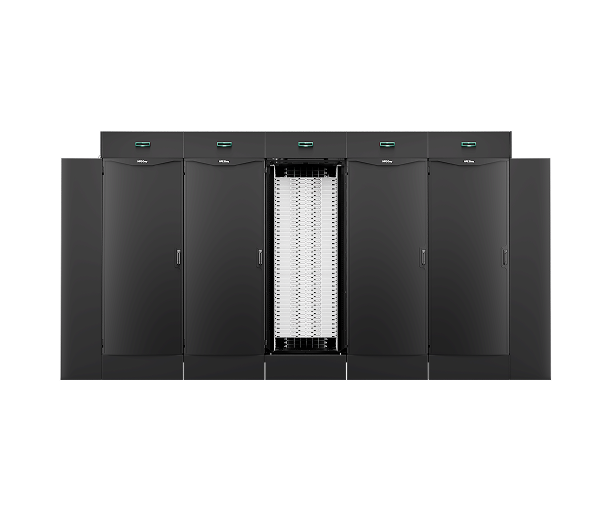
HPE Cray Supercomputing is HPE's lineup of exascale-class supercomputers, dense GPU servers, and parallel storage for organizations running HPC simulation, AI training, or both on the same converged architecture. It is built for national labs, research universities, federal agencies, and enterprises that have outgrown standard rack servers and need purpose-built interconnect, cooling, and scheduling software instead.
The current flagship, HPE Cray Supercomputing EX4000, is the architecture behind the world's three fastest supercomputers (El Capitan, Frontier, and Aurora) and powers more than half of the world's top 100 systems on the June 2025 TOP500 list. HPE announced its successor, the Cray Supercomputing GX5000, in November 2025: a denser, warmer-water-cooled platform already selected by Oak Ridge National Laboratory for its next-generation Discovery system, with first deliveries expected in early 2027. Alongside the racks, HPE pairs Cray-badged dense GPU servers (XD670, XD2000) and factory-built parallel storage (K3000, E2000) so labs and enterprises can stand up a full HPC/AI stack from one vendor.
This family also covers HPE Synergy composable infrastructure and HPE Apollo 4000 dense storage servers: the building blocks organizations use to feed data to a supercomputing cluster or to run adjacent hybrid cloud and analytics workloads without a second architecture to manage. As an authorized HPE partner, Uniqcli scopes, quotes, and helps stand up this entire stack for TAA-compliant federal, SLED, healthcare, and enterprise procurement.
A closer look
Why HPE Synergy, Apollo, and Cray (HPC & AI)
Running real HPC simulation or training frontier AI models is not a server-sizing exercise, it is a systems-architecture problem: interconnect topology, water temperature, storage IOPS, and job scheduling all have to work together at rack scale. HPE Cray Supercomputing gives buyers a single architecture that has already been proven at the top of the TOP500 list, so labs and agencies are not the first ones finding the failure modes. For federal and research buyers under budget and timeline pressure, that track record, plus GPC, SAP, FAR, and GSA eBuy availability, converts directly into lower deployment risk on a program where a wrong architectural bet costs years, not just dollars.
EX4000: the current record-holding architecture
HPE Cray Supercomputing EX4000 is the architecture behind the world's three fastest supercomputers (El Capitan, Frontier, Aurora) and powers more than half of the world's top 100 systems on the June 2025 TOP500 list.
GX5000: the next-generation platform, already selected
Announced November 2025, HPE Cray Supercomputing GX5000 cuts rack volume by 56.8% at similar power draw and runs warmer 40C liquid cooling versus EX4000's 32C. Oak Ridge National Laboratory has already selected it for its Discovery system, with deliveries starting early 2027.
Factory-built parallel storage for AI-scale I/O
HPE Cray Supercomputing Storage Systems K3000 is the industry's first factory-built system with embedded DAOS software, delivering 75 million IOPS per storage rack, 39% higher than other systems, built directly into PyTorch and TensorFlow pipelines.
Cray-badged dense GPU servers
HPE Cray XD670 and XD2000 bring Cray HPC lineage, Slingshot/InfiniBand fabric flexibility, and the Cray Programming Environment to dense GPU nodes, distinct from HPE's broader ProLiant Compute XD line.
Composable infrastructure for the surrounding estate
HPE Synergy composes fluid pools of compute, storage, and fabric into any configuration under a unified API via HPE OneView, so labs and enterprises can run hybrid cloud workloads on the same operational model as their HPC cluster.
Six decades of supercomputing heritage
HPE Cray traces back to Seymour Cray's 1976 Cray-1 at Los Alamos National Laboratory. HPE acquired Cray in 2019 and continues the lineage through EX4000, GX5000, and now expanding quantum computing collaborations.
What it does
Production exascale architecture
HPE Cray Supercomputing EX4000 is the architecture behind the world's three fastest supercomputers and powers more than half of the world's top 100 systems on the TOP500 list.
Next-gen density already validated
GX5000 cuts rack volume 56.8% at comparable power draw and has already been selected by Oak Ridge National Laboratory for its Discovery system, de-risking the platform before general availability.
Factory-integrated parallel storage
K3000 embeds DAOS software at the factory for 75 million IOPS per rack, and E2000 offers Lustre-based storage without per-drive licensing, so I/O is designed in rather than bolted on.
Benchmark-proven dense GPU servers
Cray XD670 and ProLiant Compute XD685 have taken multiple #1 results across recent MLPerf Inference rounds, giving buyers third-party verified performance before committing budget.
Cray Programming Environment and cluster tooling
Decades of production HPC software, including the Cray Programming Environment and Cray Supercomputing User Services Software, ship with these systems for job scheduling and code portability.
Composable infrastructure for the wider estate
HPE Synergy pools compute, storage, and fabric under HPE OneView so labs can run hybrid cloud and VDI workloads on the same operating model as their supercomputing cluster.
The HPE Synergy, Apollo, and Cray (HPC & AI) lineup
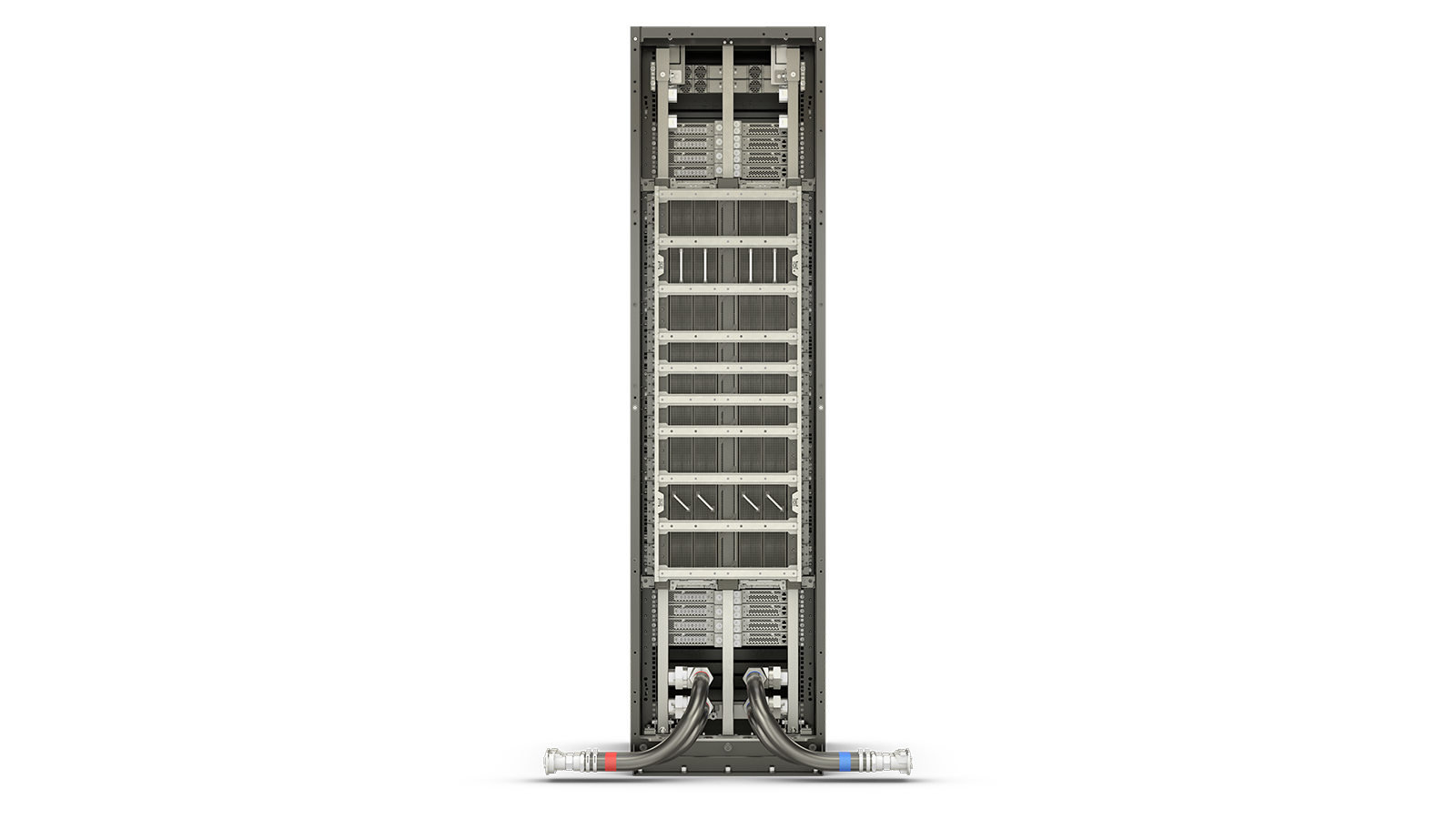
HPE Cray Supercomputing EX4000
Current production flagship, the architecture behind El Capitan, Frontier, and Aurora, powering more than half the world's top 100 supercomputers.
Exascale HPC/AI, Slingshot interconnect, liquid-cooled, production today
HPE Cray Supercomputing GX5000
Next-generation successor to EX4000, denser and warmer-water-cooled, already selected by Oak Ridge for its Discovery system.
Up to 400kW/rack, 40C liquid cooling, GX440n/GX350a/GX250 blades, ships from early 2027
HPE Cray Supercomputing Storage Systems K3000
Factory-built DAOS storage system for I/O-bound AI training pipelines, built on ProLiant DL360 Gen12.
8/12/16/20 NVMe drive configs, 75 million IOPS/rack
HPE Cray Supercomputing Storage Systems E2000
Lustre parallel file system storage that scales without per-drive or per-capacity software licensing.
Lustre open-source parallel file system, tuned storage stack
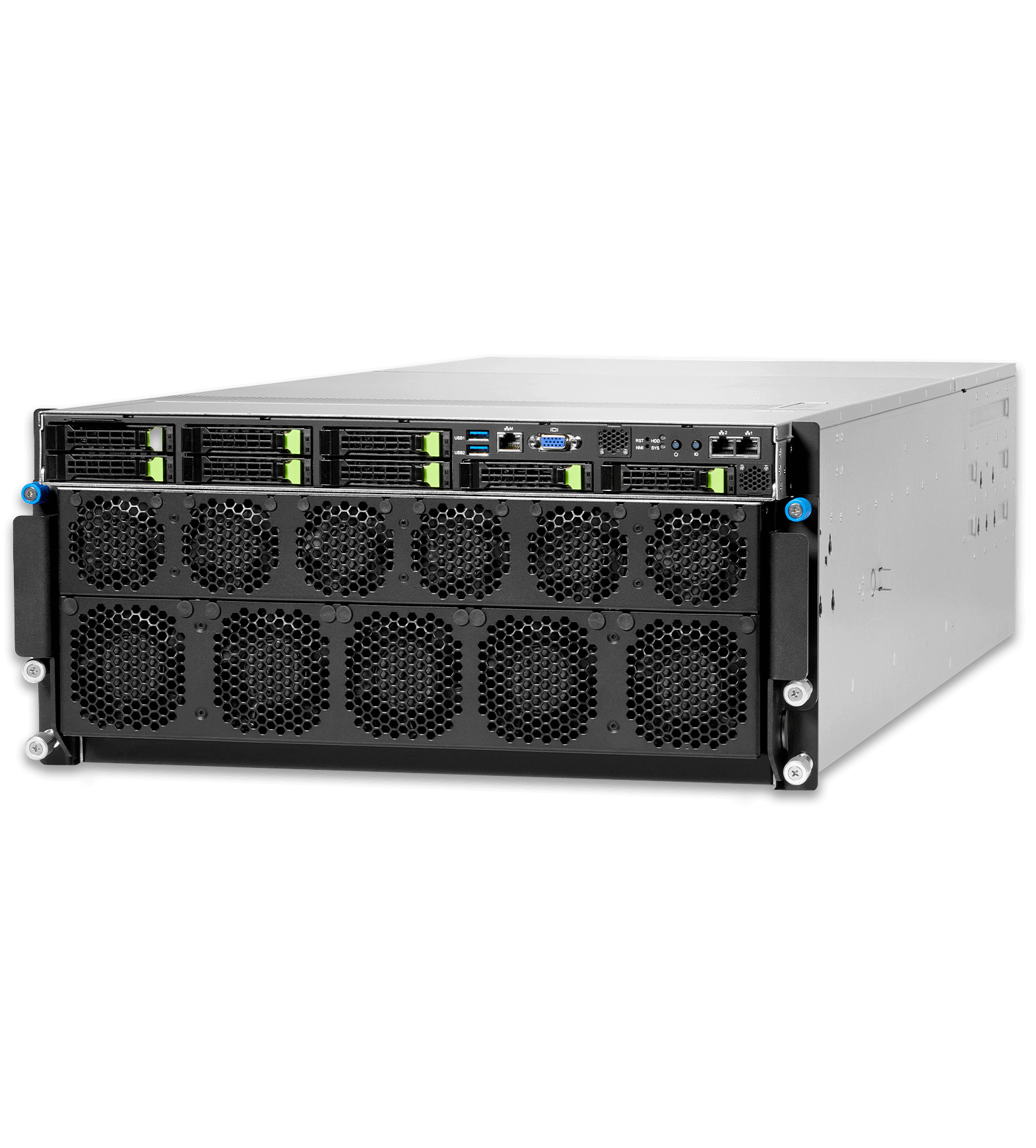
HPE Cray XD670
Dense 5U GPU server tuned for LLM training and multimodal AI, carrying Cray HPC fabric and programming tools.
8x NVIDIA H200 SXM 141GB HBM, 2x 5th Gen Intel Xeon, air or DLC
HPE ProLiant Compute XD685
Enterprise AI training node with a choice of eight NVIDIA or AMD Instinct GPUs and AMD EPYC 9005 CPUs.
8x NVIDIA or AMD Instinct GPUs, AMD EPYC 9005, optional DLC
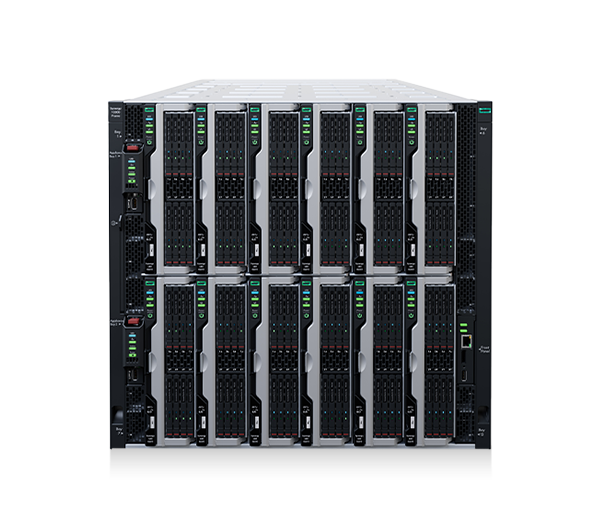
HPE Synergy 480 Gen12
Composable compute module for software-defined infrastructure feeding or surrounding an HPC cluster.
Intel Xeon 6, two-socket half-height blade, HPE OneView-composed
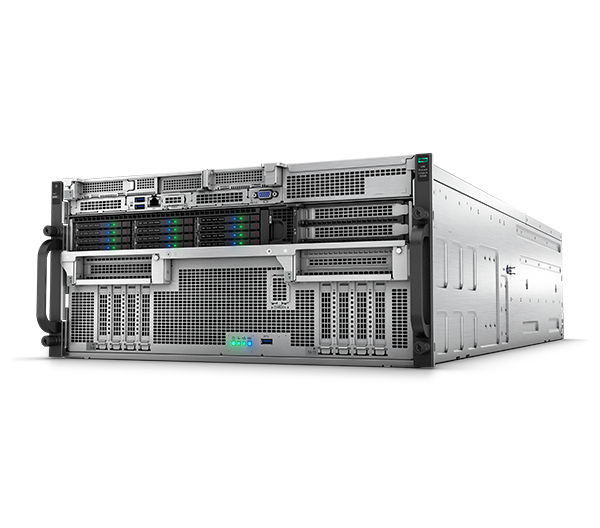
HPE Apollo 4000
Ultra-dense data storage servers for data lakes, analytics, and AI/ML pipelines feeding GPU clusters.
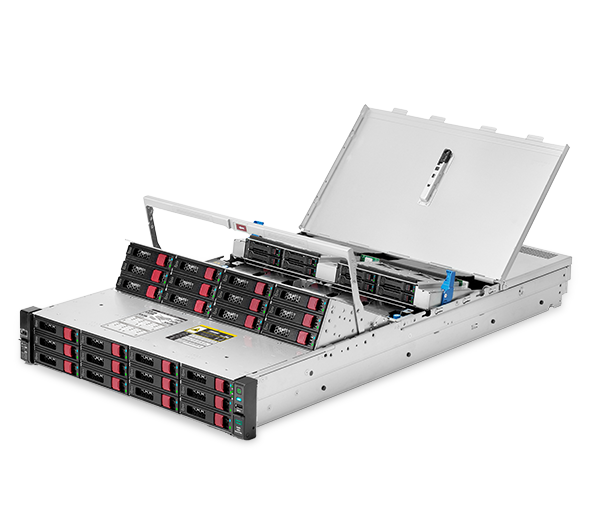
Apollo 4200 Gen10 Plus (2U, up to 60 SFF drives), Apollo 4510 Gen10 (4U)
At a glance
- Current flagship
- HPE Cray Supercomputing EX4000 (production), GX5000 (deliveries from early 2027)
- GX5000 rack footprint
- 2,045mm H x 900mm W x 1,200mm D, up to 400kW per rack, 40C liquid cooling
- GX5000 compute blades
- GX440n (Nvidia Vera + Rubin GPU), GX350a (AMD Venice EPYC + Instinct MI430X), GX250 (AMD Venice EPYC CPU-only)
- Cray Storage K3000
- Embedded DAOS, 8/12/16/20 NVMe configs, 75 million IOPS per rack
- Cray XD670
- 5U chassis, 8x NVIDIA H200 SXM 141GB HBM, 2x 5th Gen Intel Xeon, air or DLC
- ProLiant Compute XD685
- 8x NVIDIA or AMD Instinct GPUs, 2x AMD EPYC 9005 Series CPUs, optional DLC
- Synergy compute
- HPE Synergy 480 Gen12 with Intel Xeon 6, composed via HPE OneView
- Apollo 4000 storage
- Apollo 4200 Gen10 Plus (2U, up to 60 SFF drives), Apollo 4510 Gen10 (4U, up to 60 LFF drives)
75 million IOPS per storage rack
Cray Storage Systems K3000, 39% higher than other systems(vendor-published figure)
More than half of top 100 supercomputers
Powered by HPE Cray Supercomputing EX4000 architecture (June 2025 TOP500)(vendor-published figure)
How to buy HPE Synergy, Apollo, and Cray (HPC & AI)
This is capital equipment procured through federal, SLED, and enterprise contract vehicles, not shelf hardware, so how you buy it matters as much as what you buy. Uniqcli sources every tier below as an authorized HPE partner and can align the purchase to your specific contract vehicle or budget cycle.
Direct purchase, TAA-compliant configurations
Buy EX4000, GX5000, XD670, XD685, Synergy, or Apollo 4000 systems outright with TAA-compliant configurations sourced for federal and regulated buyers who require country-of-origin control.
GPC, SAP, FAR-based orders, and GSA eBuy vehicles
Federal and DoD buyers can procure this entire family via GPC direct, SAP, FAR-based purchase orders, or GSA eBuy, with GPC-friendly quoting for smaller purchases and full contract-vehicle documentation for larger cluster buys.
HPE GreenLake consumption
Consume Cray Supercomputing, Synergy, and Apollo capacity as a metered service through HPE GreenLake rather than a capital purchase, useful for labs and enterprises that want to match spend to actual utilization on multi-year research programs.
Multi-year refresh and trade-in
Organizations running earlier Cray EX, XC, or CS-series systems can plan a phased refresh onto EX4000 today with a defined path to GX5000 as it becomes available in 2027, protecting facility investments already made in liquid cooling.
Where it fits
Frequently asked
What is the difference between HPE Cray Supercomputing EX4000 and GX5000?
EX4000 is the current production architecture, powering more than half of the world's top 100 supercomputers on the June 2025 TOP500 list, including El Capitan, Frontier, and Aurora. GX5000 is the next-generation successor HPE announced in November 2025: a 56.8% smaller rack at similar power draw, running warmer 40C liquid cooling versus EX4000's 32C, with deliveries starting early 2027. Oak Ridge National Laboratory has already selected GX5000 for its Discovery system.
What is the HPE Cray Supercomputing Storage Systems K3000?
K3000 is the industry's first factory-built supercomputing storage system with embedded DAOS (Distributed Asynchronous Object Storage) software. Built on HPE ProLiant Compute DL360 Gen12 servers, it delivers 75 million IOPS per storage rack, 39% higher than other systems, and integrates directly into AI frameworks like PyTorch and TensorFlow for I/O-bound training workloads.
How is the HPE Cray XD670 different from the HPE ProLiant Compute XD685?
Both are 8-GPU AI servers, but they come from different design lineages. The Cray XD670 pairs 8x NVIDIA H200 SXM GPUs with dual 5th Gen Intel Xeon CPUs in a 5U chassis and carries Cray HPC fabric flexibility (Slingshot, InfiniBand NDR). The ProLiant Compute XD685 offers a choice of 8x NVIDIA or AMD Instinct GPUs with AMD EPYC 9005 CPUs, positioned as an enterprise AI node. Both support optional direct liquid cooling and have set MLPerf records.
What MLPerf results have these systems achieved?
HPE Cray XD670 delivered six #1 results in MLPerf Inference v5.1, including computer vision and LLM chat Q&A and text generation tests. HPE ProLiant Compute XD685 secured 18 #1 rankings in MLPerf Inference v6.0. Both benchmark results come from HPE's published community posts on the respective product pages.
What is HPE Synergy used for within this family?
HPE Synergy is composable, software-defined bladed infrastructure built around the Synergy 480 Gen12 compute module with Intel Xeon 6 processors. It pools compute, storage, and fabric resources and composes them into any configuration under a unified API driven by HPE OneView, so labs and enterprises can run hybrid cloud, VDI, or supporting workloads on the same operational model as their HPC cluster, without a second management plane.
How far back does the Cray heritage go, and does it still matter?
Cray Research was founded by Seymour Cray in 1972, and the company's first system, the Cray-1, shipped to Los Alamos National Laboratory in 1976. HPE acquired Cray in 2019. That lineage matters practically today because the Cray Programming Environment, Cray Supercomputing User Services Software, and Slingshot interconnect that ship with EX4000, GX5000, and the XD670 all descend directly from decades of production HPC engineering, not a recent AI-market pivot.
Where do we buy HPE Cray Supercomputing, XD670, XD685, Synergy, or Apollo 4000 systems?
Get a quote through Uniqcli's online quote tool at /quote, where our team scopes EX4000, GX5000, XD670, XD685, Synergy, or Apollo 4000 configurations against your workload, facility power and cooling constraints, and procurement vehicle, whether that is direct purchase, GSA, SAP/FAR channels, GPC direct, or HPE GreenLake consumption.
Can these systems be procured on federal contract vehicles?
Yes. As an authorized HPE partner, Uniqcli sources TAA-compliant configurations across this entire family and supports procurement via GPC direct, SAP, FAR-based purchase orders, and GSA eBuy, plus GPC-friendly quoting for smaller purchases. Given the facility power and cooling requirements of EX4000 and GX5000-class systems, we recommend engaging early in your procurement cycle to align delivery timelines with site readiness.
Works with
HPE Cray Supercomputing does not run in isolation. It is typically deployed alongside HPE's broader compute, storage, and management portfolio, and Uniqcli can scope the full stack in one procurement.
Compare before you buy
All comparisonsRelated in Supercomputing & AI
Shop HPE Synergy, Apollo, and Cray (HPC & AI) in the catalog
See all results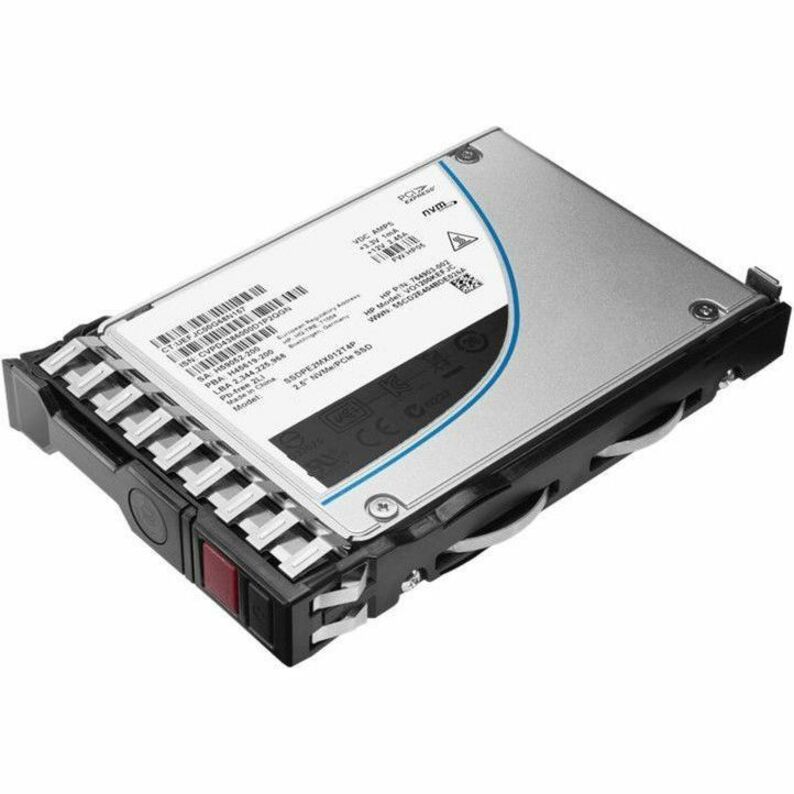
P62578-H21
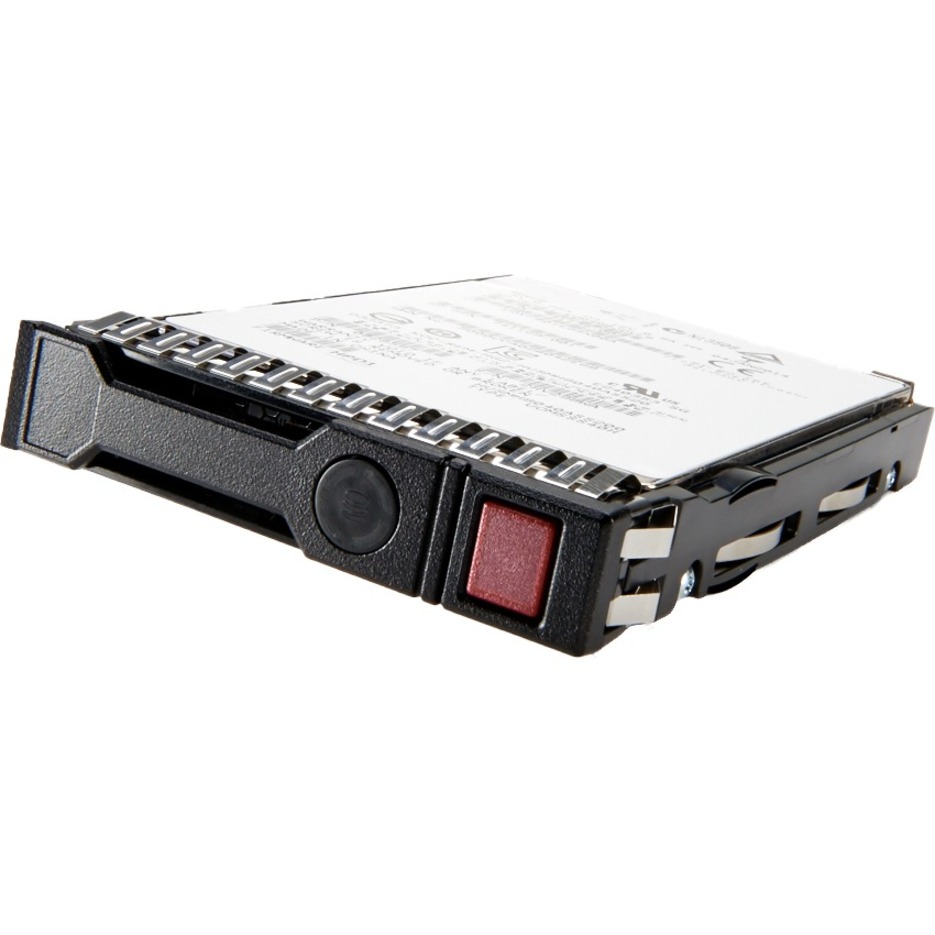
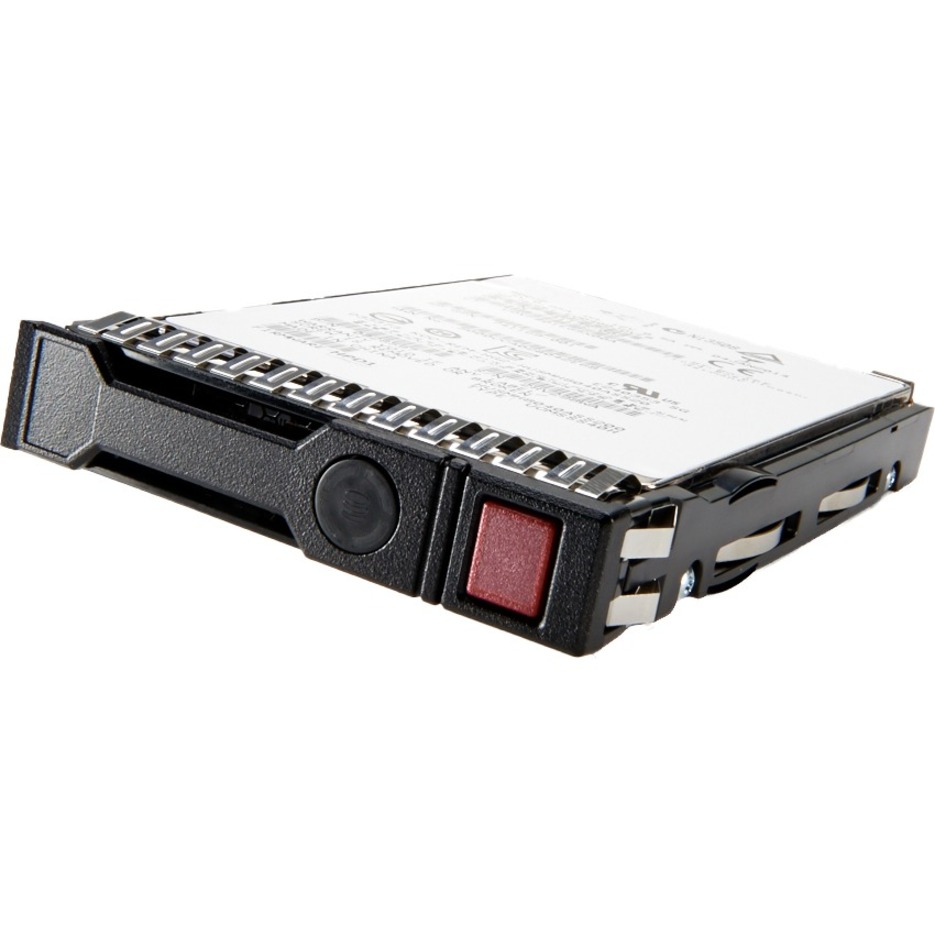
Cray 1.92 TB Solid State Drive

HPE ProLiant DL385 Gen11 8SFF x1 SAS/SATA OROC/PCIe Mid Tray Cable Kit
P57868-B21
HPE ProLiant DL385 Gen11 8SFF x1 SAS/SATA OROC/PCIe Mid Tray Cable Kit
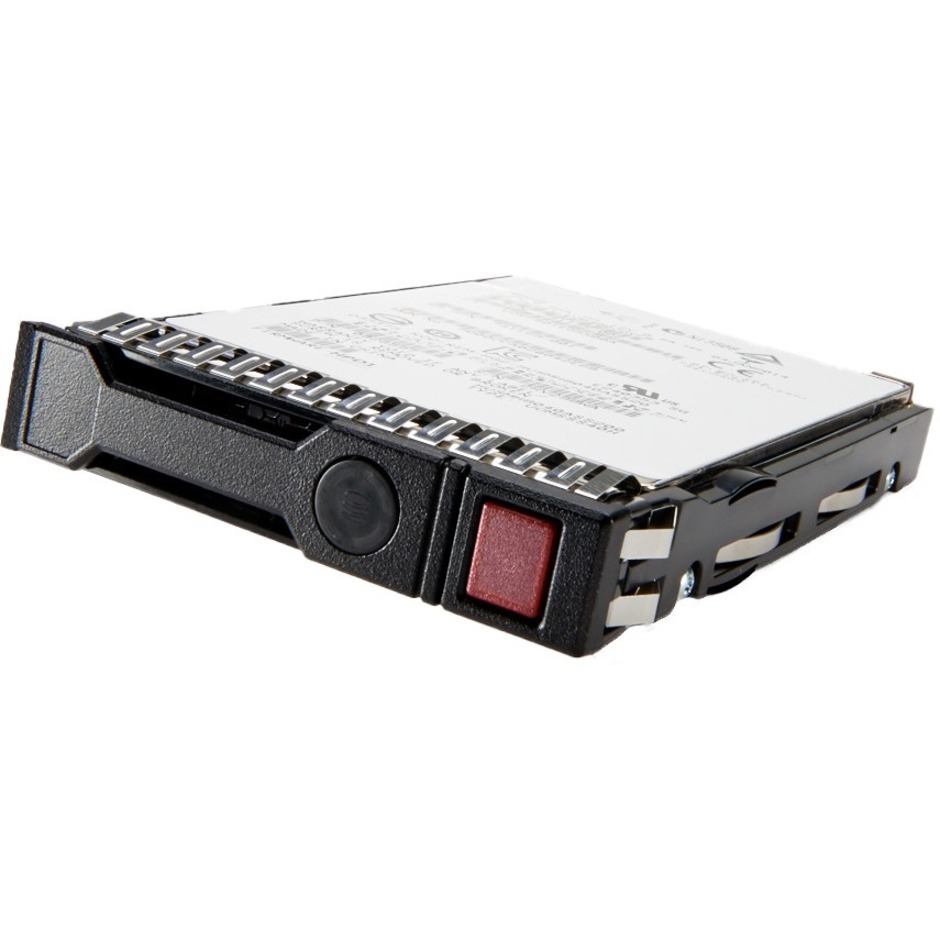
P55085-B21
HPE ProLiant DL385 Gen11 4LFF SAS/SATA Mid Tray Backplane Kit
P55087-B21
HPE ProLiant DL385 Gen11 8SFF Tri-Mode U.3 x4 Mid Tray Backplane Kit
P55086-B21
HPE ProLiant DL385 Gen11 8SFF Tri-Mode U.3 x1 Mid Tray Backplane Kit
HPE ProLiant DL385 Gen11 8SFF x2 NVMe Mid Tray PCIe Splitter Cable Kit
P57869-B21
HPE ProLiant DL385 Gen11 8SFF x2 NVMe Mid Tray PCIe Splitter Cable Kit
HPE ProLiant DL345 Gen10 Plus Smart Array to NVMe Adapter Kit
P39271-B21
HPE ProLiant DL345 Gen10 Plus Smart Array to NVMe Adapter Kit
HPE DL360 Gen9 LFF Smart Array P440ar/H240ar SAS Cable
766211-B21
HPE DL360 Gen9 LFF Smart Array P440ar/H240ar SAS Cable
Build your HPE bill of materials.
Send us the requirement, the project, or an existing quote to beat. We come back with a validated, TAA-compliant HPE configuration and a real price, often below list.
connect [at] getuniqcli.com · Chicago, IL