
"Juniper vs Cisco for Enterprise Routing: MX/SRX vs Catalyst/ASR Decision Guide"
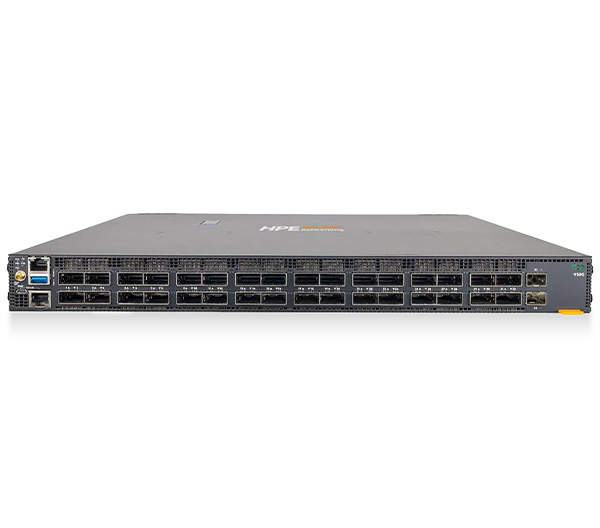
For years the enterprise routing conversation defaulted to Cisco. That default is worth re-examining. The Juniper vs Cisco decision now turns on operational consistency, AIOps-driven troubleshooting, and security integration as much as raw forwarding capacity, and the answer increasingly tilts toward Junos for teams that value a single, predictable platform. This guide compares Juniper MX and SRX against Cisco Catalyst, ASR, and Firepower so procurement and IT buyers can choose on evidence rather than habit.
The real difference: one OS vs a stack of them
The clearest line in the Juniper vs Cisco comparison is the operating system. Junos runs natively across MX routers, SRX firewalls, EX/QFX switches, and ACX access routers as a single-source codebase. The control plane, packet forwarding engine, and management daemons live in isolated memory spaces, which is why Junos is known for clean configuration rollback, commit confirm, and a consistent CLI no matter which box your engineer logs into.
Cisco's enterprise routing line, by contrast, spans IOS XE on Catalyst 8000 and ASR 1000, IOS XR on higher-end carrier platforms, and a separate FTD/FXOS stack on Firepower firewalls. Each has its own upgrade behavior, feature syntax, and management tooling. For a lean team, the Junos consistency story is not marketing, it is fewer runbooks, faster onboarding, and a lower chance that a config change behaves differently on box B than it did on box A.
Platform-by-platform: MX/SRX vs Catalyst/ASR/Firepower
Both vendors field strong hardware. The question is fit, not whether a platform "works."
| Role | Juniper | Cisco | What to weigh |
|---|---|---|---|
| Edge / aggregation routing | MX Series (MX204, MX304, MX10004) on Trio silicon | ASR 1000, Catalyst 8500 | MX scales deep on capacity and subscriber density; Catalyst 8000 leans into SD-WAN and IOS XE familiarity |
| Branch / WAN routing | ACX Series, Session Smart Router (SD-WAN) | Catalyst 8200/8300 | Juniper Session Smart brings tenant-aware, session-based SD-WAN; Cisco bundles Catalyst SD-WAN licensing |
| Enterprise / campus firewall | SRX Series (SRX300–SRX4700) | Firepower / Secure Firewall | SRX runs Junos natively; Firepower is a dual-OS (FTD on FXOS) architecture with more moving parts |
| Cloud management & AIOps | Mist AI with Marvis | Catalyst Center / Meraki dashboard | Mist's AI-native model is the differentiator for proactive troubleshooting |
Use this as a starting filter, then validate against your throughput, session-count, and interface requirements. We can size the exact MX, ACX, or SRX model to your traffic profile on the quote page.
Mist AIOps: the operational tiebreaker
Hardware comparisons rarely decide deals anymore; operations do. Juniper's acquisition of Mist gave it an AI-native cloud platform where Marvis, the virtual network assistant, correlates telemetry to surface root cause instead of leaving an engineer to grep through logs. For routing and SD-WAN edges, that means faster mean-time-to-resolution and fewer escalations, which matters most for organizations running distributed sites with thin local IT.
Cisco answers with Catalyst Center and the Meraki dashboard, both capable, but the management experience is split across product families and licensing models. If you want one assurance and automation layer spanning wired, wireless, and WAN under HPE's umbrella, the Juniper Mist path is the more unified story. For a deeper management-platform comparison, see our write-up on Aruba Central vs Mist on the compare page.
Security: SRX vs Firepower
Routing and security increasingly converge at the enterprise edge. The SRX Series combines high-performance firewalling with IPS, application security, and advanced threat prevention, all configured in the same Junos syntax your routing team already knows. That shared operating model reduces the skills tax of running separate routing and security stacks.
Firepower is a strong NGFW, but its FTD-on-FXOS design and the historical split between Cisco Security Manager and Firepower Management Center add operational complexity that surfaces during upgrades and troubleshooting. For teams standardizing on a single CLI and lifecycle, the SRX advantage is consistency rather than any single feature checkbox.
How to choose
Work through these factors in order; the first few usually settle it.
| Decision factor | Lean Juniper if... | Lean Cisco if... |
|---|---|---|
| Operating model | You want one OS (Junos) across routing, switching, security | Your team is deeply IOS XE certified and tooling-locked |
| Operations / staffing | Lean team needs AIOps to cut tickets and MTTR (Mist/Marvis) | You already run Catalyst Center at scale |
| Security integration | You want NGFW (SRX) in the same syntax as routing | Firepower is already embedded in your SOC workflows |
| Migration tolerance | Refresh window allows phased cutover and retraining | Zero appetite for retraining in this budget cycle |
| Total cost of ownership | Price-to-performance and license simplicity matter most | Existing Cisco EA already sunk |
Migration is the honest caveat. Moving from IOS XE to Junos means config translation and engineer retraining, so phase it: start at a refresh boundary or a single branch, validate, then expand. The Junos learning curve is short for experienced network engineers, and rollback-safe commits lower the risk of each cutover. Browse current MX, SRX, and ACX models on our products and catalog pages to scope the swap.
How Uniqcli helps
Uniqcli is an authorized HPE, HPE Aruba Networking, and HPE Juniper Networking reseller, so we sell and support the full routing, security, and management stack as one relationship rather than three.
- Scope and design. We size MX, ACX, SRX, and Session Smart platforms to your throughput, session, and interface requirements, and map a realistic migration path off Catalyst, ASR, or Firepower.
- Quote fast. Get accurate, configuration-validated pricing through the quote page, including Junos licensing and Mist subscription tiers right-sized to avoid shelfware.
- Procurement that fits your buyer. We support TAA-compliant hardware and federal and SLED vehicles including GSA, NASA SEWP, and E-Rate for K-12, so federal, SLED, healthcare, and enterprise buyers order on terms that work.
- Deploy and support. From staging and configuration to ongoing support, we keep the deployment moving and stand behind it after go-live.
Start a quote or compare Juniper and Cisco options with us before your next refresh cycle.
FAQ
Is Juniper better than Cisco for enterprise routing? Neither is universally "better." Juniper tends to win for teams that value a single operating system (Junos), AI-native operations through Mist, and integrated SRX security. Cisco can be the safer pick where a team is deeply invested in IOS XE tooling and certifications.
How hard is it to migrate from Cisco IOS XE to Junos? It requires config translation and some retraining, but Junos is approachable for experienced engineers, and commit-confirm rollback makes each cutover low-risk. Phase the migration at a refresh boundary or a pilot branch rather than doing a flag-day swap.
What is the Juniper equivalent of a Cisco ASR or Catalyst 8000? For edge and aggregation routing, compare the Juniper MX Series (MX204, MX304, MX10004) against ASR 1000 and Catalyst 8500. For branch and SD-WAN, compare ACX and the Session Smart Router against Catalyst 8200/8300. We can match the exact model to your needs on the quote page.
Can I buy Juniper routing on federal or SLED contracts through Uniqcli? Yes. As an authorized HPE Juniper Networking reseller, we support TAA-compliant procurement through federal and SLED vehicles such as GSA, NASA SEWP, and E-Rate, with quoting and support handled end to end.