
"Juniper MX Router Selection Guide: MX204, MX304, and MX10004 for Edge, Aggregation, and Core"
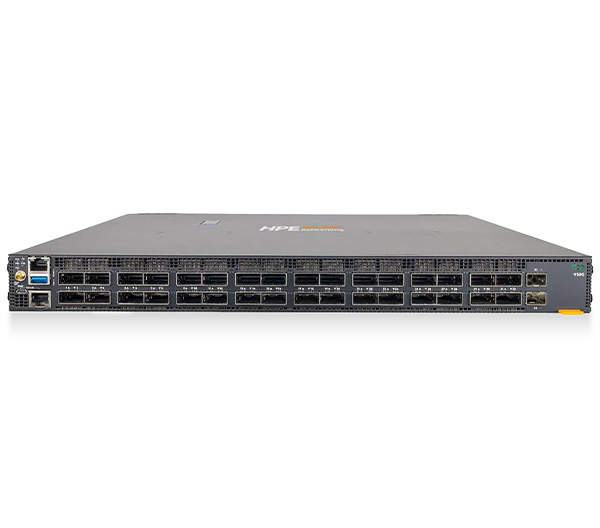
Choosing the wrong MX platform is an expensive mistake: undersize the router and you forklift it inside two years, oversize it and you've paid for slots and silicon you'll never light up. This Juniper MX router guide cuts through the catalog and maps three of the most-deployed platforms, the MX204, MX304, and MX10004, to the network roles they were actually engineered for. If you're weighing MX204 vs MX304, deciding on MX10004 selection for the core, or just need a defensible Juniper MX sizing approach for a procurement package, this is the decision framework.
How the MX series is organized
The MX (Universal Routing Platform) family runs Junos on Juniper's Trio programmable silicon, and the same MX-SPC services and routing features run across the line. What changes from model to model is three things that drive every sizing decision:
- Throughput — total forwarding capacity the system can move full-duplex.
- Port density and interface speeds — how many 10G, 100G, and 400G ports you can land, and in what mix.
- Form factor and modularity — fixed vs modular line cards, rack units consumed, and how far you can grow without replacing the chassis.
Trio silicon generation matters here too. Newer platforms ride later Trio chipsets, which raise per-slot forwarding rates, deepen buffers, and improve inline services (timing, MACsec, telemetry). When you compare an MX series comparison spec-to-spec, the silicon generation is the real "why" behind the capacity gap.
MX204: the compact edge and access router
The MX204 is a fixed-configuration 1 RU platform delivering roughly 400 Gbps of system throughput. Its port set is fixed: four 100GbE QSFP28 interfaces plus eight 10GbE SFP+ interfaces, with rate-select flexibility on the QSFP28 cages.
That makes the MX204 a workhorse for provider edge, cell-site aggregation, peering, and space- or power-constrained PoPs. You get full Junos routing (BGP, MPLS, segment routing, EVPN) and timing support in a unit that sips power and fits where a 7 RU chassis never could. The tradeoff is that it's fixed: you can't add line cards, so when you outgrow 400 Gbps or need more high-speed ports, you move up the stack rather than expand in place. Treat the MX204 as a precise instrument for a known, bounded role, not a platform you grow into.
MX304: the modular aggregation sweet spot
The MX304 is a modular 2 RU platform built on a current-generation Trio chipset, scaling to up to 4.8 Tbps of system throughput across three line card (LMIC) slots. Depending on the cards you populate, it supports interface speeds from 10GbE through 400GbE, in the range of up to 12x400GbE or 48x100GbE.
This is the platform most enterprises and regional providers should look at first for aggregation and a growing service-provider edge. The MX304 answers the most common MX204 vs MX304 question directly: choose the MX204 when the role is fixed and small; choose the MX304 when you need 400GbE today, room to add capacity without a chassis swap, or a mix of 100G and 400G uplinks. The modular MPC architecture means you can buy into a partial configuration and add line cards as traffic grows, which is exactly the kind of phased CapEx that survives a budget review.
MX10004: the high-density core and data-center edge
The MX10004 is a modular 7 RU chassis that scales to up to 38.4 Tbps of throughput, with line cards spanning 1GbE through 400GbE. It's the platform for network core, large data-center edge/gateway, and high-scale peering where port count and headroom dominate the requirement.
MX10004 selection comes down to scale and lifespan. If you're consolidating multiple aggregation boxes, terminating dense 400GbE fabrics, or building a core you don't want to revisit for years, the slot count and capacity ceiling justify the footprint. Its larger sibling, the MX10008, doubles the slots in the same family if you need to go further. As with any modular core platform, size redundancy (routing engines, power, fabric) and line cards together, not just raw throughput.
How to choose: a selection table
Use total throughput, the densest interface speed you must support, and your growth horizon as the three primary filters. The table below is a planning aid; validate exact line-card and optic combinations against current Juniper datasheets before you finalize a build.
| Platform | Form factor | System throughput | Interface speeds | Modular? | Best-fit role |
|---|---|---|---|---|---|
| MX204 | 1 RU fixed | ~400 Gbps | 4x100GbE + 8x10GbE (fixed) | No | Provider/access edge, cell-site agg, peering in tight PoPs |
| MX304 | 2 RU modular | Up to ~4.8 Tbps | 10GbE–400GbE (e.g. up to 12x400G / 48x100G) | Yes (3 LMIC slots) | Aggregation, growing SP edge, 400GbE uplinks |
| MX10004 | 7 RU modular | Up to ~38.4 Tbps | 1GbE–400GbE | Yes (line-card slots) | Core, DC edge/gateway, high-scale peering |
A quick decision path:
- Is the role fixed and under ~400 Gbps? MX204.
- Do you need 400GbE now, a 100G/400G mix, or phased growth? MX304.
- Are you building core/DC-edge scale with dense 400GbE and long lifespan? MX10004 (or MX10008 for more slots).
Then layer in non-throughput requirements that often decide the build: redundant routing engines and power, timing/synchronization, MACsec, optics availability, and Junos feature licensing. Two routers with the same throughput can differ sharply once redundancy and services are specified.
How Uniqcli helps
Uniqcli is an authorized HPE and HPE Juniper Networking reseller, and we scope MX builds end to end so you don't over- or under-buy. That means a validated bill of materials, chassis plus line cards, routing engines, power, optics, and Junos licensing, sized to your actual port and throughput requirements rather than a list price guess.
For public-sector and regulated buyers, we handle procurement through the vehicles you already use: TAA-compliant configurations, GSA, SEWP, and E-Rate where applicable, with documentation that holds up to audit. You can browse platforms on our products page, dig into models in the catalog, line options up side by side on compare, and start a quote when you're ready. Beyond the purchase, we support staging, deployment, and lifecycle, so the MX you buy is the MX that gets racked, configured, and supported.
FAQ
MX204 vs MX304: which should I buy? Buy the MX204 when the role is fixed and bounded under roughly 400 Gbps, edge, cell-site aggregation, or a tight peering PoP. Buy the MX304 when you need 400GbE, a 100G/400G mix, or the ability to add line cards and grow without replacing the chassis.
When does MX10004 selection make sense over an MX304? When you're building core, data-center edge, or high-scale peering where port density and a high capacity ceiling (up to ~38.4 Tbps) dominate. The MX10004's modular slots give you growth runway the 2 RU MX304 can't match, at the cost of a larger 7 RU footprint.
How do I do Juniper MX sizing for a procurement package? Start with three numbers: required total throughput, the densest interface speed you must terminate (100G vs 400G), and a 3-to-5-year growth horizon. Then add redundancy, timing, MACsec, optics, and Junos licensing. Uniqcli builds the validated BOM from those inputs.
Are these platforms available on government contract vehicles? Yes. Uniqcli supplies TAA-compliant MX configurations and can procure through GSA, SEWP, and E-Rate where eligible. Reach out via our quote page and we'll confirm the right vehicle for your organization.