
"One Vendor, Full Stack: The Case for Standardizing on HPE Compute, Aruba, and Juniper"
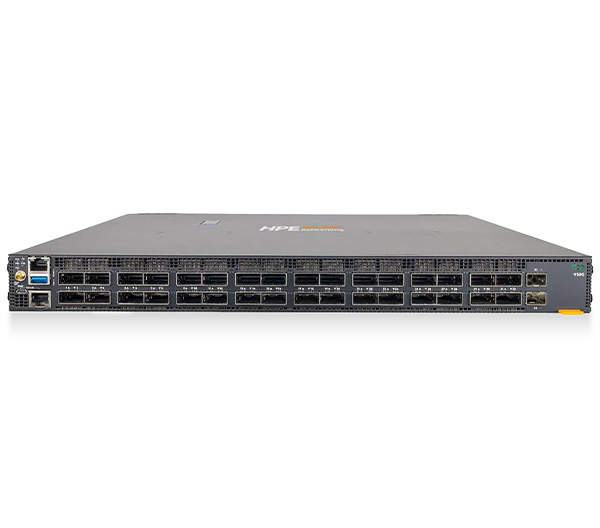
Most IT estates do not get complicated on purpose. They accumulate. A switch refresh here, a wireless controller there, a separate router OEM for the WAN, compute from one line card and storage from another — each chosen well at the time, each carrying its own license model, support contract, and renewal calendar. The hidden cost is not the hardware. It is the seams between vendors. This post makes the case for closing those seams by standardizing on a single HPE full stack — compute, storage, campus and data-center networking, and WAN — and what that consolidation actually buys a procurement or IT team.
The real cost of a multi-vendor estate
When people argue against vendor consolidation IT strategies, they usually cite "best of breed." The instinct is reasonable, but the math rarely is. A mixed estate means you maintain separate management planes, separate firmware lifecycles, and separate support escalation paths that point fingers at each other when an incident spans the boundary between, say, the switch fabric and the server NICs.
The costs compound in three places that buyers feel directly:
- Support fragmentation. Every additional OEM is another TAC to call, another severity matrix to learn, another contract to keep current. Cross-vendor issues are the slowest to resolve because no single vendor owns the whole path.
- License sprawl. Wireless, switching, routing, and infrastructure each arrive with their own subscription tiers, true-up cycles, and portals. Audit readiness suffers when entitlements live in five places.
- Procurement overhead. More vendors means more quotes to reconcile, more lead times to track, and more paper to push through a contract vehicle.
A single vendor networking posture does not eliminate complexity, but it relocates it to one accountable party.
What the HPE Aruba Juniper stack actually is now
The relevant fact for 2026 buyers: HPE completed its acquisition of Juniper Networks on July 2, 2025, roughly doubling the size of its networking business. HPE now carries two networking brands under one roof — HPE Aruba Networking for campus and edge (Wi-Fi 6E/Wi-Fi 7 access points, CX switching, EdgeConnect SD-WAN, ClearPass) and HPE Juniper Networking for data-center fabric, service-provider routing, and the Mist AI-driven cloud and AIOps platform. Sitting alongside them is HPE's compute (ProLiant, Synergy) and storage (Alletra) portfolio, with HPE GreenLake as the consumption and management layer over the lot.
That is what makes an HPE end to end story credible today rather than aspirational. The pieces that used to require three OEMs — campus, data center/WAN, and the servers and storage they connect — now sit under one vendor with one account team, one set of master terms, and an increasingly unified, AI-native management direction.
| Layer | HPE Aruba Juniper stack | What it replaces in a mixed estate |
|---|---|---|
| Campus / edge wireless & switching | HPE Aruba Networking (CX switches, Wi-Fi 7 APs, ClearPass) | Standalone WLAN + access-switch OEMs |
| Data-center fabric & WAN routing | HPE Juniper Networking (Apstra, MX/PTX routing) | Separate data-center and router vendors |
| Network operations / AIOps | Juniper Mist + HPE Aruba Central | Multiple disjoint NMS consoles |
| Compute | HPE ProLiant / Synergy | Third-party server line |
| Storage | HPE Alletra / storage portfolio | Standalone array vendor |
| Consumption & lifecycle | HPE GreenLake | Per-vendor CapEx + renewal calendars |
How to choose: when full-stack consolidation pays off
Consolidation is not automatically the right call. Use these criteria to decide whether a unified IT vendor approach fits your environment before you commit.
- Refresh timing. The cleanest moment to consolidate is at a natural refresh — an EOL switch fleet, a data-center build, or a campus expansion. Standardizing mid-lifecycle means stranding usable assets.
- Operational maturity. Smaller teams gain the most from one management plane and one support number. Large teams with deep multi-vendor expertise should weigh the savings against re-tooling.
- Compliance and sovereignty. Regulated buyers (federal, SLED, healthcare) benefit when entitlements, firmware provenance, and support all trace to one accountable vendor with TAA-compliant supply.
- Risk tolerance for lock-in. Single-vendor reduces integration risk but concentrates leverage with one OEM — negotiate multi-year terms up front.
If most of those point your way, the HPE Aruba Juniper stack is one of the few options that can genuinely cover campus, data center, WAN, compute, and storage without leaving a seam for finger-pointing.
The outcomes buyers care about
Standardizing on one stack is a means, not an end. The outcomes that justify it:
- One support relationship across networking, compute, and storage — faster resolution on cross-domain incidents because one vendor owns the whole path.
- Consolidated licensing with fewer portals, cleaner true-ups, and audit-ready entitlements.
- Predictable procurement through a single vendor on a single contract vehicle, which shortens quote-to-PO time.
- A coherent AI-native operations roadmap as HPE unifies Mist and Aruba Central, instead of stitching together separate NMS tools.
- Simpler lifecycle planning when refresh, firmware, and renewals align under one calendar — especially under a GreenLake consumption model.
How Uniqcli helps
Uniqcli is an authorized reseller for HPE, HPE Aruba Networking, and HPE Juniper Networking, and we transact the full stack — not just the boxes that are easy to ship.
- Scope and design. We map your current multi-vendor estate against an HPE end to end target and right-size the campus, data-center fabric, WAN, compute, and storage so you are not over-buying licenses or capacity. Browse the product catalog or specific products to see what we configure.
- Quote and compare. Get a consolidated, line-item quote across all layers, and use compare to evaluate Aruba versus Juniper options where both could fit.
- Procurement vehicles. We support TAA-compliant, GSA, NASA SEWP (SEWP V ordering currently extended through September 30, 2026, with SEWP VI awards underway), and E-Rate procurement for federal, SLED, healthcare, and education buyers — so a full-stack standardization lands through one contract path.
- Deploy and support. From staging and configuration to deployment and ongoing support, we keep the single-vendor advantage intact rather than handing you back a pile of separate contracts.
If you are weighing a refresh, request a quote and we will model the consolidated stack against your current spend.
FAQ
Is "best of breed" really worse than a single-vendor stack? Not inherently — but best-of-breed only wins when a specialized product is materially better and your team can absorb the integration and support overhead. For most regulated and enterprise buyers, the seams between vendors cost more than the marginal feature gap, especially now that HPE covers campus, data center, WAN, compute, and storage under one roof.
Are HPE Aruba and HPE Juniper merging into one product line? HPE has stated it will keep both the HPE Aruba Networking and HPE Juniper Networking brands in market by customer segment. Aruba leads at the campus edge; Juniper leads in data-center fabric, routing, and the Mist AIOps platform. The direction is unified management and a shared AI-native operations roadmap, not the disappearance of either line.
Does consolidating on one vendor create lock-in? It concentrates commercial leverage with one OEM. The mitigation is contractual: negotiate multi-year pricing, define renewal terms up front, and use standards-based fabrics to retain interoperability. The integration-risk reduction usually outweighs the lock-in concern for full-stack buyers.
Can I buy the whole stack on a single government contract vehicle? In most cases, yes. Uniqcli transacts HPE compute, storage, Aruba, and Juniper through TAA-compliant, GSA, SEWP, and E-Rate paths, so a campus-to-data-center standardization can move through one procurement channel instead of several. Request a quote to confirm the right vehicle for your agency or organization.