
"End-of-Life Network Gear: How to Identify and Replace EOL HPE, Aruba, and Juniper Hardware"
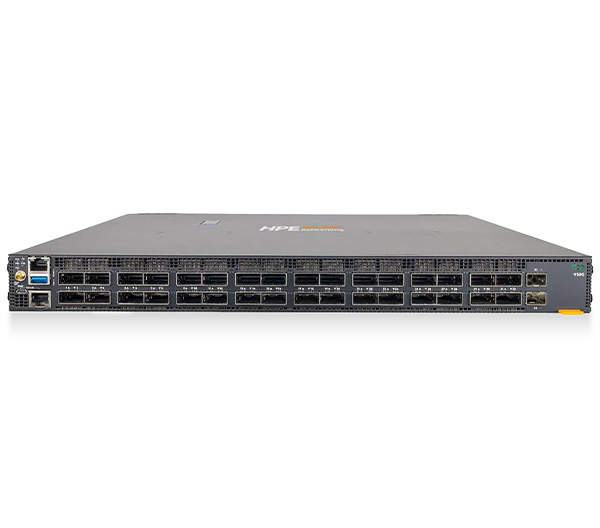
Every switch, router, and access point in your rack has an expiration date — and running past it is no longer just a support inconvenience, it's a documented breach vector. When you operate network gear end-of-life, you lose firmware patches, you fall out of compliance, and you become the soft target that attackers specifically hunt for. This guide shows you how to identify EOL HPE, Aruba, and Juniper hardware, weigh the EOL security risk, and build a refresh plan your finance and procurement teams will actually approve.
What "end of life" actually means (EOL vs. EOSL)
Vendors use a lifecycle vocabulary that buyers conflate at their peril. The milestones that matter:
- End of Sale (EOS): The last date the manufacturer accepts new orders for a product. Support and software updates continue, but the clock is now running.
- End of Software / Security Maintenance: The last date the platform receives bug fixes and — critically — security patches. After this, new CVEs go unpatched on that code train.
- End of Support Life (EOSL / EOSS / Last Day of Support): No more technical support, no RMAs, no fixes. You're on your own.
HPE Aruba Networking publishes these dates per product and, under its current policy, sets the End of Software Support date several years after the declared End of Sale — the exact window depends on when you purchased the hardware and whether the code is a Short Supported Release or Long Supported Release. The takeaway: EOS is a warning shot, not the deadline. EOSL is the deadline, and you should be off the platform well before it.
Why running EOL gear is a real security and compliance risk
The clearest cautionary tale is CVE-2025-21590, a Junos OS kernel isolation flaw that the China-linked group UNC3886 exploited to backdoor Juniper MX routers — many of them end-of-life units running older Junos. Attackers injected malicious code into legitimate processes and bypassed the Veriexec integrity subsystem. CISA added the CVE to its Known Exploited Vulnerabilities (KEV) catalog on March 13, 2025. The lesson is blunt: nation-state actors actively target gear that vendors have stopped patching, because they know the fix will never ship.
The risk compounds across three dimensions:
- Security: Unpatched CVEs accumulate with no remediation path. An EOL device is a permanent open door.
- Compliance: CISA KEV remediation deadlines (BOD 22-01) apply to federal agencies, and frameworks like FedRAMP, CMMC, HIPAA, and PCI-DSS expect supported, patchable infrastructure. Auditors flag EOL gear.
- Operational: No RMAs means a hardware failure becomes an extended outage while you scramble for gray-market replacements of questionable provenance.
How to find the EOL dates for your fleet
You can't plan a refresh until you know what you have and when each piece dies. Build an inventory, then map every model to its published dates.
| Vendor | Where to check EOL/EOSL | What to capture |
|---|---|---|
| HPE Aruba Networking | HPE Networking Support Portal end-of-life listings and the product lifecycle policy | EOS date, end of software/security support, EOSL |
| Juniper | Juniper's EOL pages (juniper.net support EOL) per series (MX, SRX, EX, QFX) | Last order date, end of engineering/software support, EOSL |
| HPE compute/storage | HPE Support (support.hpe.com) lifecycle and PSNow documentation | EOS, end of service life, Care Pack eligibility |
Cross-reference each model and its running software version — a supported chassis on an unsupported code train still carries patch risk. Capture serial numbers and Care Pack/warranty status while you're at it; that data drives both the risk score and the budget.
How to choose what to replace first
Not everything dies at once, and not every EOL device carries equal risk. Prioritize with a simple scoring model — rank each asset on these factors and tackle the highest scores first:
| Factor | Higher priority when... | Why it matters |
|---|---|---|
| EOSL proximity | Past or within 12 months | No patches and no support = active exposure |
| Active CVEs / KEV listing | Known exploited (e.g., CVE-2025-21590) | Attackers are already targeting it |
| Exposure | Internet-facing or management-plane reachable | Larger, more accessible attack surface |
| Criticality | Core, aggregation, firewall, NAC | Failure or breach has fabric-wide blast radius |
| Compliance scope | Touches PHI, CUI, cardholder, or federal data | Audit and mandate exposure |
| Lead time | Long supply-chain or factory-integration lead | Order early to hit the cutover date |
A general sequencing rule for EOL replacement: retire internet-facing and management-reachable devices with known-exploited CVEs first, then core and security-enforcement gear (firewalls, NAC), then aggregation, then access-layer edge. Use the natural like-for-like upgrade paths — Aruba CX for legacy switching, Juniper SRX/MX/EX for routing, firewall, and switching — and lean on cloud management (Aruba Central or Juniper Mist) so the new fleet stays patchable and visible going forward. Compare candidate platforms side by side on our compare tool and browse current models in the catalog.
Building the refresh plan and budget
Turn the prioritized list into a fundable roadmap:
- Phase by risk tier. Map the scored assets into 30/60/90-day and FY-budget waves so you fix the worst exposure now and spread CapEx across cycles.
- Account for lead times. Factory-integrated configs and high-density platforms can carry weeks of lead time — order against your cutover dates, not your wish dates.
- Validate TAA and contract eligibility. For federal and SLED buyers, confirm new gear is TAA-compliant and available on your vehicle before you commit.
- Plan the migration, not just the purchase. Config conversion, license transfer, staging, and a rollback window belong in the plan from day one.
- Right-size support. Pair new hardware with the appropriate HPE or Juniper support tier so you never end up here again.
How Uniqcli helps
Uniqcli is an authorized reseller of HPE, HPE Aruba Networking, and HPE Juniper Networking, and we run EOL refreshes end to end for federal, SLED, healthcare, and enterprise buyers.
- Scope and assessment. We help you inventory the fleet, map every model to its EOL/EOSL dates, flag KEV-listed exposure, and produce a prioritized replacement roadmap.
- Quote and procurement. We provide configuration-accurate quotes and TAA-compliant gear through the right vehicle — GSA Schedule, NASA SEWP, SLED cooperative contracts, and E-Rate for K-12. Start a request on our quote page.
- Deploy. Factory-integration coordination, license transfer, staging, and cutover support so the refresh lands on schedule with minimal downtime.
- Support. We attach the right HPE/Juniper support tier and keep your new fleet on a supported, patchable footing.
Browse current platforms on our products page or pull part-level detail from the catalog to scope your replacement.
FAQ
What's the difference between EOL and EOSL? EOL/EOS typically marks the last day you can order a product; support and patches continue afterward for a defined period. EOSL (End of Support Life, sometimes called Last Day of Support) is the true deadline — after it there are no patches, fixes, RMAs, or technical support. Plan to be migrated before EOSL, not after.
Is it really that risky to run gear a little past end of support? Yes. CVE-2025-21590 showed the China-linked group UNC3886 backdooring end-of-life Juniper MX routers, and CISA added it to the KEV catalog. Once a platform stops getting security patches, every new CVE is permanent — and attackers specifically scan for unsupported devices.
How do I find the EOL date for a specific switch or AP? Check the vendor's published lifecycle listings: the HPE Networking Support Portal for Aruba, Juniper's EOL pages by series, and HPE Support for compute and storage. Match both the hardware model and the running software version, since an unsupported code train carries risk even on supported hardware. We can run this mapping for your whole fleet.
Can I buy replacements on a federal or SLED contract vehicle? Yes. Uniqcli supplies TAA-compliant HPE, Aruba, and Juniper hardware through GSA, NASA SEWP, SLED cooperative contracts, and E-Rate. Tell us your vehicle on the quote page and we'll confirm eligibility and pricing.