
"Campus Network-as-a-Service with Aruba: Predictable OpEx for Distributed Enterprises"
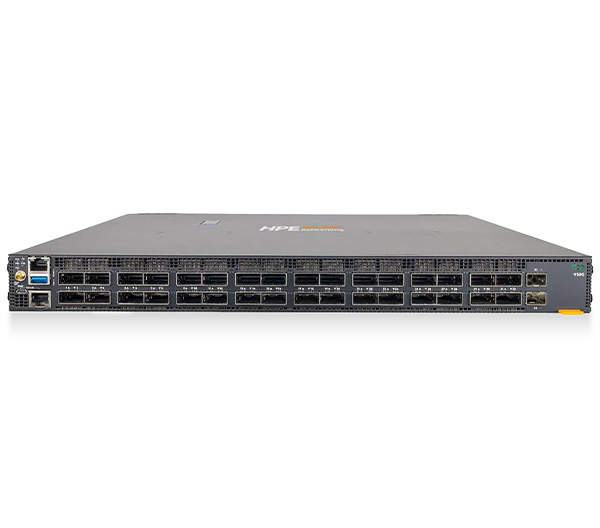
For a multi-site organization, the campus network is both mission-critical and chronically hard to budget. Every three-to-five-year refresh lands as a lumpy capital request, every new building or clinic restarts the procurement clock, and the IT team that owns the outcome rarely controls the spend. Network as a Service (NaaS) with HPE Aruba Networking reframes the problem: instead of buying switches, access points, and gateways outright, you subscribe to the campus network as a managed, consumption-based service with predictable operating expense across every location.
This post makes the case for Aruba NaaS for distributed enterprises, public-sector agencies, and healthcare systems that want OpEx predictability without giving up control of their own infrastructure — covering the pain NaaS solves, how the HPE Aruba approach works, what outcomes to expect, and how to procure it through regulated contract vehicles.
The Problem: CapEx Lumpiness Across Many Sites
The traditional campus model breaks down at scale. A 40-site retailer, a regional health system, or a school district with a dozen campuses faces the same structural issues:
- Refresh cycles never align. Sites were built and upgraded at different times, so capital requests arrive in waves that are impossible to smooth.
- Overprovisioning is the default. To avoid being caught short, teams buy 30-50% more capacity than they need on day one and pay for idle ports and APs for years.
- The approval process is slow. Large capital expenditures trigger stringent sign-off cycles that delay new sites and refreshes.
- Lifecycle and management fall on a stretched team. Firmware, RMAs, security patches, and monitoring across dozens of sites consume staff you would rather point at higher-value work.
NaaS attacks all four. By bundling hardware, software, and lifecycle into one monthly subscription, subscription networking removes the CapEx spike, aligns spend to usage, and shifts operational burden to a managed model.
The Aruba Approach: How HPE NaaS Works
HPE GreenLake for Networking delivers a NaaS experience built on HPE Aruba Networking hardware and the Aruba Central cloud management platform. The model combines three layers into one subscription:
- The infrastructure — HPE Aruba CX switches, Wi-Fi 6E / Wi-Fi 7 access points (such as the 600-series 6 GHz APs), and gateways, sized to each site.
- The cloud management plane — HPE Aruba Networking Central, delivered through the HPE GreenLake platform, providing AIOps-driven monitoring, configuration, and visibility across campus, branch, and IoT from one console.
- The lifecycle services — design, deployment, ongoing management, firmware and security updates, and hardware support, packaged so the network is consumed rather than owned.
HPE structures much of this through modular service packs: unitized offerings that combine the required Aruba hardware, software, and service components for a specific use case, so a campus NaaS deployment is built from repeatable, quotable units rather than a custom bill of materials every time. Aruba Central subscriptions come in Foundation and Advanced tiers across fixed terms (commonly 1, 3, 5, 7, and 10 years), letting you match feature depth and contract length to each site.
The result is a "pay-as-you-grow" posture: you add capacity as you open sites or onboard users, and spend tracks usage instead of a one-time, oversized purchase.
Outcomes: What Predictable OpEx Actually Buys
The financial story is the headline, but the operational outcomes are what keep NaaS deployed:
- Budget predictability. A known monthly cost per site replaces unpredictable capital requests — valuable for education and government buyers working against fixed annual appropriations.
- Faster site turn-up. Standardized service packs and cloud-managed provisioning bring a new building, clinic, or campus online in days, not a procurement quarter.
- Lower total effort. AIOps in Aruba Central surfaces issues before users report them, and managed lifecycle removes the firmware-and-RMA treadmill from your team.
- Right-sized capacity. Because you scale with demand, you stop paying for the idle-port overprovisioning tax that inflates the traditional model.
- A consistent security posture. Centralized policy and updates push the same baseline to every site, which matters for HIPAA, CMMC, and zero-trust mandates.
Industry analysts have flagged campus NaaS as a real growth category, with Dell'Oro Group projecting the market reaching roughly $600M by 2027.
NaaS vs. Traditional CapEx Procurement
| Dimension | Traditional CapEx Refresh | Aruba NaaS Subscription |
|---|---|---|
| Spend pattern | Large, lumpy capital outlays every 3-5 years | Predictable monthly OpEx |
| Capacity sizing | Overprovision on day one | Pay-as-you-grow with usage |
| New-site turn-up | New procurement cycle each time | Add units to existing subscription |
| Lifecycle / firmware / RMA | Owned by internal team | Included in managed service |
| Management plane | Often per-site or fragmented | Single cloud console (Aruba Central) |
| Refresh at end of term | New capital request | Built into subscription renewal |
| Best fit | Single site, stable footprint | Multi-site, growing, OpEx-driven |
NaaS is not the right answer for every organization. A single stable campus with a healthy capital budget and strong in-house operations may do fine owning its gear. The model shines with many sites, an expanding footprint, an OpEx preference, or a lean team that would rather consume the network than run it.
How to Choose: Is NaaS Right for Your Campus?
Work through these questions before committing:
- How many sites, and how variable is the footprint? More sites and faster growth strengthen the NaaS case.
- CapEx or OpEx preference? If finance favors predictable operating expense and wants to avoid capital approval cycles, NaaS aligns directly.
- What is your operational capacity? If lifecycle and monitoring already strain the team, the managed component carries real weight.
- What term fits? Match subscription length (1-10 years) to your planning horizon and refresh appetite.
- What compliance and contract constraints apply? Confirm TAA compliance and the right purchasing vehicle up front — this is where many public-sector deals stall.
If most answers point toward many sites, OpEx, and a stretched team, a campus NaaS deployment is worth scoping in detail.
How Uniqcli Helps
Uniqcli is an authorized HPE and HPE Aruba Networking reseller, and we scope, quote, procure, and support campus NaaS deployments end to end.
- Scope and design. We assess your sites, model the right mix of CX switches, Wi-Fi 6E/7 APs, gateways, and Aruba Central tiers, and translate that into NaaS service packs sized to your footprint. Browse the gear in our products and full catalog, and use compare to weigh options.
- Procurement through your vehicle. We support TAA-compliant, GSA, NASA SEWP, and E-Rate purchasing so federal, SLED, healthcare, and education buyers can acquire NaaS through the contract path they already trust.
- Quote. Tell us your sites and timeline and we will return a clear, per-site subscription model — request a quote.
- Deploy and support. We coordinate deployment, onboarding into Aruba Central, and ongoing support so the network is genuinely consumed, not just financed.
FAQ
Is Aruba NaaS just leasing with extra steps? No. Leasing finances hardware you still operate. Network as a Service with Aruba bundles the hardware, the Aruba Central cloud management, and the lifecycle services — design, deployment, updates, and support — into one subscription, so you consume the managed network rather than owning and running it.
Can I get NaaS through a government or education contract vehicle? Yes. HPE GreenLake for Networking can be acquired through standard public-sector paths. Uniqcli supports TAA-compliant, GSA, SEWP, and E-Rate procurement, which is what makes the OpEx model workable for federal, SLED, and healthcare buyers.
What happens at the end of the subscription term? Refresh is built into the model. Rather than filing a new capital request, you renew the subscription and the lifecycle continues, which is a core reason multi-site organizations choose subscription networking over repeated CapEx cycles.
Do I lose visibility or control of my own network? No. You retain full visibility through HPE Aruba Networking Central — a single cloud console with AIOps across all sites — while offloading the operational toil of firmware, RMAs, and patching to the managed service.